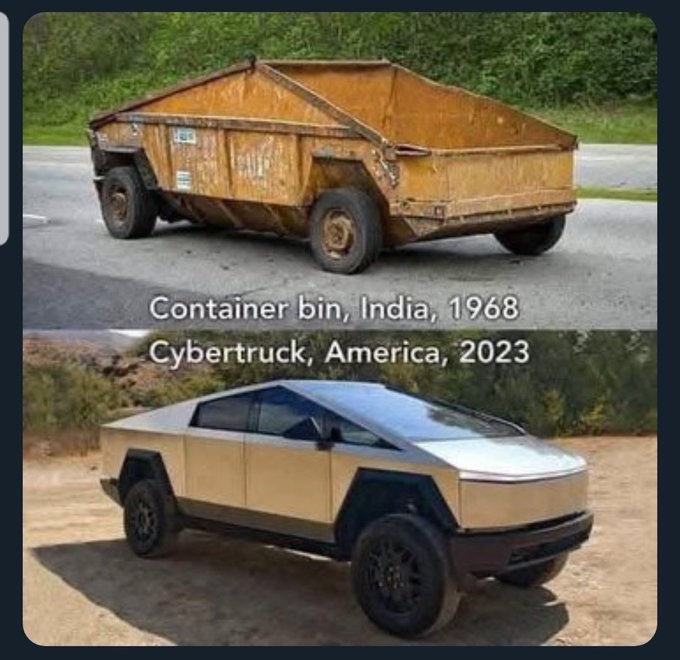
For many Americans, the purchase of a Tesla was once indicative of financial privilege while also serving as a means of signaling one’s virtue on behalf of the environment. Because of this, hybrids were notorious emitters of liberal smug as South Park depicted brilliantly. But following the re-election of Donald Trump to the Oval Office and subsequent formation of Elon Musk’s Department Of Government Efficiency, former brand loyalists have suddenly turned against the company. Many Teslas were promptly adorned with bumper stickers that read, “I bought this before Elon went crazy.” Meanwhile, some former enthusiasts began selling their Teslas while others went to great lengths disguising their Teslas as other brands like Audi and Honda. At the same time, a handful of “activists” have taken up literal arms against the company, carrying out acts of armed violence, arson and vandalism.

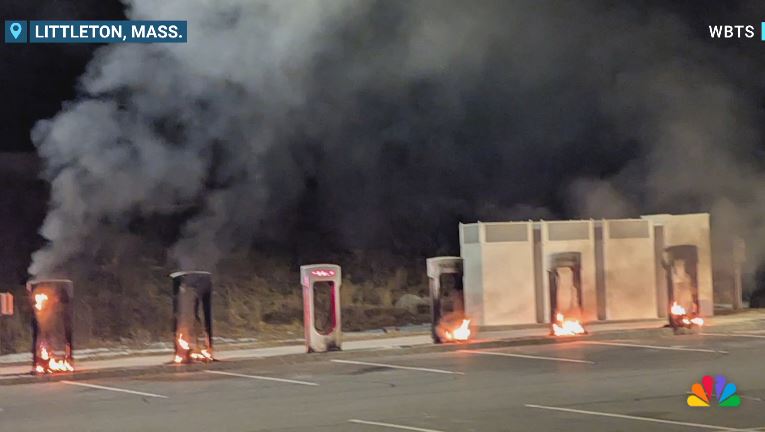


An Oregon man was charged for lobbing molotov cocktails at a dealership on 20 January and 19 February 2025 in Salem. A dozen Teslas were set ablaze in France on the second of March. Then on Monday, March third, a row of charging stations in Littleton, Massachusettes were “intentionally set on fire”. Shots were fired at a Tesla dealership in Tigard, Oregon by an unidentified gunman on 06 March. A Coloradan was federally charged for “a series of incidents at the Tesla dealership in Loveland, Colorado” which included vandalism with molotov cocktails and tagging the building with the word “Nazi” below the entrance sign; that same dealership suffered more attacks including another arson on 07 March. And Newsweek reported a Cybertruck “defaced with a red swastika” near Wall Street in New York City. These incidents preceded a nationwide protest on 08 March dubbed the worldwide “Tesla Takedown”.


Anger at Tesla is maybe understandable when considering how dangerous their products are to everyone and everything on the road. But none of the outrage stems from the safety or efficacy of the product. While the corporate media focuses on the efforts of so-called “activists” carrying out vandalism, it feels rather disappointing that the outrage is purely political, stemming from a very real and observable psychological pathology known as Trump Derangement Syndrome.
For the people carrying out these acts of vandalism, it doesn’t seem to matter that these vehicles are neither green nor safe. Indeed it has never been of any importance to so-called “environmentalists” that lithium-ion batteries are “thermo-dynamically unstable” and often spontaneously explode, causing fires that are nearly impossible to put out. But of all the mechanical abortions that stumbled out of the Tesla factories, none of them are as deadly as the Cybertruck.
Cybertrucks feature an acceleration pedal that gets stuck in the “full-throttle” position, a “suicidal” crash safety rating, an aluminum frame that can snap in half, a massive blind spot that hinders visibility and increases the likelihood of wrecks, fragile cast-aluminum rims that break spontaneously, undercarriages that are missing bolts, body panels that fly off during use,
and obnoxiously bright headlights that temporarily blind oncoming drivers but actually disappear completely when driving in snow due to a foolish design flaw. Tesla admitted to Cybertuck customers that “depressing the brake may or may not disengage the accelerator”. Reported problems finally “hit an apex in April 2024” and prompted a massive physical recall of all Cybertrucks on the road at that time:
The problem was a faulty gas pedal that required Tesla technicians to perform a rather embarrassing fix: bolting in a rivet onto the Muskotruck’s floor so the pedal didn’t get stuck when pressed. The recall notice stated: “The accelerator pedal can become stuck, sending the truck accelerating beyond control, making it a danger to everyone on the road.”
That wasn’t the end of it: The National Highway Traffic Safety Administration has now announced two new physical recalls that affect about 11,000 units and represent hazard for the Cybertruck’s driver and other cars. The problems are especially embarrassing because they involve actual pieces falling off the truck and electrically overloaded components in this fully-electric ‘dream’ vehicle.
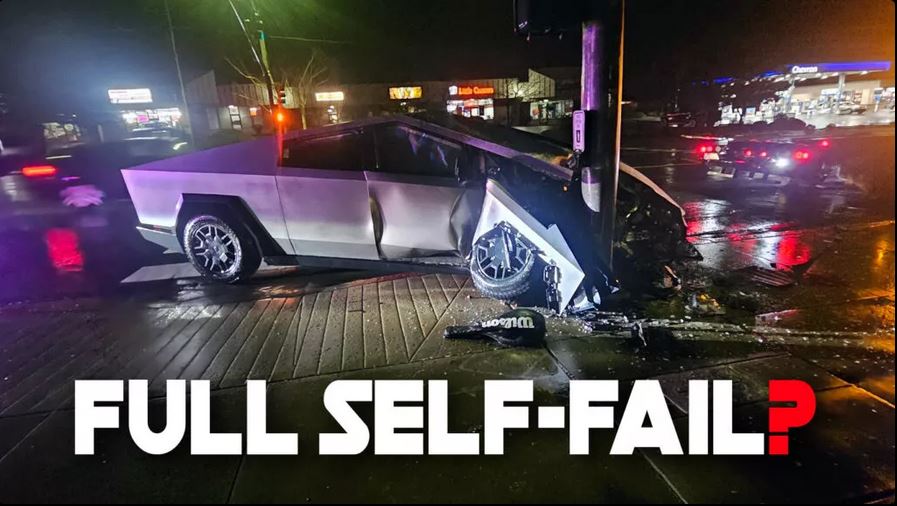
The problems continue to persist into 2025. Last month a Cybertruck in Florida “drove itself into a light post”. The Cybertruck’s razor-sharp door edges and amputation-prone trunk lids have earned it the nickname “Cyberguillotine”. And after enough people were injured by the sharp corners of the Cybertruck, Tesla began selling rubber bumpers to “prevent injury”. It’s not difficult to understand why some critics refer to these things as “Cybercoffins.”
The Tesla Cybertrash isn’t just the most dangerous toy since the Easy-Bake Oven, but also the most spectacular engineering failure in the auto industry’s recent history.
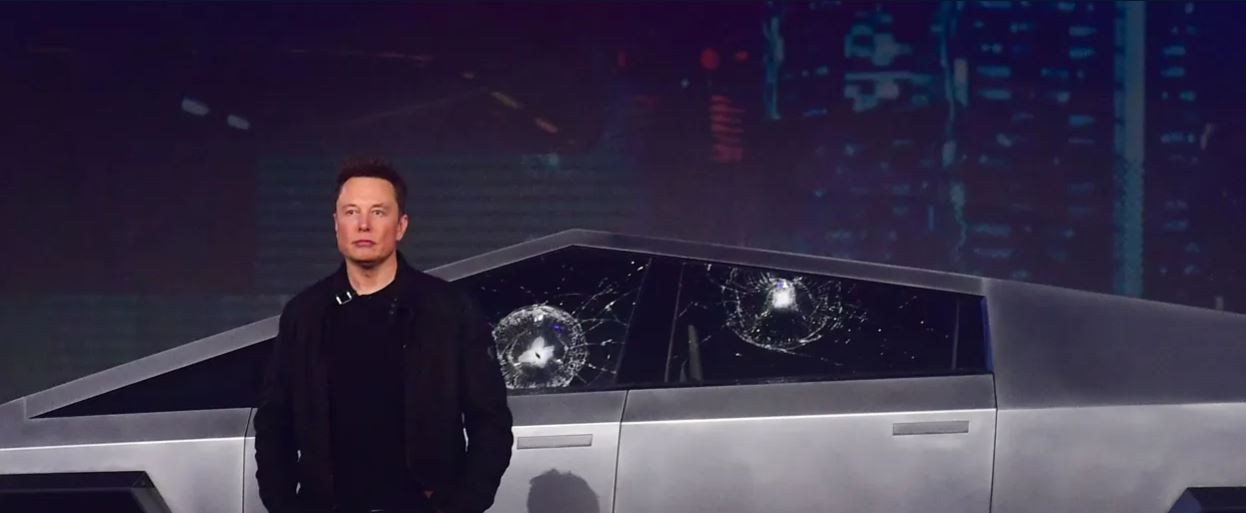
Cybertrucks feature a weak suspension that fails under normal driving conditions, “bullet proof” windshields that spontaneously shatter, a “stainless steel” body that is prone to rust, comical windshield wiper failures, chargers that get stuck in the charging port (and render the vehicle useless), an inability to charge in cold weather, an inability to drive in snow, and the infamous Christmas “software update” that rendered Cybertrucks temporarily unusable.
Cybertrucks are so loaded with problems that GEICO refuses to insure them. Many insurance companies have come to the same conclusion because these toys have too many problems and are just too expensive to repair. Despite the popular claims of fanboys, these “trucks” were never designed to haul much of anything and lose their warranty if they’re ever taken off road. Indeed, even the antique Model “T” handles off-road conditions with more grace than the Cybertruck.

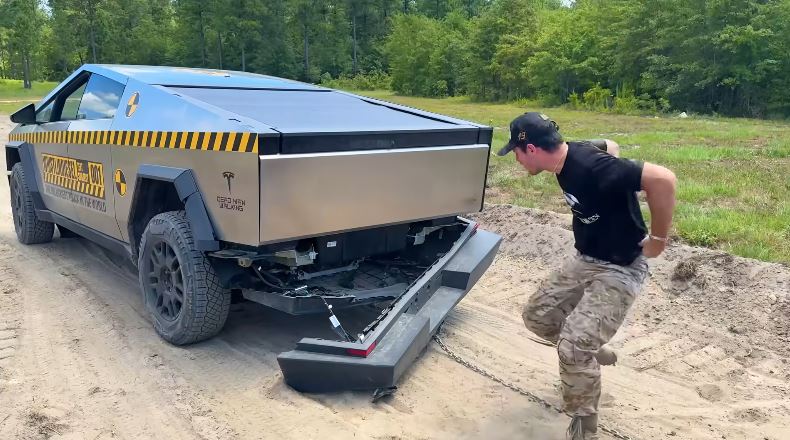

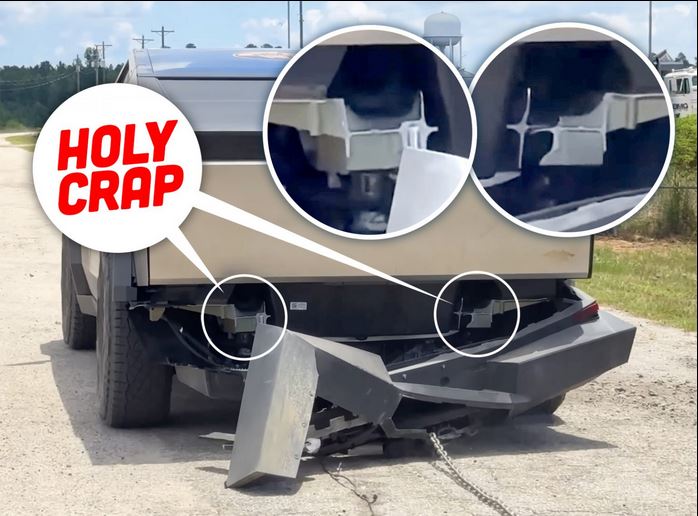

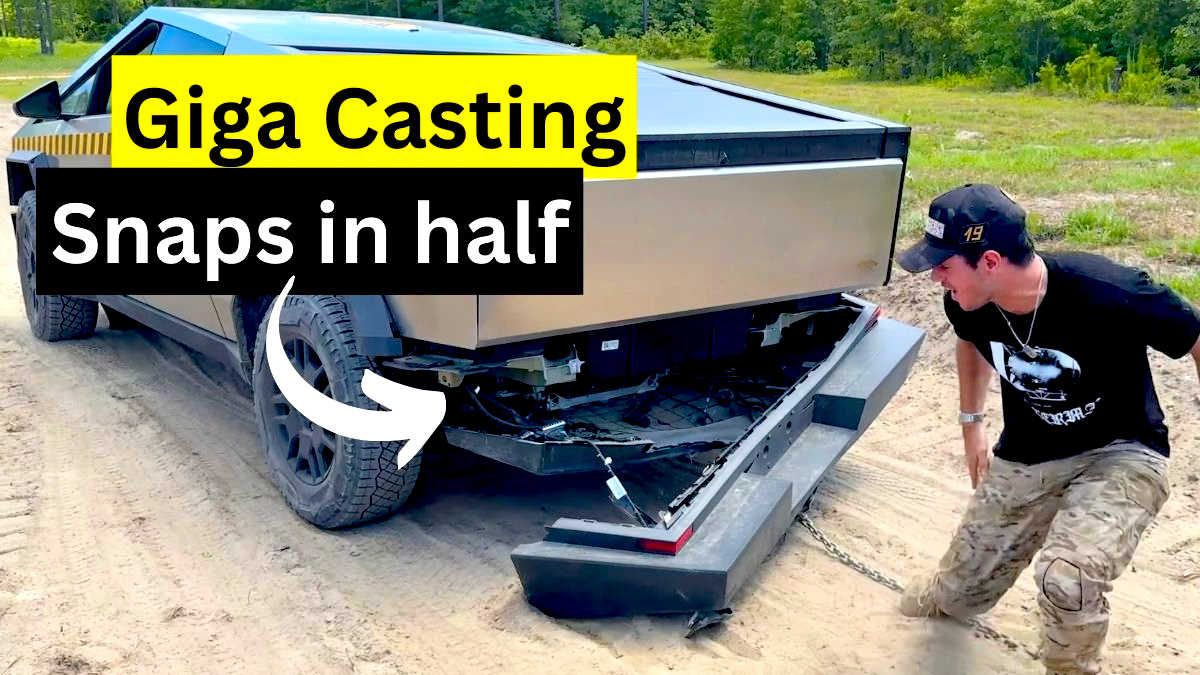
Some California police departments have been “forced” to use the Cybertruck, despite many officers testifying that these vehicles are not built for police work. How are law enforcement expected to execute a pit maneuver in a chase with a vehicle built on a weak frame of aluminum?
One Cybertruck hit a pothole that caused the rear suspension mounts to break and punch through the frame “requiring a full rear-frame replacement” that cost $34,000 and took four months to repair. Another Cybertruck broke down after only 35 miles and had to be towed to a service center. Yet another was declared “totaled” after only 26 miles on the odometer. When Cybertrucks get cyber-stuck they’re almost always rescued by an F-150 or equivalent petroleum-powered vehicle, and Tesla engineers purportedly excuse these pathetic failures as nothing more than a “software issue” that can be resolved with system updates. Anyone who’s ever seen the documentary “Who Killed The Electric Car?” can see how pathetic and avoidable this all really was (incidentally, this week marks the twentieth anniversary of the final retirement of General Motors’ wildly successful EV1, powered by the revolutionary Ovonic battery that nobody has ever heard of).
The fragile nature of Tesla’s lithium-ion battery cells has resulted in the mass manufacture of vehicles that can be rendered completely useless after a single fender bender. The explosive phenomenon that can result from such incidents is known as thermal runaway and has become far more common than many would like to admit:
“This is when one of the individual cells in the battery is either damaged by an impact, or just degrades over time to the point where it causes a short circuit. This generates heat in the cell which causes an out-of-control chemical reaction to become self sustaining. Very quickly the heat spreads to the cells nearby, heating them to the point where they also go out of control in a kind of avalanche, until frequently the whole battery and the car is destroyed. But believe it or not, this isn’t the scariest thing that can occur when a lithium-ion battery degrades or is damaged. That would be a Vapor Cloud Explosion. …
“EV fires are hard enough to put out. They often take hundreds of times more water to extinguish than a regular petrol or diesel fire. The toxicity of the gasses means that first responders need breathing apparatus. And cells can continue to reignite for days or even weeks after the initial fire is out. But what is truly scary is the prospect of an EV parked in an apartment block garage creating a vapor cloud explosion in a confined space.”



On the environmental side of things, the electricity to run these things mostly sources from coal fired power plants and their continued manufacture requires massive mining operations to source the raw materials. The batteries in these vehicles degrade long before the life of the car has expired, meaning that owners must repeatedly replace the batteries to keep them on the road. And a set of tires connected to a Tesla will only last a maximum of 7,000 miles before requiring replacement as compared to the 50,000+ miles that drivers can expect their tires to last on conventional vehicles. All that extra weight literally quadruples the consumption of rubber for Tesla owners who think they’re helping the environment.
That added weight also accelerates the deterioration of roads and bridges, requiring loads of additional upkeep that taxpayers must collectively pay for. That extra weight also means that if anyone gets hit by a Tesla, they’re not likely to walk away from the scene of the accident. For the same reason, heavy electric vehicles blast right through modern guard rails like a hot knife through butter. As reported by Nebraska Today:
“A crash test performed on a guardrail on Oct. 12, 2023, highlighted the concern. At 60 mph, the 7,000-plus-pound, 2022 Rivian R1T truck tore through the barrier with little reduction in speed. In a separate test conducted in September, a 2018 Tesla Model 3 sedan lifted the guardrail and passed below it, coming to rest behind the barrier.”
Existing parking garages were never constructed to accommodate the burdensome weight of electric vehicles, and are all at risk of catastrophic failure because of it. The vehicles are much too heavy for the existing infrastructure to accommodate, but the entire grid is suddenly expected to accommodate them.
Not only are Cybertrucks “a dystopian, masturbatory fantasy” as some have observed, they’re arguably dangerous at any speed. The new General Motors, if you will. But none of this has anything to do with DOGE and none of it makes any difference to Elon Musk. These vandalism incidents do, however, help solidify a familiar narrative to take more of our civil rights as a necessary precaution to “keep everyone safe”.
The real dangers with Musk’s presence in Washington involve his obsession with artificial intelligence and cyborg transhumanism as an inevitability, not the shuttering of ominous bureaucracies like the Agency for International Development (USAID) an organization that, among other things, literally funded terrorist factions around the world.
Musk’s hobby of auto manufacturing bears no relationship whatsoever to the revolutionary innovations of Nikola Tesla, the man for which the company is named. The company as a whole has always seemed contradictory to Tesla’s actual achievements, but the total “recall” of more than 2 million vehicles due to problems with their so-called “autopilot” feature in December of 2023 definitely takes the cake. And while these vehicles do pose a significant risk to the world at large for many reasons, destroying dealerships doesn’t seem like an effective method for correcting this course. Contaminating neighborhoods with dioxin by starting fires doesn’t help the environment and tagging Teslas with swastikas isn’t changing anyone’s mind.

In exactly the same way, Trump’s recent decision to purchase a Tesla for himself (in a move that NBC framed as turning “the White House lawn into a Tesla showroom”) will not turn things around for the company’s dwindling sales because the only people who were willing to look beyond the aforementioned myriad of mechanical malpractices were lefties who are now too triggered by political propaganda to continue their affiliation any further. And conservatives were already opposed to electric vehicles following the Biden Administration’s “asinine” mandates and are not about to abandon time-tested automobiles from the world’s most competent engineers because of a photo op.
The final flop comes with the Biden Administration’s public commitment to a “$400 million” purchase of a Cybertruck fleet for the stated purpose of securely transporting diplomats. That contract has since been put on permanent hold, which is good for ambassadors and envoys. Because if protecting diplomats is the goal, then their guardians would do well to keep them as far away from these death traps as possible.
 Outer Limits Radio Show