
Missoula local Phil Atkins passed away on the morning of Wednesday 23 April 2025 at the age of 87. Phil was a dedicated outdoorsman and poet who published several books including Free in the Sapphire Mountains (2003), Mountain Water Mountain Air (2010), Lost Water Canyon (2013), and When the Earth is New (2020).
Born in Munising, Michigan in August of 1937 to Lyle and Ethel Atkins, Philip Anton Atkins grew up in a small cabin near the Pictured Rocks along Lake Superior on Michigan’s Upper Peninsula. The family spent a lot of time at this cabin fishing, hunting and camping. His father Lyle was a musician renowned for his ability to play literally any instrument who taught music at Carthage College in Illinois near the shores of Lake Michigan.
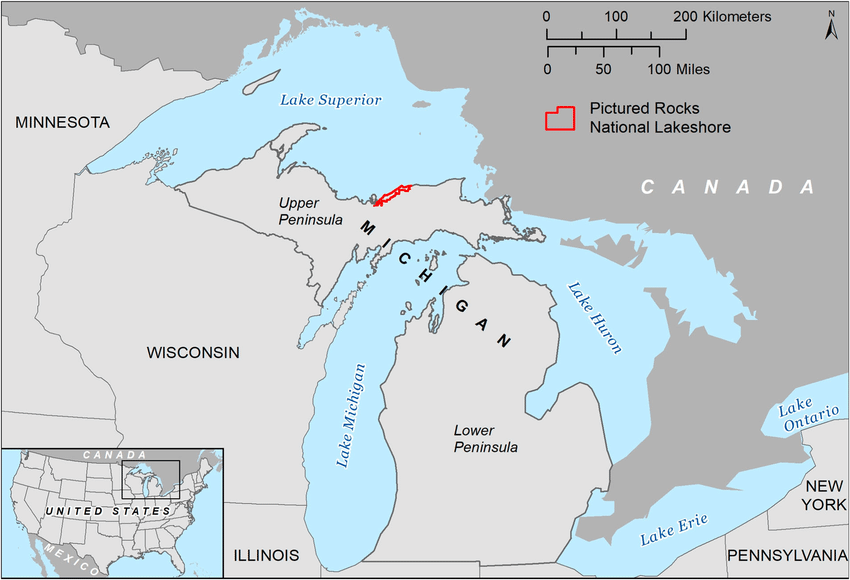


After a tragic boating accident on Lake Superior resulted in the drowning deaths of Lyle and several other family members, Phil’s mother abandoned the cabin. Today, the area where Phil spent his childhood is a national park.
Phil also grew up on a farm where everything was done in the old ways by hand and with horses. The family eventually sold their farm and put the money in a trust. Despite the fact that they lived a life of extreme frugality, the Atkins family moved to Mexico for a spell where they thrived by the generosity of others and spent a lot of time walking the railroad lines.
When he was 19 years old Phil joined the military for a four year stint of active duty with the United States Navy. Enlisting in September of 1956, Phil spent six months in California at the Navy’s communications school in 1957 and was trained as a radio repairman. Back in those days radios were big and heavy and still used vacuum tubes that had to be changed out and very carefully handled. When his training was complete, Phil was assigned to a Destroyer (or “tin can” in sailor parlance) called the USS Kidd.

Phil left active duty in August of 1960 but he remained in the Navy as a reservist. Then Nikita Khrushchev deployed nuclear weapons to Cuba and thus began the notorious Cuban missile crisis in October of 1962. Because the Navy was desperately scrambling every available sailor and ship it could find, Phil was activated and sent to the front line. The U.S. Naval blockade that encircled Cuba with warships included the USS Kidd, providing Phil with a front-row seat to the historic standoff infamous for nearly sparking thermonuclear World War Three.
Following the two week ordeal in the gulf, Navy ships and personnel returned to their ports and Phil served out the remaining four months of his reserve contract. He was awarded the Navy’s Good Conduct Medal and honorably discharged from service in February of 1963.
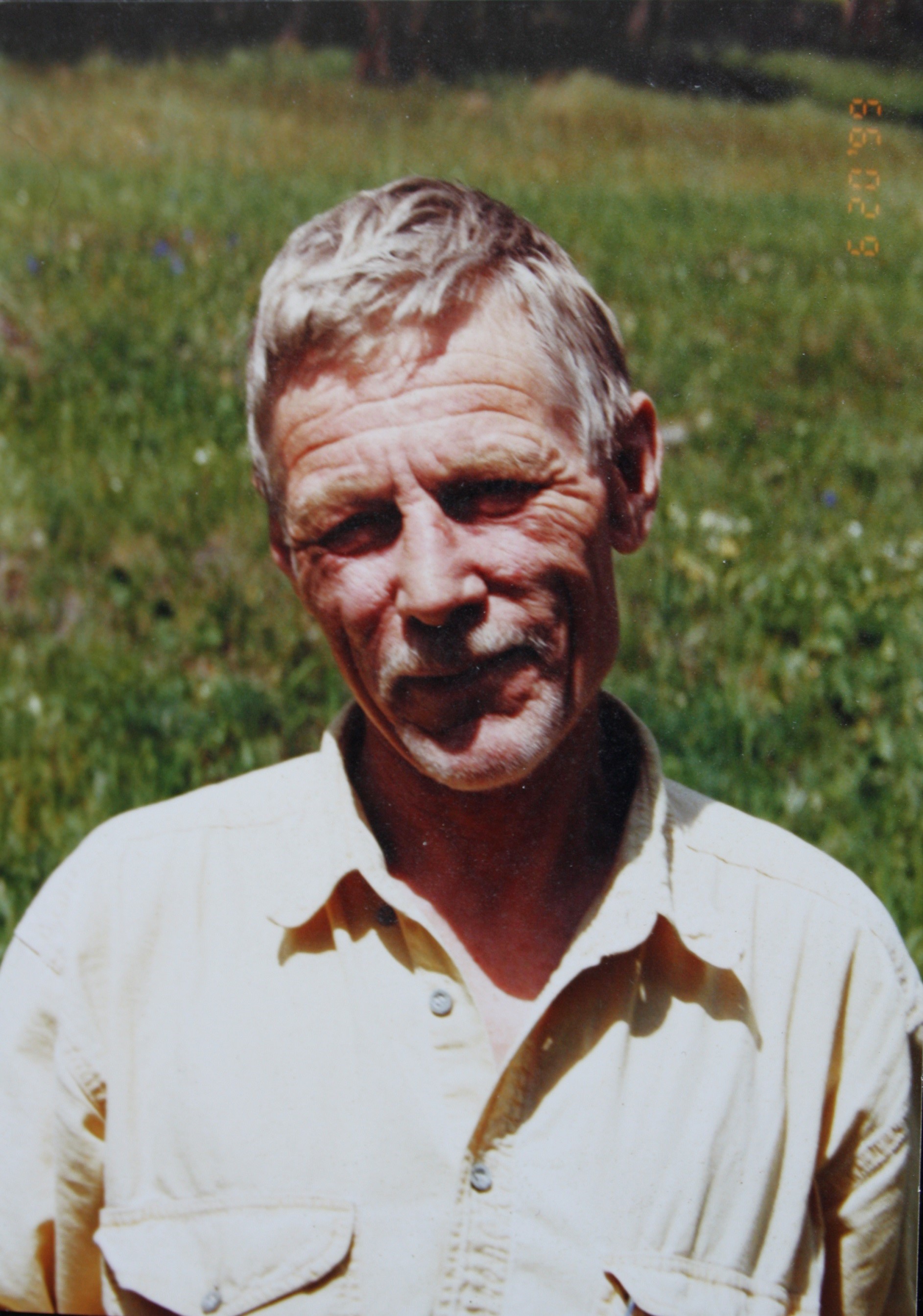
Following his military career, Phil came to Missoula and attended the University of Montana on the G.I. Bill to study writing under the great Leslie Fiedler. It was during this era that Phil fell while rock climbing and sustained injuries serious enough to necessitate a four month stay in the hospital. When Phil learned that tuition was free in California, he left the UM for UC San Francisco.
After he was done with college, Phil lived all over the American West, hitchhiking everywhere he went and relying upon his many connections that kept him well fed and out of trouble. He lived a Jack Kerouac kind of life a la the 1957 best seller, On The Road. When he lived in Bellingham, Washington he spent his days in the shipyards as a dockworker. He also spent a lot of time in New Mexico.
Phil eventually returned to Montana and became a social worker assigned to Great Falls as well as parts of Wyoming. During this time he was dispatched to “Hill 57” outside of Great Falls, named after a billboard advertising Heinz 57 Sauce. Near this billboard sat a shantytown sporting an array of old abandoned campers, buses and trucks, many of which were occupied by individuals and families who were actively living in them. These were the so-called “Landless Indians” forgotten by treaties and never granted formal reservations, and it was Phil’s job to try to improve their lives.
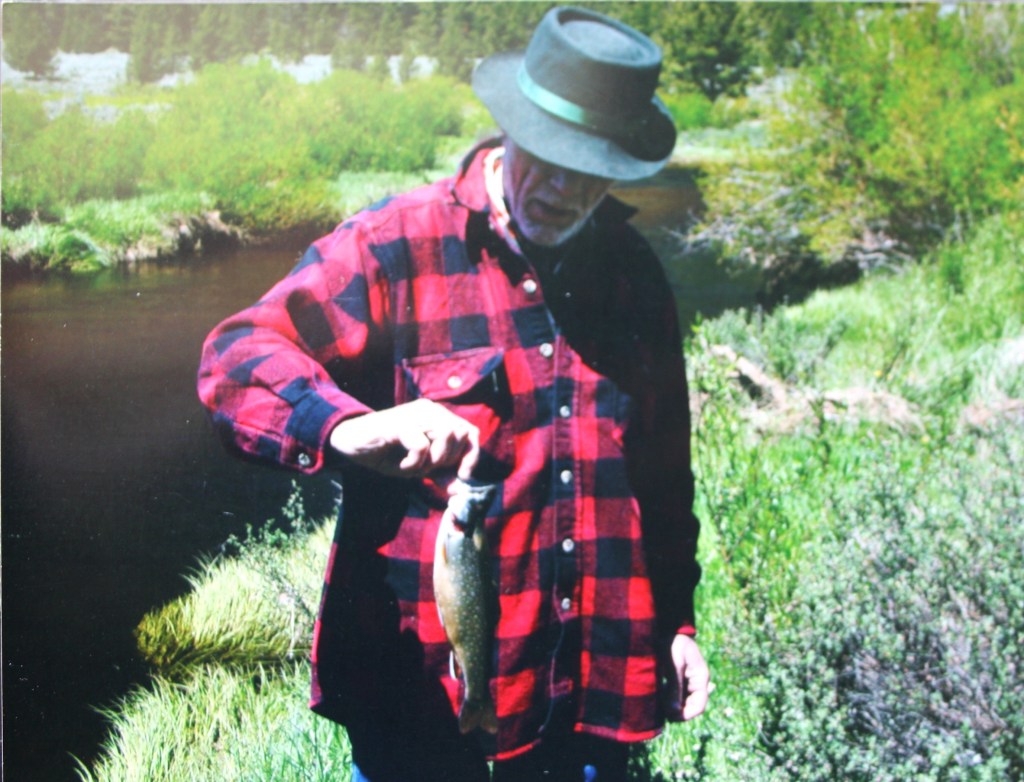
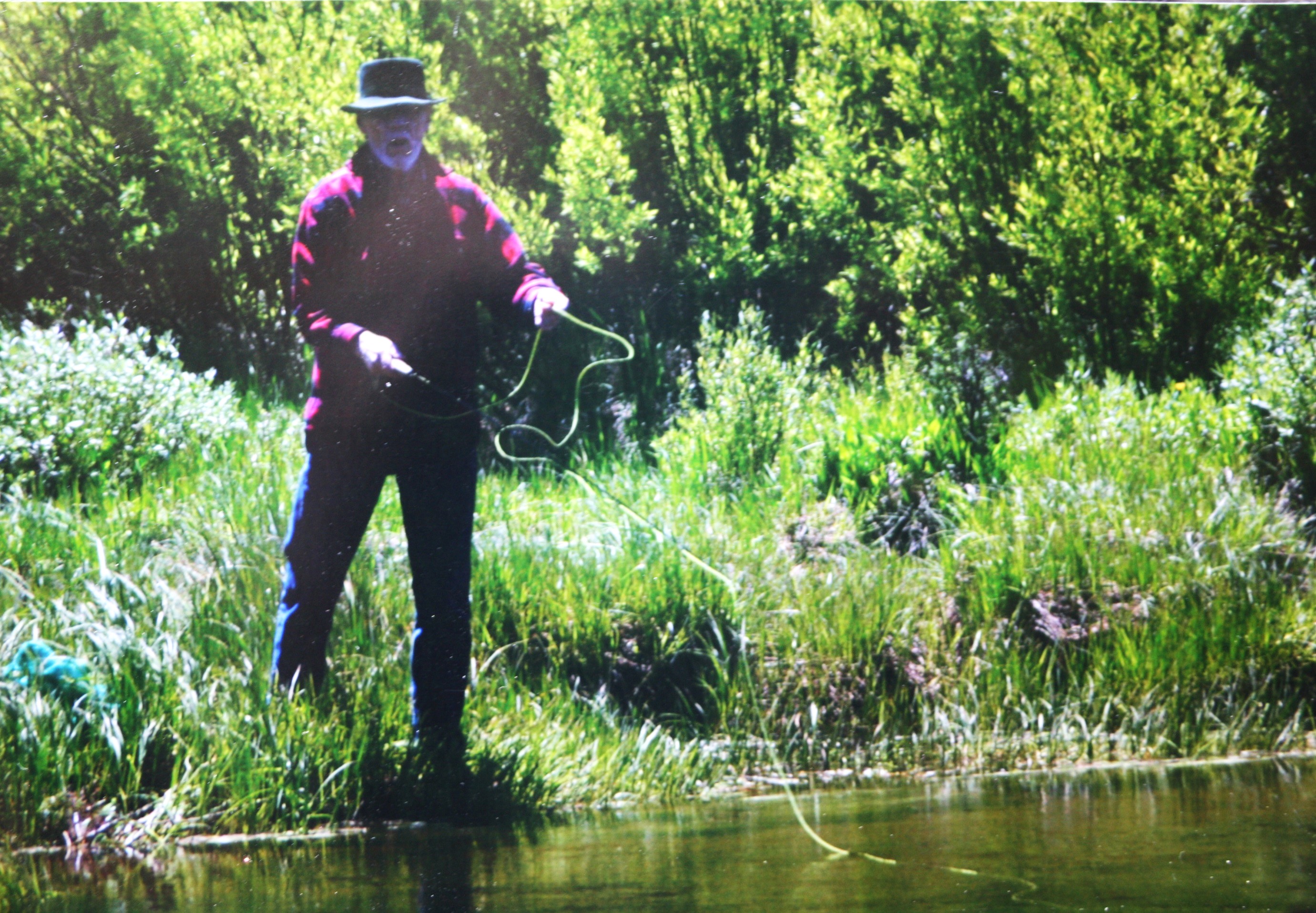
Throughout most of his life Phil spent a great deal of his time fishing and talking about fishing. Some of his fondest memories surround his time living near Vermilion Creek in Montana’s Thompson River Valley. Having spent much of his life hitchhiking from one fishing destination to another, Phil seemed to have lived in just about every corner of Montana. If you pointed to a random spot on a map the chances were good that Phil could tell a story about it and demonstrate specific knowledge of the area.
Known for being quite rowdy in his younger days, Phil was a frequent patron of the saloons for many years when he wasn’t spending time in the woods. Back when Charlie’s Bar was still called Eddie’s Club in downtown Missoula many regulars referred to him as “Forestry Phil”. Though he gave up alcohol some years ago, Phil never lost his taste for beer and would often crack open a non-alcoholic Clausthaler, sipping it through his ever-present grin.
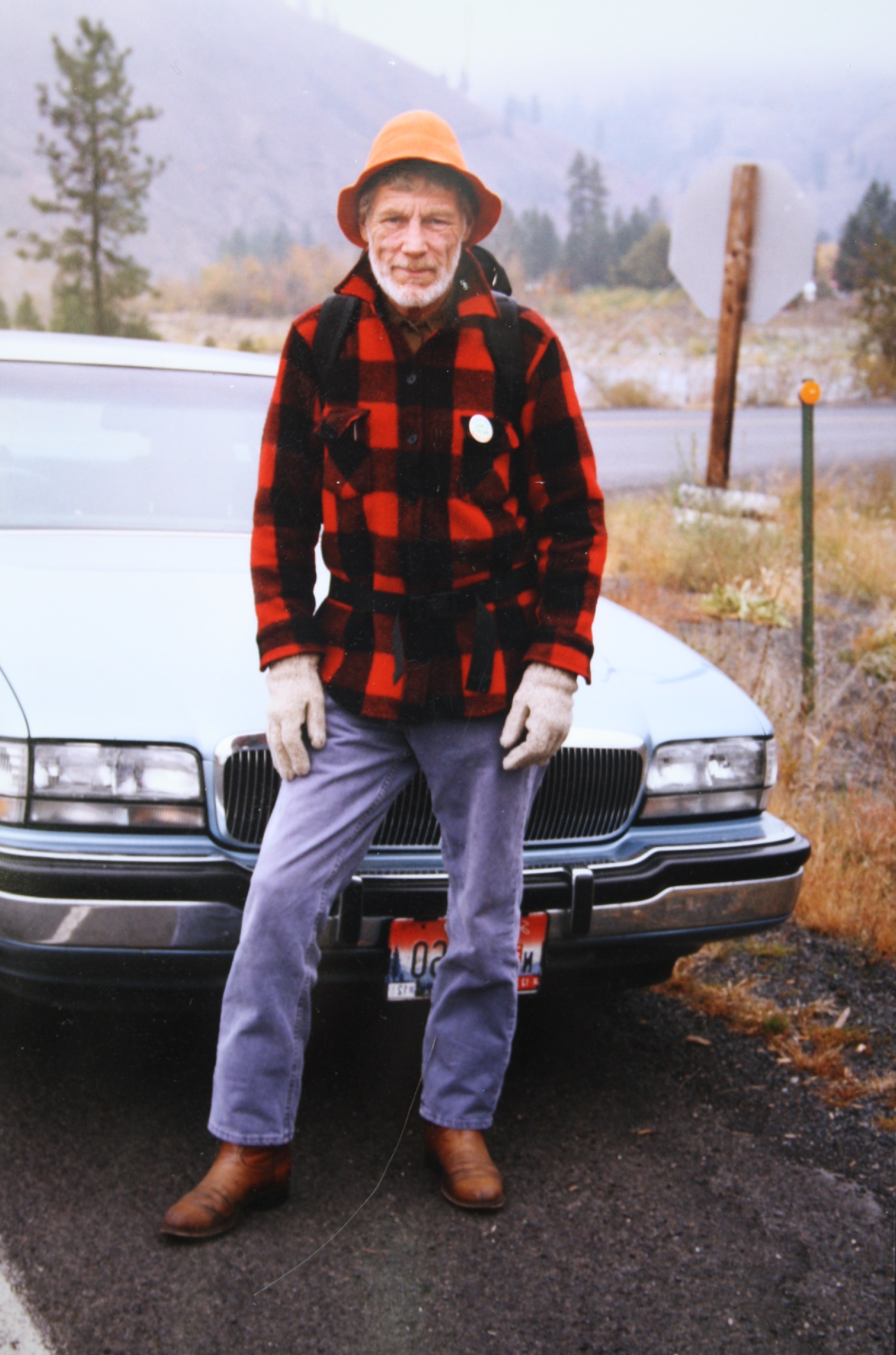
When he later returned to Missoula, Phil ended up living with Michael Fiedler, son of the literary legend Leslie Fiedler. Phil was a widely read man who could exhibit familiarity with any book you could think to mention. In his later years he could fill hours referencing the great literature he had spent decades reading and absorbing. He was particularly fond of Edward Abbey (author of Desert Solitaire) and Cormac McCarthy (No Country for Old Men, Blood Meridian).
Phil also lived for many years on the “richest hill on earth” in Butte, Montana, and it was through a foundation there that he got his books published. Phil’s poetry could paint a musical mosaic and light a fire within the imagination. Take this poem from his 2003 book, Free in the Sapphire Mountains:
July at Fawn Springs
Wandering up on Strawberry Mountain
Where the tiniest wild flowers in
The world flourish white and red and blue,
We’re idling where the breezes whisper
Among big pines in
The grassy glades of loafer’s heaven
Where the springs are tinkling down
in Streams of purest silver and
Wild strawberry gardens
Hide among the grasses with
The fruit of paradise.

But Phil didn’t only yarn on about the ineffable beauty of the natural world. He was also intensely critical of war profiteering and government corruption. One of Phil’s most powerful poems appears near the end of his 2013 book, Lost Water Canyon:
Double-talk Snake-walk
While pretending to care
About the common people
And blowing hot air,
It takes but a slight breeze in the night
To float Obama like a feather
Far to the right
On the wrong side of the class war fight.
Change or chump change,
He’s burned his campaign platform
Down to the ground,
And if the bold lies he told
Were nuggets of gold,
The president of sneak and peek
Would be rich as Midas.
But back then he looked tall
As he talked big in the hall
And now he’s on the hill
Throwing nothing but spitballs,
Screwballs and sliders.
Secretive, sinister, servile and sly,
He rode to the White House
On the back of a lie
And stabbed us in the back in the wink of an eye,
While suffering in common with the super rich
And a congress of corruptionists from
A severe case of spiritual malnutrition
On and on they’re bound to toil
For Wall Street and Israel,
The pentagon and big oil.

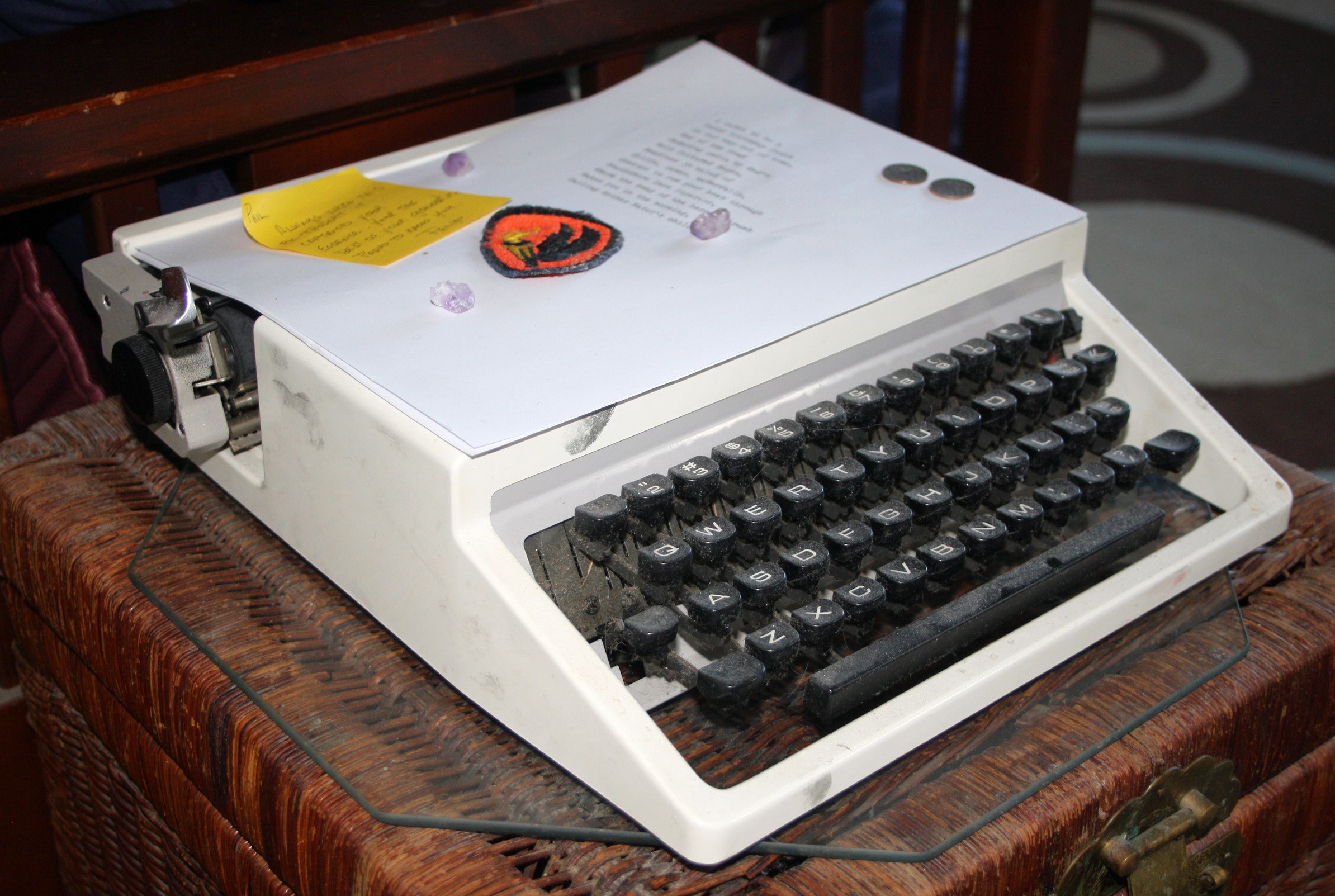
Phil refused to use computers of any kind, and drafted his poems by hand in small notebooks before hammering them out with an old typewriter. He left behind several unpublished poems, and of the dozens of pages he left behind, the following works stand out.
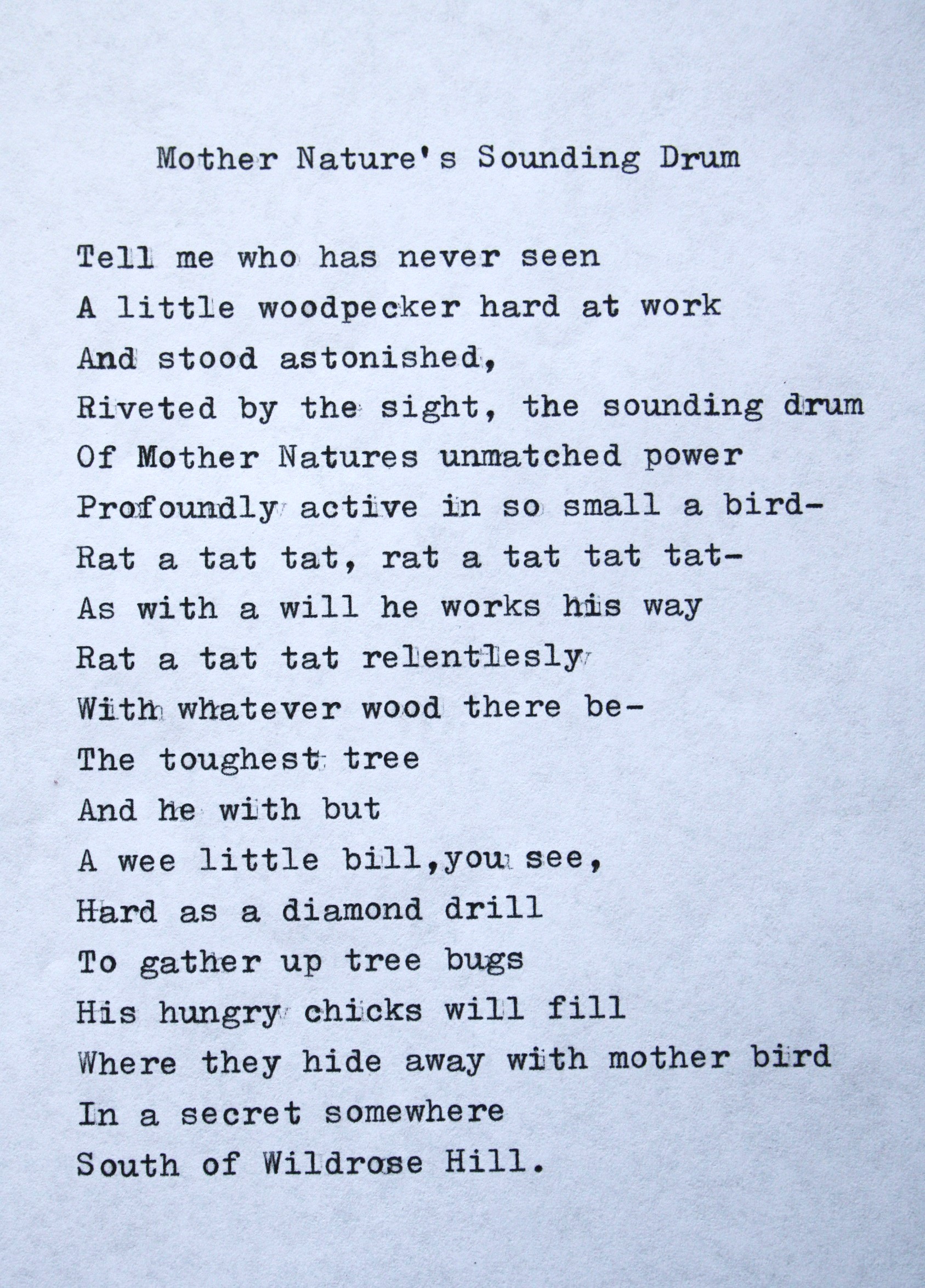
Mother Nature’s Sounding Drum
Tell me who has never seen
A little woodpecker hard at work
And stood astonished,
Riveted by the sight, the sounding drum
Of Mother Nature’s unmatched power
Profoundly active in so small a bird-
Rat a tat tat, rat a tat tat tat-
As with a will he works his way
Rat a tat tat relentlessly
With whatever wood there be-
The toughest tree
And he with but
A wee little bill, you see,
Hard as a diamond drill
To gather up tree bugs
His hungry chicks will fill
Where they hide away with mother bird
In a secret somewhere
South of Wildrose Hill.
Many of the best poems are without titles and Phil seems to emerge right off the page:
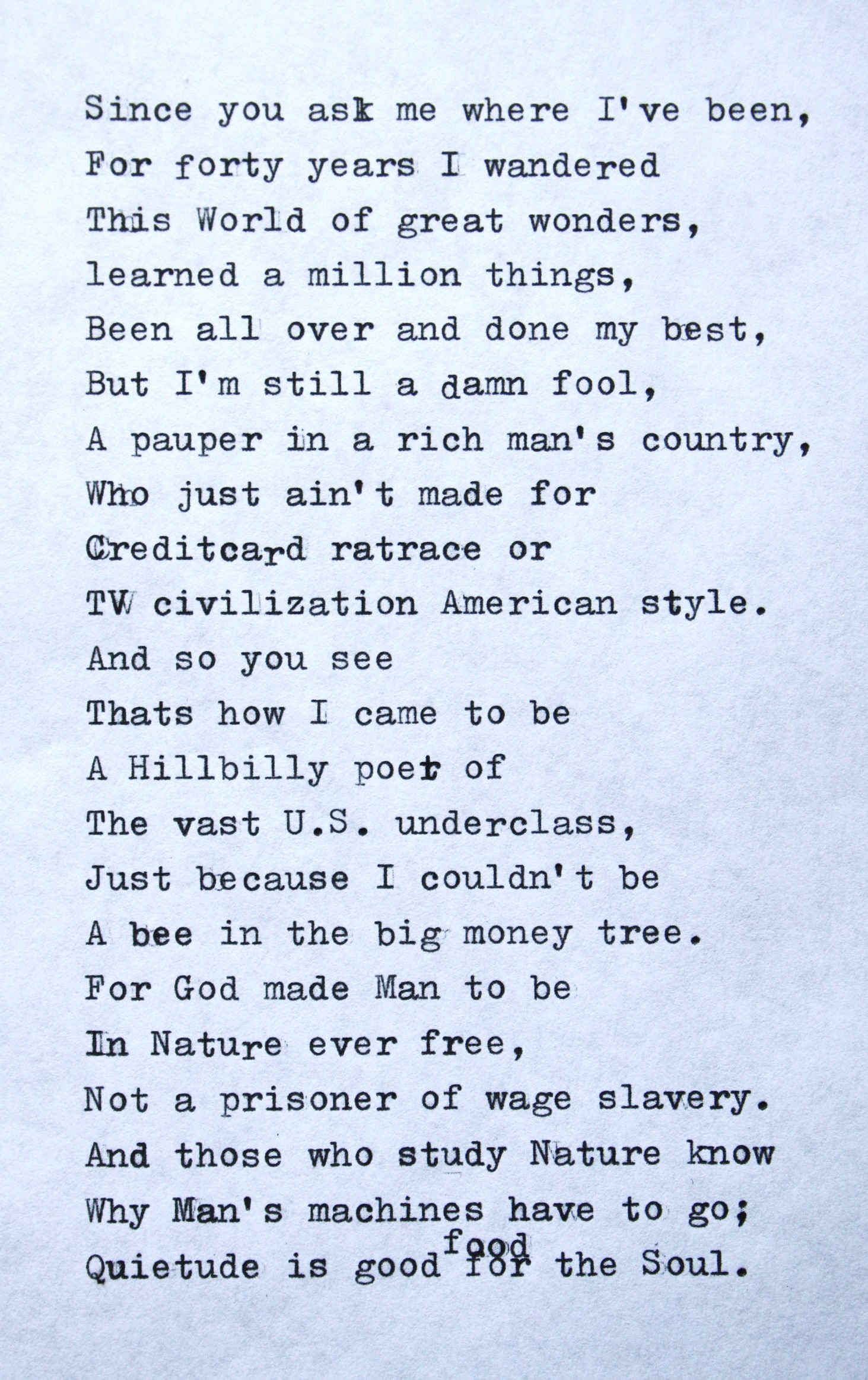
Since you ask me where I’ve been,
For forty years I wandered
This World of great wonders,
learned a million things,
Been all over and done my best,
But I’m still a damn fool,
A pauper in a rich man’s country,
Who just ain’t made for
Creditcard ratrace or
TV civilization American style.
And so you see
That’s how I came to be
A Hillbilly poet of
The vast U.S. underclass,
Just because I couldn’t be
A bee in the big money tree.
For God made Man to be
In Nature ever free,
Not a prisoner of wage slavery.
And those who study Nature know
Why Man’s machines have to go;
Quietude is good food for the Soul.
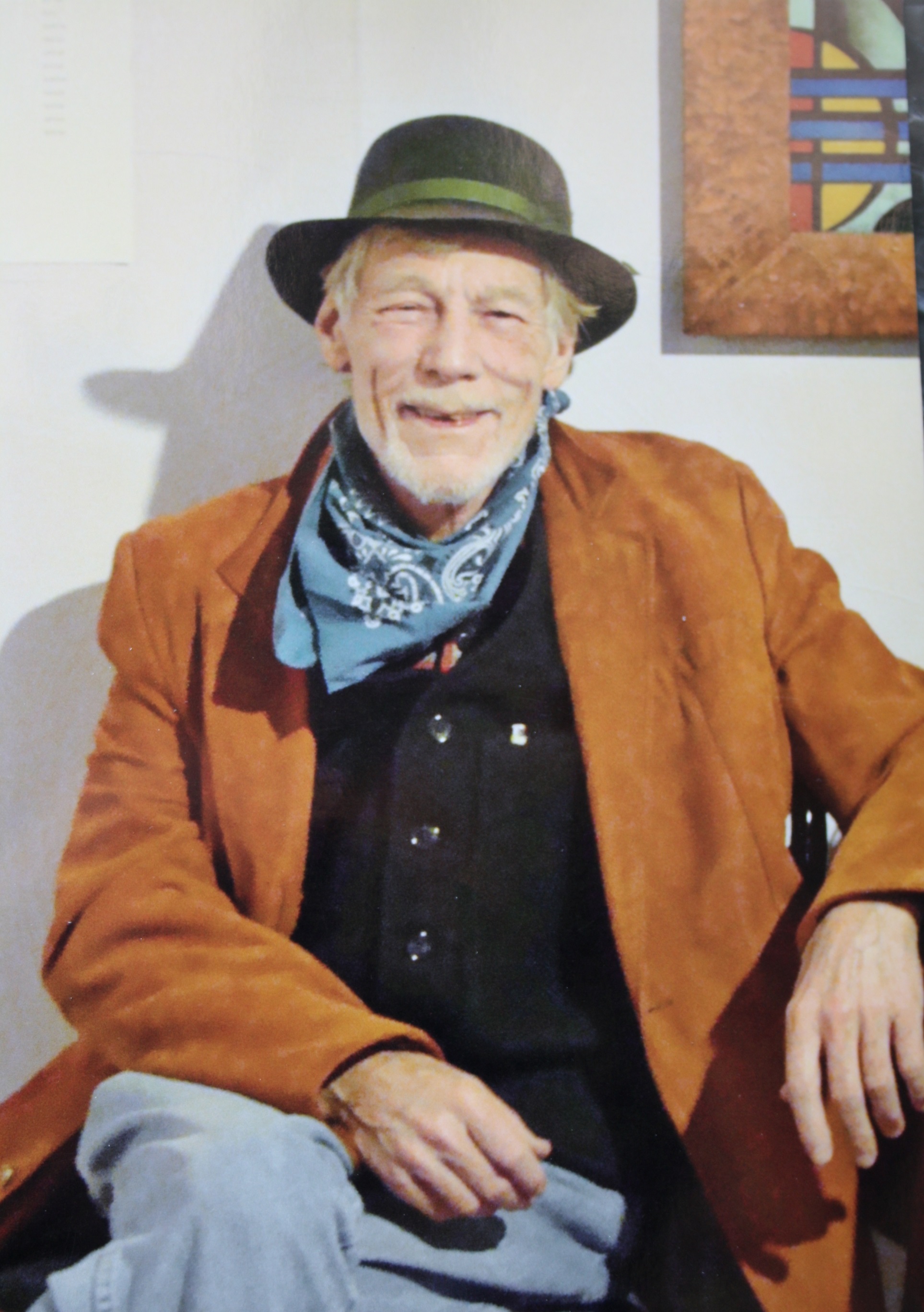
This other untitled work speaks as a kind of self portrait:
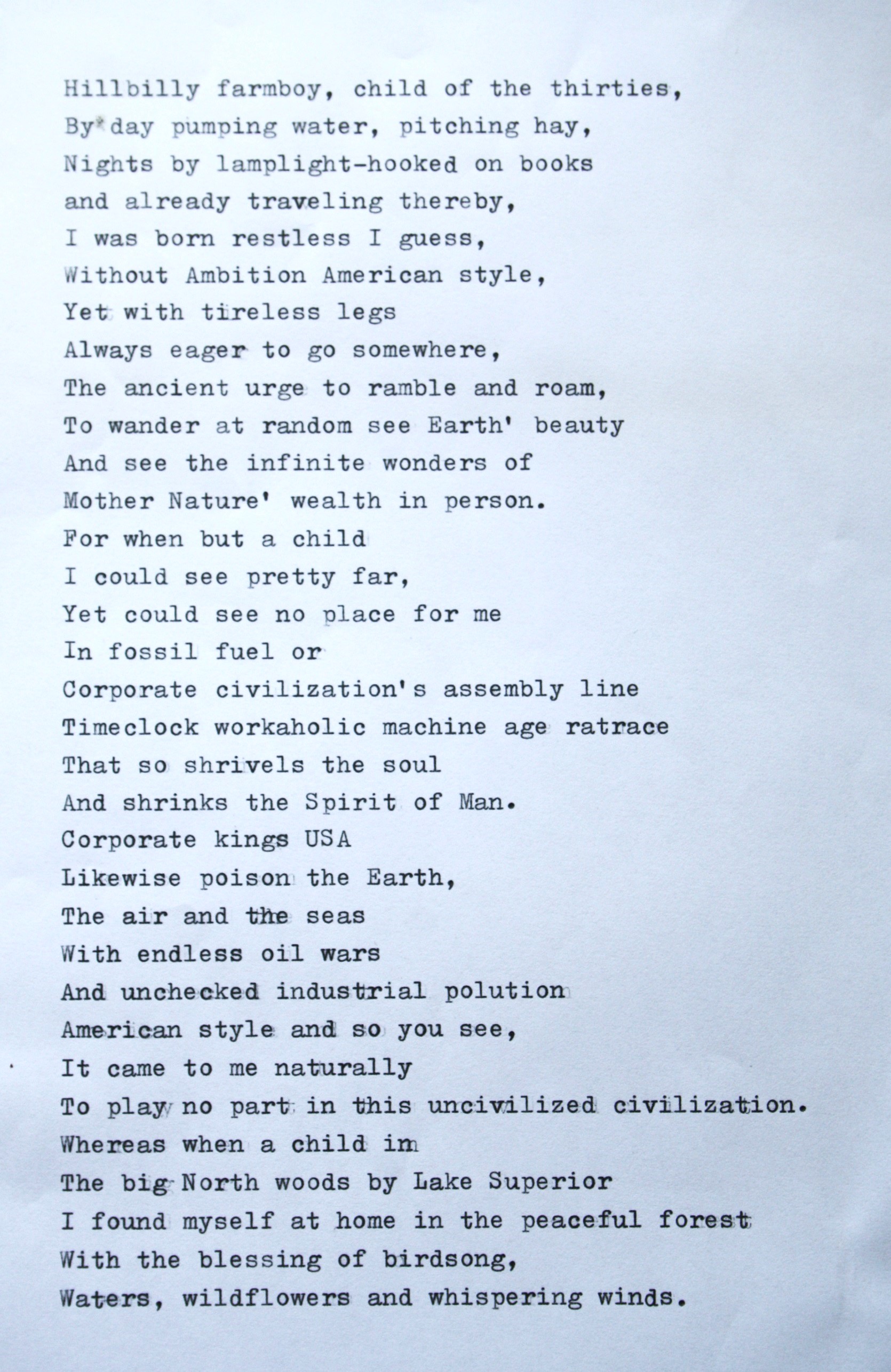
Hillbilly farmboy, child of the thirties,
By day pumping water, pitching hay,
Nights by lamplight-hooked on books
and already traveling thereby,
I was born restless I guess,
Without Ambition American style,
Yet with tireless legs
Always eager to go somewhere,
The ancient urge to ramble and roam,
To wander at random see Earth’s beauty
And see the infinite wonders of
Mother Nature’s wealth in person.
For when but a child
I could see pretty far,
Yet could see no place for me
In fossil fuel or
Corporate civilization’s assembly line
Timeclock workaholic machine age ratrace
That so shrivels the soul
And shrinks the Spirit of Man.
Corporate kings USA
Likewise poison the Earth,
The air and the seas
With endless oil wars
And unchecked industrial pollution
American style and so you see,
It came to me naturally
To play no part in this uncivilized civilization.
Whereas when a child in
The big North woods by Lake Superior
I found myself at home in the peaceful forest
With the blessing of birdsong,
Waters, wildflowers and whispering winds.
Finally there’s this lovely little gem:
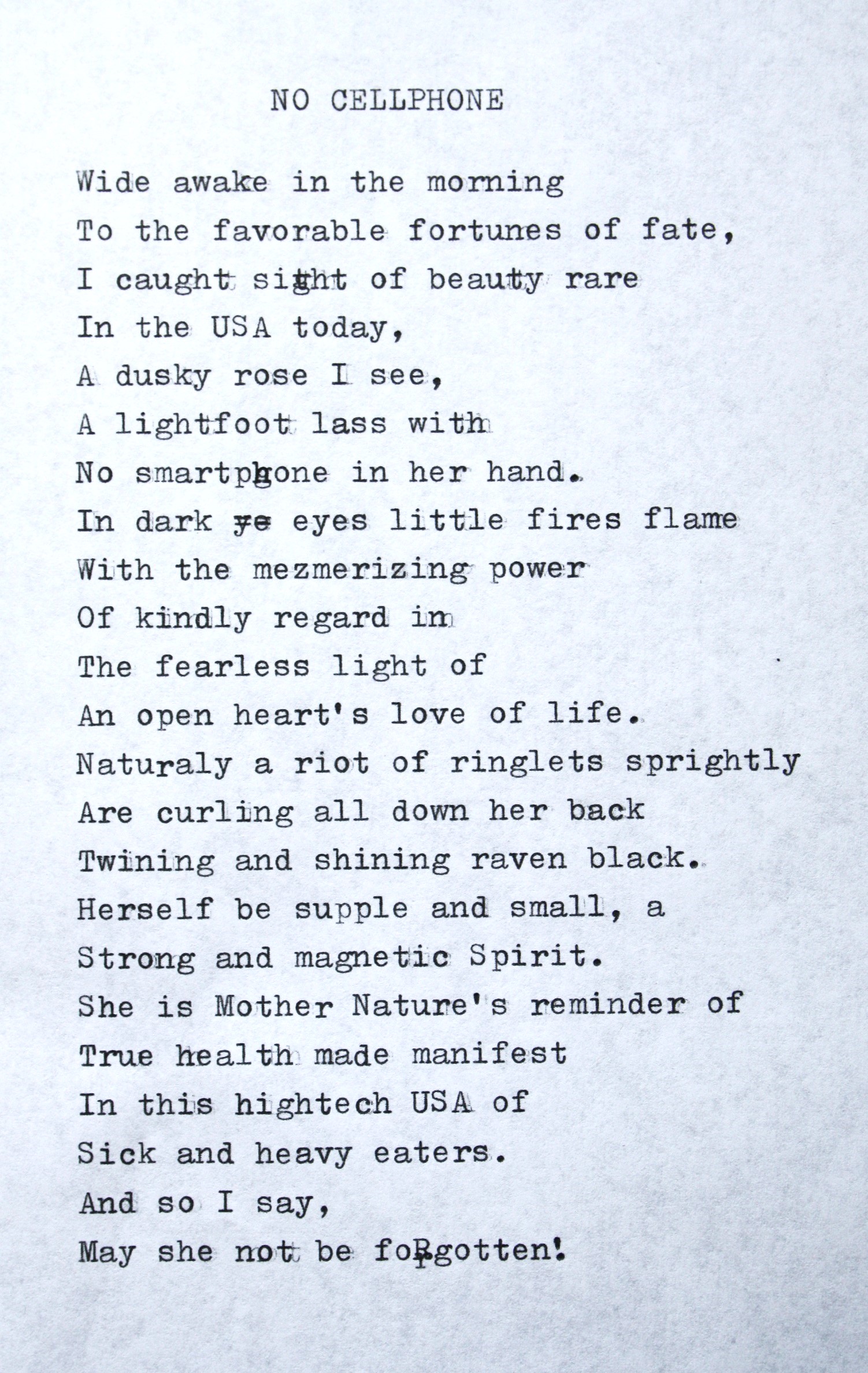
NO CELLPHONE
Wide awake in the morning
To the favorable fortunes of fate,
I caught sight of beauty rare
In the USA today,
A dusky rose I see,
A lightfoot lass with
No smartphone in her hand.
In dark eyes little fires flame
With the mesmerizing power
Of kindly regard in
The fearless light of
An open heart’s love of life.
Naturally a riot of ringlets sprightly
Are curling all down her back
Twining and shining raven black.
Herself be supple and small, a
Strong and magnetic Spirit.
She is Mother Nature’s reminder of
True health made manifest
In this hightech USA of
Sick and heavy eaters.
And so I say,
May she not be forgotten!
Phil is survived by children whom he did not know and was never able to reconnect with. What remains are his books, which are all cataloged in the Library of Congress.

An avid bird watcher who often carried books on bird identification, Phil was known for taking long walks through Missoula on a daily basis. Even after breaking both femurs in his late 70’s, Phil continued his nature walks well into his 80’s. In his later years, Phil’s favorite activity was philosophizing and reminiscing with old friends over a cup of coffee at Butterfly Herbs in downtown Missoula. Imparting his life experiences and disdain for irrational government authority often and proudly, Phil Atkins was fiercely independent in every way.

 Outer Limits Radio Show