The Trans-Pacific Partnership Threatens Internet Freedom
The newest step in the elite’s quest for complete globalization is called the Trans-Pacific Partnership (TPP). It is the newest of the “Free Trade” agreements from the same multinational corporations who gave us the General Agreement on Tariffs and Trades, (GATT), the North American Free Trade Agreement (NAFTA) and the World Trade Organization (WTO). This new TPP deal has been called NAFTA on steroids, and just another example of how these trade deals are never just trade deals. Of the 29 chapters in the TPP, only 5 of them have anything to do with trade, with the other 24 being hailed as a Corporate Wish-List. The rest set a dangerous precedent with an international tribunal to put an end to internet sovereignty.
The TPP isn’t just NAFTA on steroids, it’s also CISPA on steroids. TPP will limit internet freedom by forcing Internet providers to act as copyright enforcers and cut off people’s Internet access. In fact, entire paragraphs from ACTA have been copied and pasted, word-for-word into the TPP completely verbatim from defeated cybersecurity bills. Whenever activists and communities cooperate and achieve victory together, lobbyists try again and eventually find a new way to undermine those efforts, thus sabotaging the will of the people. The defeat of SOPA (Stop Online Piracy Act), PIPA (Protect IP Act), CISPA (Cyber Intelligence Sharing and Protection Act), and ACTA (Anti Counterfeiting Trade Agreement) has accumulated in the realization that internet control will never pass if it is labeled as internet control. Although CISPA was temporarily defeated, these victories are all empty because nothing was put into place to prevent lobbying groups from trying to do it again, and the will of the people goes ignored.
Ben Still reports that in realm of internet freedom, TPP incorporates the most draconian provisions of previous legislation defeated by congress last year that would grant copyright protections to corporate created internet content for 120 years. Internet Service Providers will be enlisted into a private snooping force empowered to monitor user activity and arbitrarily remove content or even prevent access to the internet altogether. TPP will limit internet freedom by forcing Internet providers to act as copyright enforcers and cut off people’s Internet access. It gives multinational corporations everything they’ve ever wanted to make it easier to control how people use copyrighted materials. Copyright law effects everyone on the planet under this deal, since the definition of “copyright” is widely expanded under this trade deal, demonizing truly innocent acts like ripping CDs onto MP3 devices. If the new TPP Tribunal find you guilty, they charge you in court with criminal damages. This amounts to sending people to prison for committing copyright infringements to including things that don’t even cost money, and would enforce mandatory permits to download anything and everything on the internet.
Which brings us to the international court system that goes along with this. The TPP Tribunal consists of three judges (all appointed by private corporations), who would oversee Corporations suing governments and individuals for threatening profits. These Tribunals exist outside the normal courts and circumvent all national legal systems. In fact Eli Lily is suing Canada for 500 million dollars because Canadian government rejected drug patents hence preventing the sale of said pharmaceuticals. These kinds of cases are referred to as Investor State Dispute Settlements, meaning that a corporation can sue an entire nation for what it alleges is a loss of its future profits. If the Tribunal rules in favor of the Corporation, the Companies gain millions of dollars and the public ends up footing the bill since government requires people to fund it. TPP would create a completely new set of rules regulating the economies of 12 different countries on four different continents, despite the fact that few of the people living on these continents have ever heard of any of this.
On the other side of the continent, also negotiated in secret, is the Trans-Atlantic Trade and Investment Partnership (T-TIP), which is TPP for countries bordering the Atlantic Sector. Together these two trade deals compose a double-headed Trojan horse, giving birth to the concept of Corporate Nationhood. All of this was accomplished under a veil of complete secrecy, until Wikileaks released the TPP draft unfamiliar to any legislator. Most members of congress have no access to the text, and the public will never even get to see a draft of the proposed agreement until four-years after its passing, when it will be far too late to do anything about it. Not even the Chair of the Subcommittee of Jurisdiction on International Trade has had any access to the text. Like the Federal Reserve Act, the TPP was not negotiated by world leaders or lawmakers but by corporate lobbyists and bankers. Oregon Congressman Peter DeFazio says that in order to read the bill, he would have to make a special appointment, take no notes, with no staff present, and then not talk about what he had read. Nevertheless, bits and pieces of the bill have trickled into public view. Wikileaks outlined 90 pages of extremely obscure legalese outlining the attempt to impose rules for how people will use the internet for the next 20 years, in addition to also imposing rules for so-called, “Free Trade.”
TPP is a clever subversion to the United States Constitution, since Article 6 states that Treaties are the supreme law of the land. So ironically it would be theoretically constitutional under the TPP for US laws to be made to conform to provisions within the TPP, allowing corporations to sue entire governments if those governments interfere with corporate profits, even though all of this is blatantly unconstitutional. According to Public Citizens Trade Watch, TPP would allow private corporations to sue countries that pass regulations they don’t like, reward companies that send jobs overseas, and gut regulations that keep big banks in check. Dean Baker for Huffington Post contends that TPP is about crafting rules that will favor big business at the expense of the rest of the population in both the United States and other countries.
Once banking oligarchs created the European Union, they set to undermining the national sovereignty of the entire planet by working to create a series of other unions, including the North American Union (NAU) which would have encompassed Canada, the United States and Mexico to form a borderless community with a single currency similar to the Euro: the Amero. NAU was signed into law by President George W. Bush under the Security and Prosperity Partnership (SPP), but was later shut down due to negative publicity. However, the TPP is everything that the NAU was going to be, only far worse and on a much grander scale. They’ve included the proposed North American Union into the larger TPP configuration that includes the three countries of the NAU alongside nine additional countries: Australia, Brunei, Chile Malaysia, New Zealand, Peru, Singapore, Vietnam, and China.
WHY DO WE HAVE TRADE DEALS IN THE FIRST PLACE?
From America’s founding two centuries ago all the way up to the 1980’s, America’s economy was built on a system of Tariffs (taxes on imported goods) that protected American manufacturing businesses. Workers and businesses didn’t have to compete with cheap products or cheap slave labor from abroad. The American economy flourished until President Ronald Regan abandoned the tariff system altogether, thus ushering in the era of so called, “Free Trade.” But these trade deals are never just trade deals. And every president since has followed Regan’s lead, signing the United States into deals that are supposed to grow the economy, but instead lay waste to the industrial base. For example, on 3 December 1993 President Bill Clinton signed NAFTA into law after promising repeatedly that, “NAFTA means jobs, American jobs and good-paying American jobs!”
NAFTA thereafter was directly responsible for sending 700,000 jobs to Mexico, undermining American industry. The Trans-Pacific Partnership likewise is peddled as a trade agreement while actually operating as Global Corporate Governance that is actually enforceable. The agreement requires that every signatory country conform all of its laws, regulations and administrative procedures, to 29 chapters of legalese, 24 of which set a whole new array of corporate privileges and rights, handcuff governments and limit regulations; a tool used by the .01% to shred what is left of our most basic needs and rights. They’re able to circumvent the rule of law by what is called, “Fast Tracking,” granting the authority of the US President to negotiate international agreements that Congress cannot amend or filibuster.
The Evil of the TPP doesn’t end with Internet Censorship or the Tribunals designed to regulate it. TPP expands the copyright language into the realm of patent law as well, granting corporations the ability to patent animals, which is the reason some have referred to TPP as the Monsanto Protection Act on Steroids. Even surgical methods fall into this which would forbid some doctors from performing life saving operations that are the patented intellectual property of the surgeon or doctor who invented them. TPP abolishes environmental regulation, strips away health and safety regulations, and grants the corporate New World Order, Total Power to Profit. Ever since NAFTA destroyed America’s manufacturing base, trade agreements haven’t been exactly popular because they’re so catastrophic for the people, so TPP has been kept a closely guarded secret amongst 600 corporate lobbyists and the oligarchs they serve. All the major players from the military industrial complex one might expect, including defense contractors like Haliburton and fuel corporations like Exxon, are involved in this slow-motion coup d’etat. Everything is negotiated and handled behind closed doors, written in confusing legalese, and all without so much as the possibility of oversight or transparency.
The vast majority of the rules in these trade agreements serve as delivery systems to undermine victories won by citizens movements, activism and advocacy groups in congress. Lobbyists never give up because their funding is unlimited. Lobbyists make a career out of being lobbyists, because the corporations need mouthpieces to reconcile with the media to sell the public things it doesn’t need. They will never stop, and neither can we. The TPP is for now, the trade agreement to end all trade agreements and it is being negotiated and handled without our consent. The defense of our liberty requires Constant Vigilance because the people who are trying to make this world worse are not taking a day off. So how can we?
Gabrielle Lafayette is a journalist, writer, and executive producer for the Outer Limits Radio Show.
What went so horribly wrong with regards to the global financial crisis? Was it the deregulation of financial institutions? Perhaps the abolition of Glass-Steagall? Maybe Gramm-Leach-Bliley is to blame? “Derivatives” certainly enter this discourse eventually, but just what are derivatives exactly?
Of all the questions surrounding this issue, perhaps the most perplexing of them all is this one: Why has no one been indicted or imprisoned for wrecking Earth’s entire global economy?
Many within the circles of the financial elite who gained from the destruction have the audacity to claim that nobody saw this crisis coming, despite the fact that in 2004 the FBI warned of an “epidemic of mortgage fraud” – on the lending side, not the borrowing side.
Meet the man who jailed a thousand bankers following the Savings and Loan (S&L) crisis of the 80’s and 90’s – William K. Black. As he and others will assure you, this situation is absurdly simple: The largest bank robbery in recorded human history has taken place, but no one has been arrested.
Unlike S&L, the men responsible have not only hijacked everything money can buy (including government); they’ve managed to get away with it scot-free. Until they are arrested, indicted and imprisoned, we cannot reasonably expect anything to change.
WHERE IS THE TOP OF THE PYRAMID?
The financial Pyramid is composed of a cluster of organizations we can call the Cornerstones of Corruption. Ever wonder what the Council on Foreign Relations is? This organization has dominated every presidential administration since the days of FDR, and today entails some 4,000 members. If presidents have not themselves been members of the CFR they were surrounded by people who were – as is the case with the Obama White House. CFR are given directives from the Trilateral Commission, which functions as the governing Roundtable Group for the United States sector, and today boasts some 300 members. Trilateral are given their directives from an even more powerful group, which meets annually. As major corporations merge into conglomerates, those who wield high influence are invited to attend a Bilderberg conference eventually. Successful, independent billionaires are usually coerced into toeing the Bilderberg line eventually, further consolidating power.
Corporations need access to cheap money (at low interest rates), which is supplied by the next link in the chain of command: the International Monetary Fund, the World Bank, and the Bank for International Settlements. These Rothschild founded institutions continue to consolidate power, buying up banking chains for pennies on the dollar; buying up land for pennies on the acre; buying up corporations for pennies on the share. The next step in the globalist agenda is the successful solidification of the Trans Pacific Partnership (TPP); which is a more aggressive form of the Security and Prosperity Partnership (SPP) under Bush which was supposed to form a borderless community between Canada, the United States and Mexico, and was supposed to wipe the dollar out and replace it with the Amero (the North American Union version of the Euro); SPP was really just a more aggressive form of the World Trade Organization (WTO) which was resisted so vigorously by the people, the meetings in Seattle resulted in warzone-like chaos now known as the Battle For Seattle; NAFTA (the North American Free Trade Agreement) is tied up in here too, but I think you’re beginning to see the pattern here – more and more aggressive bills and agendas are slowly introduced over time as part of incrimentalism. The theory deals with a live frog in a pot of water on your stove. If the temperature is turned up too quickly, the frog will become uncomfortable and jump out. On the other hand, if the temperature is adjusted incrimentally, that is, very slowly over a long period of time, the frog will eventually boil to death and be completely unaware of what is happening.
As a globalized world gobbles diminishing resources, the same families continue to benefit from the the wreckage they caused: Rockefeller, Morgan, and the Grand Emperor of all Earthly Bankers: Red-Shield Rothschild.
WHO DUN IT?
So who specifically are ultimately responsible? As it turns out some of the most blatantly guilty parties involve (but are not limited to):
Alan Greenspan Ben Bernanke Larry Summers Henry Paulson Paul Volcker Robert Rubin Timothy Geithner Lloyd Blankfein Jamie Dimon Lewis Sachs John Thain
William C Dudley Gary Gensler Mary Schapiro John Mack Mark Patterson Rahm Emanuel Martin Feldstein
This is by no measure a complete list – just one of the cornerstones of corruption. Al Capone has nothing on these financial terrorists, all of whom currently serve in positions of power and influence, from the White House to the CFTC, to ivy-league universities. The financial brand of organized crime has proven to be the most insidious of all, stealing wealth, commandeering governments, seizing markets, and taking the world hostage.
WHAT CAN WE DO?
There appear to be hidden tools for which to meaningfully oppose the fascism being handed down as salvation at the moment, and if you’re reading this then you’re already utilizing the most important tool humanity has: the internet.
But with banking specifically in mind there are several other potential tools at the people’s disposal. Bitcoin is quickly becoming a powerful tool with which to stand up to the corrupt central banking global monolith. It is increasingly validated by more and more reputable businesses aligning with Bitcoin to exchange goods and services for the new currency. As a matter of fact, in the wake of Cyprus’ economic and banking collapse, Bitcoin ATM’s have appeared! And it doesn’t work the way the old systems of money have functioned, and bankers who have become indolent to the old models are soon in for a big wake up call. Their wealth will likely be transferred out of their accounts by brazen hackers eventually, and they won’t even realize what happened. What is more, regulatory bodies cannot seize Bitcoin – a perfect example of this is the FBI’s attempted seizure of the Pirate Bay’s assets, which were in the millions. But since it was Bitcoin the authorities had to admit that they lacked the mental faculties to seize any of it.
We can also push for public banking – as is the model in North Dakota (publicbanking.org), which happens to be the only state in the US with such a model. Public banking is actually honest, benefits the people, and in the case of North Dakota, flourished during the 2009 banking panics as opposed to how every other bank in the country ended up – in the hands of one of the big three banking families.
In the end we would do well to rid ourselves of money and the lust that we humans have attached to it. In the meantime, our situation may have to become exponentially worse than it is now for enough people to understand how truly obsolete and imaginary the monetary system is. Until then, individual survival in this new world now depends on individual prowess and education in as many fields as possible. We’ll need to master everything from automechanics to computer languages in a world with fewer jobs and higher profit motives. And it is only a matter of time before the obsolete “working poor” as they’re called by the established oligarchy, are shuffled into camps on a wider scale that merely what is happening in Columbia, South Carolina right now, where homelessness has been declared an offense. Homeless populations in that area have been taken to a “shelter” that resembles more of a prison labor camp than a shelter. The largest red flag is the fact that “residents” are not allowed to leave.
Money is just a means to an end. The end is control. Power is the only addiction that lies beyond Money. But this isn’t the first time history has seen a version of this kind of story play itself out. Consult the David Mitchell book AND Wachowski/Hanks film adaptation of “Cloud Atlas” for a deeper meditation on the rise and fall of empire and the cyclic nature of time. This too shall pass.
Gabrielle Lafayette is a journalist, writer, and executive producer for the Outer Limits Radio Show.
The year is 2013, and despite the fact that the modern state of technology poses a world potential to revolutionize social cohesion and enable human freedom never before seen, our ability to thrive is stifled by the fact that everything in today’s world requires money.
Your rent is paid in dollars. Groceries cannot leave the supermarket until IOUs are traded. Access to water and electricity are granted only to those who can pay. Emergency medical procedures require conscious patients to sign on the dotted line. Even an education costs a pretty penny at a for-profit university. And the last thing for-profit medical institutions want is the curing of diseases. In a for-profit system, everything depends on the dollar, so everyone chases after the dollar. Be it the transportation of goods, the administration of services or the implementation of policy – a gallon of gas, an hour with a lawyer, a pound of potatoes – everything in our system requires money, and perishes without it. It is the lifeblood of the market, and the market has become our lifeboat.
Alan Watts observed that, “People go to the supermarket, and they get a whole cartload of goodies and they drive it through, then the clerk fixes up the counter and this long tape comes out, and he’ll say ‘$30, please,’ and everybody feels depressed, because they give away $30 worth of paper, but they’ve got a cartload of goodies. They don’t think about that, they think they’ve just lost $30. But you’ve got the real wealth in the cart, all you’ve parted with is the paper. Because the paper in our system becomes more valuable than the wealth. It represents power, potentiality, whereas the wealth, you think oh well, that’s just necessary; you’ve got to eat. That’s to be really mixed up.”
Literally every aspect of today’s global society hinges upon monetary transfers. As even Corporations and Politicians are perhaps the most vulnerable to such monetary dependency, the proverbial root of all evil remains to be “the Love for money.” Most of the problems with our institutions are rooted in this love. After all, the job of professional politician is the only job where an individual will spend hundreds of times the annual salary the job offers, just to get the job. See the problem?
The irony lies in the fact that all the money floating around has no intrinsic value; every dollar in existence is owed to somebody, since every dollar in existence was loaned out, and it was loaned out at interest. The irony lies in the fact that every dollar in existence is an instrument of debt, not of wealth. Thus the more money there is, the more debt there is and vice versa; if a bank has the power to print dollars and then loan those dollars out with Interest attached to those dollars that must be paid back in addition to the loan, where does the additional money to cover the Interest come from? Put another way, if a central bank prints the very first dollar bill into existence and then loans me that $1 at 6% Interest, how can I pay back $1.06 if there is only $1 in circulation? Well, it doesn’t exist – until they print more money. What’s most frustrating of all is that banks don’t need a printing press to “Expand the Money Supply,” since just about any bank that is plugged into the central banking system can create money on a computer screen by means of making loans. This is the “Fractional Reserve” side of the equation; they’re only required to keep a fraction of deposits on hand for withdraws, and can loan the vast majority of deposits out to generate more Interest payments from more customers; they’re all paying Interest to have access to the same money. So who wins in the end but the bank of course. But one of the unintended consequences of so much new money spontaneously springing up into existence is that the total amount of money in circulation is constantly growing – a phenomena commonly known as inflation. Prices rise and wages stay the same, because the best way to steal your wealth is by cheapening your money.
It wasn’t always this way. American dollars were once upon a time backed by assets, namely the Gold Standard; notes actually used to read, “Redeemable In Gold,” whereas today they read, “Legal Tender.” Our modern Dollar’s value is only contingent on how much of it is in circulation. It wasn’t until 1913 that a Private Bank was instituted to monopolize the printing of America’s money. That institution is the Federal Reserve, which experienced researchers know is about as Federal as Federal Express. The Federal Reserve (also known as the FED) has stockholders who according to the FED’s own website, receive annual dividends of 6%. No Federal agency has stockholders.
Collectively as Americans, we have unwittingly allowed this to go on for a century now, primarily due to the common misunderstanding between Money and Currency as different things. The critical distinction is that Currency holds its value over long periods of time, whereas Money can be printed or created from pretty much anything. Currency is therefore an asset, whereas Money is simply an IOU, sometimes backed by an asset to prevent hyperinflation, which is usually caused by massive printing runs in foolish attempts at staving off the effects of inflation. Assets are truth wealth – your time, your freedom, and your property are assets. Money is the game used to steal your assets, at least in a Fractional Reserve Lending system chartered by a Central Bank. It’s a pyramid scheme designed to siphon the real wealth of the world into the upper echelons we know of sometimes as the financial “elite.”
WHAT THE $฿€£ IS “THE ECONOMY?”
Of all the social institutions we are born into, there is no system as taken for granted and widely misunderstood as the monetary system. Comprehending the subject is critical to understanding why our lives are the way they are today, but economics is all-too-often viewed with confusion and boredom. Why? Perhaps Peter Joseph articulates it best: Endless streams of financial jargon coupled with intimidating mathematics quickly deter most of us from attempts at understanding it, until it’s too late.
Bankruptcy and foreclosure are givens in our modern zombie economy, and it’s only a matter of time before each and every one of us have been effected. Think you’re savings makes you safe? Think your 401K exempts you? Think Quantitative Easing helps our economy? Banks regularly absorb savings accounts because depositors do not understand that they don’t actually own their deposits; banks take on your deposit as a liability and treat it as credit. Likewise, pensions disappear with increased regularity. In time, Inflation and Interest inevitably extract what little wealth we have left. After all, printing trillions of dollars worth of Federal Reserve notes, which are nothing more than glorified IOUs, creates more total notes in circulation, cheapening each existing note already in existence. Inflation is brilliantly exploitative, because the best way to steal your wealth is by cheapening your money.
The Chances are you or someone you know has recently lost a house to foreclosure. The chances are you or someone you know has some credit card debt, or student loan debt. If you are a student, you share a proud $1.3 TRILLION of total American student debt. Students have likewise seen the hijacking of their student loan refund monies by a shady financial firm called Higher One, who have nickel-and-dimed student loan monies that students are already paying interest on by charging students exorbitant fees to access their loaned monies. Five class action law suits were eventually brought up against Higher One, but they are a microcosm of a world saturated with banking fraud. Banks have been regularly exposed for laundering drug money for Mexican Cartels; the subprime mortgage racket which contributed to the housing bubble left more than 6 million Americans homeless; the 2008 financial meltdown that caused unemployment to skyrocket, destroyed American production, and left America’s middle class in shambles, was largely caused by complicated financial products known as derivatives that were simply gambling schemes on a worldwide scale.
Prices go up, wages stay the same. A bubble inflates, the suckers buy in, the FED prints another trillion, and another round of musical chairs concludes, leaving someone foreclosed and without a home while someone else makes a buck.
The bottom line is that banking affects you. Moreover, banking policy influences literally everyone you’ve ever met, and everything you’ve ever seen. We no longer live in societies ruled by Generals or Priests or Demigods. Bankers rule in the 21st century. As a result, everything is for sale, nothing is sacred, and profit is the only life coordinate.
DEBT is the only 4-letter word that leaves truly grotesque scars upon the planet. Just about everyone is shackled by debt. And what do we do when we’re in debt? We submit to employment as debt slaves. We compete with our neighbors for labor, moving into cities, stacking ourselves in concrete-filing cabinets for widows and young professionals. We become wage slaves. Meanwhile, capital bankers collect massive paychecks for contributing nothing and in fact imposing a burden on the system as a parasite. Financial analyst Max Keiser regards this phenomena as “Financial Apartheid.” Someone on a wage is paying Interest for the car they use to get to their miserable job, while a banker collects Interest payments from the same pool of money by means of the banking system; his Jumbo-sized Certificate of Deposit guarantees dividends, without any social contribution whatsoever.
IS AMERICA REALLY A FREE COUNTRY?
90.6 million Americans were reported as excluded from the labor force as of September 2013. Since our population is roughly 300 million, actual unemployment in America is nearly 30% -NOT the single-digit percentages reported by the media. And when people are unemployed, they can’t make their rent or mortgage payments. Banks and builders alike must have anticipated quite a housing sale boom, for they built millions of homes that America has no use for whatsoever. For every homeless person living in America there are 25 empty homes that were either foreclosed or never sold. The problem is no one can afford them. Tent cities have popped up all over America as a result, causing those who remain inside the matrix to possess a growing disdain for panhandlers, drunk hobos, and unconscious transients sleeping on the sidewalks of downtown areas. In the response to a growing homeless population, some states are beginning to treat homelessness as a criminal offense now. Columbia South Carolina for example, has outlawed homelessness shipping truckloads of people into camps they cannot leave.
In today’s shaky economy, homelessness can be just around the corner for all of us. But there are countless other punishments for being poor in our system. Just for starters, the physiological effects of “feeling” poor indeed manifest into all manner of physical ailments, but the collective society at large suffers as well. People are more likely to commit monetary-related crimes like thievery or armed robbery when left to starve in the gutter.
When the entirety of your earnings are exhausted on food and shelter, your labors are no longer viewed as an opportunity for economic advancement, but rather as an act of self preservation in the real world.
That’s Slavery. But why do most American’s fail to see the plantation?
John Steinbeck once observed:”…the poor of America see themselves not as an exploited proletariat, but as temporarily embarrassed millionaires.” Hence, none are more hopelessly enslaved than those who falsely believe they are free, as Goethe once observed.
As “exceptional” Americans, we like to think of ourselves as free. However, Doug Stanhope contends:
“You’re not free in the least. You need a diploma to cut hair in this country! They say if you give a man a fish, he’ll eat for a day, but if you teach a man to fish…then he’s gotta get a fishing license, but he doesn’t have any money. So he’s got to get a job and get into the social security system, and pay taxes. Now you’re gonna audit the poor sucker because he’s not really good with math. So, he’ll pull the I.R.S. van up to your house, and he’ll take all your shit; He’ll take your black velvet Elvis and your Batman toothbrush, and your penis pump, and that all goes up for auction with the burden of proof on you, because you forgot to carry the one. All because you were just worried about eating a fucking fish! And you couldn’t even cook the fish because you needed a permit for an open flame. Then the health department is going to start asking you a lot of questions about where are you going to dump the scales and the guts. Then, ladies and gentlemen, if you get sick of it all at the end of the day? It’s not even legal to kill yourself in this country. You were born free, you got fucked out of half of it, and you wave a flag celebrating it. The only true freedom you find is when you realize and come to terms with the fact that you are completely and un-apologetically fucked, and then you are free to float around the system.”
George Carlin likewise understood how the new Imperial Owner-Class of Bankers have established a worldwide slavery plantation:
“There’s a reason education sucks, and it’s the same reason it will never ever ever be fixed. It’s never going to get any better. Don’t look for it. Be happy with what you’ve got… because the owners of this country don’t want that. I’m talking about the real owners now… the real owners. The big wealthy business interests that control things and make all the important decisions. Forget the politicians. The politicians are put there to give you the idea that you have freedom of choice. You don’t. You have no choice. You have owners. They own you. They own everything. They own all the important land. They own and control the corporations. They’ve long since bought and paid for the Senate, the Congress, the state houses, the city halls. They got the judges in their back pockets and they own all the big media companies, so they control just about all of the news and information you get to hear. They got you by the balls. They spend billions of dollars every year lobbying. Lobbying to get what they want. Well, we know what they want. They want more for themselves and less for everybody else, but I’ll tell you what they don’t want. They don’t want a population of citizens capable of critical thinking. They don’t want well-informed, well-educated people capable of critical thinking. They’re not interested in that. That doesn’t help them. That’s against their interests. That’s right. They don’t want people who are smart enough to sit around a kitchen table and think about how badly they’re getting fucked by a system that threw them overboard 30 fuckin’ years ago. They don’t want that. You know what they want? They want obedient workers. Obedient workers, people who are just smart enough to run the machines and do the paperwork. And just dumb enough to passively accept all these increasingly shittier jobs with the lower pay, the longer hours, the reduced benefits, the end of overtime and vanishing pension that disappears the minute you go to collect it. And now they’re coming for your Social Security money. They want your fuckin’ retirement money. They want it back so they can give it to their criminal friends on Wall Street. And you know something? They’ll get it. They’ll get it all from you sooner or later ’cause they own this fuckin’ place. It’s a big club and you ain’t in it. You and I are not in the big club. …The table is tilted, folks. The game is rigged and nobody seems to notice. …And nobody seems to notice. Nobody seems to care. That’s what the owners count on. The fact that Americans will probably remain willfully ignorant of the big red, white and blue dick that’s being jammed up their assholes every day, because the owners of this country know the truth. It’s called the American Dream, ’cause you have to be asleep to believe it.”
Physical slavery requires people be housed and fed. Economic slavery requires people house and feed themselves, (lest they be illegally homeless). Whether its losing your house or being stifled by crushing perpetual debt, there comes a time when we all should endeavor to comprehend how these institutions and their economic policies relate to every facet of our rainbow colored globe, from geopolitics and social justice to subprime loans and credit default swaps; from consumption analyses and stabilization policies to deficit spending and aggregate demand.
Now, If economic language sounds confusing remember that it was intended to make us feel stupid. It was designed for the perplexed layman to lose interest in it. It was written to be intentionally confusing. Just like the legal language of Legalese, the twisted vernacular of finance was not written for the common citizen. It only appears more complex than it actually is, to keep you from noticing the biggest theft in recorded human history. Wouldn’t it be nice to have English translations for derivatives, Quantitative Easing, and Fractional Reserve Banking? It’s all very simple, if we can simply peel back the language barrier.
WHERE DO OUR TAXES GO?
2013 marks 4 centennial celebrations: the 100 year anniversary of the Federal Reserve Bank, the unconstitutional Income tax, the 16th Amendment (which was never ratified) and the inception of the Internal Revenue Service. As you can see, 1913 wasn’t a very good year. Up until 1913, Americans kept 100% of their earnings and yet America still had schools, colleges, streets, railroads, subways, the Army, Navy and Marine Corps. etc.
Taxes are a touchy subject for most. In theory, we all shoulder a share of burden by parting with a few of our hard-earned dollars, to collectively enjoy government services. Typically, those of us who work hard bite a thumb at the freeloaders around us who want to get away with not paying their fair share.
But where do your Income Taxes actually go? According to the Grace Commission report of the 1980′s: “100% of what is collected is absorbed solely by interest on the federal debt, and by Federal Government contributions to transfer payments. In other words all individual income tax revenues are gone before one nickel is spent on the services taxpayers expect from government.” The income taxes we all file under duress each April do not finance our government they are the interest payments to the central banks. World Bank whistleblower Karen Hudes attests that our taxes are channeled through the Federal Reserve, transferred to the Red Shield Banking Cartel (headed up by the Rothschild family), and then sent to the Vatican.
IRS Whistleblowers Sherry Peel Jackson, Joe Banister and others shine light down another mysterious rabbit hole; where is the law requiring the majority of Americans pay this un-apportioned, unconstitutional tax? It turns out there is no law, and the IRS relies entirely on intimidation to extort protection money from Americans in the form of Income Taxes. We should call them what they are, since they’re not really taxes at all – they’re interest payments. Furthermore, how can an American worker file his or her taxes without violating their 5th Amendment right not to act as a witness against themselves?
IRS spokesmen stand behind the 16th amendment as their prerogative to fleece the populace, however, the Supreme Court ruled Income taxes as unconstitutional in 1894 – when the supreme court says something is unconstitutional, it’s unconstitutional. In 1913 another attempt was made to institute a tax on labor, and the Supreme court asserted that “the 16th Amendment conferred no new powers of taxation.” Furthermore, the number of states required to ratify the16th Amendment was never met – a fact maintained in many modern court cases.
1913 has brought about a century-long headache for our country and indeed for the world. Prior to the inception of the Federal Reserve bank, President Andrew Jackson survived several assassination attempts in his battle to shut down America’s previous Central Bank. Jackson shut down America’s previous central bank in 1835, and when asked on his deathbed what the greatest accomplishment of his life was, he replied with his last mortal words: “I killed the bank.”
The first president since Andrew Jackson to stand up to the money powers of the banking cartels was none other than JFK. Friday, 22 November 2013 marks the 50-year anniversary of the JFK assassination. During the past five decades a large sum of previously unknown information surrounding JFK and his brother Bobby has slowly revealed itself to the public. It is clear that there are few powers the new president and his attorney general brother did not anger. But one piece of evidence consistently catches my attention…
Kennedy also took steps to rid America of parasitic central banking in his aim to let man be what he was born to be: “Free and Independent.” He angered the Federal Reserve by signing executive order 11110 on June 4, 1963, authorizing the Treasury Secretary to continue printing silver certificates while transitioning away from the FED’s monopoly. The act repealed the Silver Purchase Act of 1934 and related laws, repealed a tax on silver transfers, and authorized the Federal Reserve to issue one- and two-dollar bills, in addition to the notes they were already issuing.. He planned to use the capital gains to pay off the national debt and to free the American people from the control of the Banksters. If the U.S Government printed its own money, and did so interest-free like the Constitution advises, the national debt would be zero, and all taxes could be eliminated.
Somethings similar happened with President Abraham Lincoln. During the American Civil War, Lincoln bypassed the high-interest loans offered by the European Banks, and decided to do what the founding fathers advocated, namely, to create an independent debt free currency: the Greenback. Shortly after this document was created, an internal document circulated throughout the banking interests stated:
“… Slavery is but the owning of labor and carries with it the care of the laboerers, while the European plan… is that capital shall control labor by controlling wages. It will not do to allow the Greenback… as we cannot control that.” – Hazard Circular – 7/1862
Many believe it was Lincoln’s willingness to oppose the money powers that led to his assassination. But before he was shot in the Ford Theater, Lincoln was cited with the following quote: “The money power preys upon the nation in time of peace and conspires against it in times of adversity. It is more despotic than monarchy, more insolent than autocracy, more selfish than bureaucracy. I see in the near future a crisis approaching that unnerves me, and causes me to tremble for the safety of our country. Corporations have been enthroned, an era of corruption will follow, and the money power of the country will endeavor to prolong its reign by working upon the prejudices of the people, until the wealth is aggregated in a few hands, and the republic is destroyed.”
To add insult to injury, both Lincoln and Kennedy – presidents who openly opposed private central banks – appear on American money printed by the FED, a private central bank; Kennedy appears on the half-dollar, while Lincoln appears on the penny and the five. Other presidents who appear on Federal Reserve notes who were openly opposed to organizations like the FED include Franklin Jackson and Jefferson, all of whom would likely roll over in their graves to see their faces appear on debt IOUs issued by a private central bank.
SOCIAL SECURITY, THE BIRTH CERTIFICATE, AND CAPITIS DIMINUTIO MAXIMA
Twenty years after the creation of the Federal Reserve Bank in 1913, the United States was declared officially “Bankrupt” under President Franklin Delano Roosevelt. Not only was this decision made at the height of the Great Depression, but it was the turning point in the operation of the US Government, which was shifted to “Emergency Powers” to manage the Bankruptcy – emergency powers that continue to this day. When an agency is declared Bankrupt, the bank will typically ask for collateral. In the case of the American debt to the FED, collateral would be obtained by means of interest payments made by the American citizens. Under this plan, each citizen required a numeric employee tracking number. Under the guise of a pension plan, Social Security was sold to the taxpayer as a good idea, thus subjugating unborn generations.
Social Security was only half of the 1933 equation, however. It’s cousin, the Birth Certificate, likewise did not exist prior to 1933. It’s worthy of pointing out that a Birth Certificate is not the same thing as a Live Birth Record, since one requires the signature of a government agent. The most notable feature of a Birth Certificate is its status as a Bank Note. Indeed, careful examination of a Birth Certificate will reveal to the careful eye not only a perimeter webbing similar to the webbing on the back of the $1 bill, but the words “Bank Note” actually appear somewhere on the document (mine says, “Midwest Banknote Company”).
Social Security Cards and Birth Certificates have a number of things in common, but let’s focus on perhaps the most important feature, namely, that your name appears in all capital letters. This is referred to in many different ways; some people call this “The Strawman,” while others refer to it as “De-Facto.” Still others call a name written in ALL CAPS as “Capitis Diminutio Maxima” or Maximum Loss of Status. In Roman law, there were three changes of state or condition attended with different consequences, maxima, media, and minima. The greatest, capitis deminutio maxima, involved the loss of liberty, citizenship, and family (e.g. being made a slave or prisoner of war). For simplicity sake we’ll take a cue from Dean Clifford and simply refer to the ALL CAPS NAME as your “Legal Person.”
In demystifying the concept of a “Legal Person” it is important to understand that you ARE NOT a person – you HAVE a person. It is a title that you can use if you so wish, to act as an agent of the government. Because of this, it is the instrument that guides your life; if you can be presumed to be acting in the capacity of a public servant, than you must comply with employee regulations, which are enforced within the corporate structure by Superior Officers. These regulations are called “Statutes,” though many people mistakenly refer to them as “Laws.”
In the world of Law, there only three ways to break the law: 1) Harm or kill another human being 2) Steal or damage another human’s property 3) Knowingly use fraud in a contract
But there are thousands upon thousands of statutes we have to follow, aren’t there? From speed limits to building permits, there seem to be limits on our free will just about anywhere we turn. And what makes you liable to follow the ever growing list of statutes? Your compliance as an employee, especially with regards to the Social Security system; only employees are eligible for a pension. But can anyone force you to be part of a pension plan? Something to think about when filing your 1040 next year.
WE ALL KNOW TONY SOPRANO, BUT WHO IS HANK PAULSON?
It is interest rates that decide if people eat or starve, and it is the bankers who decide interest rates. If money controls every aspect of the system at large, those in control of the money are our true emperors. Central banking has evolved from merely influencing the economic game, to buying politicians and governments, to controlling the fate of our entire civilization. Banking manipulation has existed for a long time and now it has spiraled violently out of control.
Former FED Chairman Alan Greenspan (now Obama Presidential Advisor) when asked on CNN what relationship the FED had with the President of the United States, told viewers worldwide, “Well first of all, the Federal Reserve is an independent agency…” He then stumbles, saying, “So there is no Ag- *other agency of government that can overrule actions that we take.” He almost says, “There is no Agency of government that can overrule actions that we take,” which is the truth as they are accountable to no one (most unelected cliques of bankers have not even been through the formality of a senate hearing, though that does not stop them from influencing governments). To maintain the facade that is the popularly held belief in the FED as a part of the Federal Government, he slips in the word, *other.
The founders of this country were well aware of the dangers of Central Banking. Thomas Jefferson, for example once said, “If the American people ever allow private banks to control the issue of their currency, first by inflation, then by deflation, the banks and corporations that will grow up around them will deprive the people of all property until their children wake up homeless on the continent their Fathers conquered…I believe that banking institutions are more dangerous to our liberties than standing armies… The issuing power should be taken from the banks and restored to the people, to whom it properly belongs.”
Sir Josiah Stamp made a similar observation:
“Banking was conceived in iniquity and was born in sin. The Bankers own the earth. Take it away from them, but leave them the power to create deposits, and with the flick of the pen they will create enough deposits to buy it back again. However, take it away from them, and all the great fortunes like mine will disappear and they ought to disappear, for this would be a happier and better world to live in. But, if you wish to remain the slaves of Bankers and pay the cost of your own slavery, let them continue to create deposits.”
In the world of Banksters, one name is consistent throughout history: Rothschild. One of the biggest breaks that made the Rothschild dynasty was financing both sides of Napoleon’s war. When Napoleon’s armies were defeated at Waterloo, Rothschild messengers beat out the army messengers back to England and spread rumors of England’s defeat, resulting in English stocks plummeting in value; at which point, the Rothschild family used their enourmous wealth to purchase the entire English infrastructure. After gaining control of the entire English economy Nathan Mayer Rothschild would later state, “I care not what puppet is placed upon the throne of England to rule the Empire on which the sun never sets. The man who controls Britain’s money supply controls the British Empire, and I control the British money supply.”
One of the elements that boiled over into the manifestation of the American Revolutionary War in the Eighteenth Century was taxation without representation by the English government, which was owned and operated by the Rothschild banking dynasty. At the time, these unfounded taxes (to include the tea tax which was the straw that broke the camel’s back) accounted for an average of roughly 15% of a worker’s income. Benjamin Franklin contended that money itself was the primary cause of the Revolution: “The refusal of King George III to allow the colonies to operate an honest money system, which freed the ordinary man from the clutches of the money manipulators was probably the prime cause of the revolution.”
Today’s Fractional Reserve Banking system is far more egregious than anyone living during the American Revolution could have ever conceived; our national debt is more than $70 TRILLION – until a few decades ago there was no such thing as a single Trillion in the amount of US dollars. Additionally, the Revolution protested astronomical taxation of 15%, but today the average worker’s income is taxed by approximately 64% on average. Don’t believe it?
Here is a short list of some of the taxes Americans today are forced to pay in addition to the Income Tax on our labor:
Accounts receivable tax Automobile registration tax Building permit tax Capital gains tax CDL license tax Cigarette tax Court Fines Dog LIcensing tax Estate Tax Federal Unemployment Tax Fishing License tax Food license tax Fuel permit tax Gasoline tax (42 cents per gallon) Hunting license tax Inheritance Tax Interest Expense Inventory Tax IRS Interest Charges (tax on top of tax) IRS Penalties Liquor Tax Local Income Tax Luxury Tax Marriage License Tax Medicare Tax Parking Meters Property Tax Real Estate Tax Septic Permit Tax Service Charge Taxes Social Security Tax Road Usage Tax Sales Tax Recreational Vehicle tax Road Toll Booth Taxes School Tax State Income Tax State Unemployment Tax Telephone Federal Excise Tax Telephone Federal Universal Service Fee Tax Telephone Federal State and Local Surcharge Taxes Telephone Minimum Usage Surcharge Tax Telephone recurring and non-recurring charges tax Telephone State and Local tax Telephone Usage Charge Tax Toll Bridge Taxes Toll Tunnel Taxes Traffic Fines Trialer Registration Tax Utility Taxes Vehicle License Registration Tax Vehicle Sales Tax Watercraft Registration Tax Well Permit Tax Workers Compensation Tax
WHERE DO WE GO FROM HERE?
Slavery did not disappear with Abraham Lincoln’s administration it is more popular than ever. The matrix has us all, and All roads lead to Wall Street in TWENTY thirteen. This isn’t Rich vs. Poor; This is the story of the worst criminal element in recorded history; give a man a gun and he can rob a bank, but give him a bank and he can rob the whole world. He can buy up the news media, the major industries, and even the government. Beyond the addiction to money and wealth exists the addiction to power.
Those who have hijacked our government are involved in Judicial Blackmail. Honest, patriotic Americans need to see the word “gullible” on the ceiling and realize that an agency which will unlawfully impose a tax that doesn’t exist is not going to care if we the people don’t know what our rights are.
Thus the seemingly unrelated worlds of corporate monopoly, corrupt politicians, legal injustice, inequality, chemical spraying, Genetically Modified Foods, propaganda, unlawful surveillance, torture, fracking, big pharma’s drug war, the Military Industrial Complex, deregulated utilities, media lies, state aggression and the eroding of civil liberties all gather at the crap-table in the observance of assembling the monetary jigsaw puzzle of dollars and cents. Therefore it is essential that we educate ourselves and demystify trade secrets like debt, inflation and interest in order to reveal what we all can do to navigate ourselves out of this mess. Until we do, we’re just shooting in the dark; navigating without a compass.
Many alternative systems have been proposed, including adopting North Dakota’s Public Banking model, a return to backing money with assets (be it silver gold or whatever), allowing the treasury to handle the printing of America’s money, etc. It is clear that we have always and will continue to evolve new systems for managing our society, but the storage of wealth via money and currency may be the most pernicious parasite, as our egos are still susceptible to the love for money. Eventually, if logic and reason prevail, our civilization will facilitate a dismissal of the monetary system altogether, perhaps adopting a resource-based economy as proposed by Peter Joseph, Jacques Fresco and others. Whatever the goals are, they are still far away, and we would do well to concentrate on the next relevant step in the right direction towards those goals. We mustn’t become overwhelmed by the magnitude of the task; be here now, step only in the right direction, and don’t lose sight of the destination.
As for our very first step may I simply offer forward the conspicuous observation that not a single individual has been charged or indicted for destroying the global economy, which was of course seated in the heart of the American dollar economy, Wall Street New York. Sending bankers to prison might clean out large factions of the Executive Branch, as they have spent decades infiltrating power centers in an elaborate and silent coup d’etat.
Just as a modest proposal, jailing some of these bankers would make a good start. Since roughly 1,000 Bankers were imprisoned for various roles in perpetrating the Savings and Loan Crisis of the 1990’s, and since the 2008 crisis was more destructive by several orders of magnitude, might it be wise to unshackle the millions of wrongfully convicted prison inmates serving time for victimless crimes, and replace them with bankers who knowingly took part in heinous crimes against humanity on scales never before imagined? This way the Prison Industrial Complex would at least have a grace period before likewise realizing the inadequacy of trading stock on Wall Street based on how many people are in jail, accept their obsolescence and end America’s reign as number one for per capita incarcerated citizens. Before that happens, we could keep the prison industry happy with long lines of banksters bussed in to fill those empty cells. While they’re serving life sentences, the country can convene a Continental Congress like the founders did, and discuss other possible solutions.
We could audit the Federal Reserve. We could write an Amendment to the Constitution, explicitly forbidding the creation of central banks. We could return to backing money with assets. We could give exclusive money creation powers to the Treasury. We could abolish money altogether. Whatever we do, ignoring the problem will no longer do.
While taking a long run across the country, Forrest Gump was making his way along a suburban neighborhood road when a young man sighted Mr. Gump and flew out of his front yard in a mad dash to catch up to him. The young man gasped, “It’s you! I can’t believe it’s really you! I mean, it was like an alarm went off in my head, you know. I said, here’s a guy that’s got his act together. Here’s somebody that’s got it all figured out. Here’s somebody who has the answer! I’ll follow you anywhere Mr. Gump.”
Most of us tend respond automatically to people who seem to know what they’re doing. Perhaps it stems from our capacity to be influenced by our surroundings. It is said that the people we spend the majority of our time with begin to “rub off” on us. As social creatures, humans begin to exemplify the characteristics of those around them. The mannerisms, phrases, memes, body language, and ideologies of our surrounding peer groups permeate into the individual merely through proximity. For this same reason we are all influenced by advertising, even though most claim they simply tune ads out. We are influenced by whatever we find in our surrounding environment. Over time, many of us will begin to make similar observations, share parallel realizations, and produce equivalent output. Often the sudden appearance of a cutting-edge invention will be accompanied by a facsimile invention by a completely unrelated party on a completely different corner of the globe. We can refer to this “universal consciousness” as our overmind.
but the very concept of overmind implies a difficult question: Where do our thoughts come from?
We all are influenced by everything we come into contact with to some degree. It is impossible not to be. By teaching us how to act through their actions, the observable behavior of our parents is the first of many programs to be installed into the biological hardware of our nervous systems, and among the most important. The early installations have greater impacts than later ones, for the earlier a program is installed the more it has a tendency to become hardwired. Schools install a great number of operational programs into the individual, and our friends, neighbors and communities teach us what we should expect from the greater society.
But how might this be especially true of television programs? Might the fictional characters on the silver screen have just as much impact on shaping our behavior and mentalities as our families, friends and neighbors?
How many times have you quoted a film or show during otherwise natural conversation? People adopt mannerisms, body language and even phrases and tones of voice from watching actors express feigned emotional states in films and television. Fictional characters often exemplify characteristics we wish we possessed, and we tend to relate most to hero figures, be it Achilles, Joan of Arc, Sherlock Holmes, Indiana Jones, James Bond, Han Solo, Mara Jade, Robin Hood, Wonder Woman, Zorro, King Leonidas, Batman or anyone else who exhibits courage, integrity and ethics. Everyone wants to be a hero, though I believe the term deserves additional specificity before we move on. So what are the qualifications for someone to be considered a hero? And when people refer to heroes, do they actually mean protagonist? Because we all see ourselves as the center of our own universe. The difference between heroes and villains often seems a matter of perspective. “If God be for us, who be against us?”
Here’s the rub: when an audience gathers to hear a lecture or speech, a concert or a film, a sporting event or television show, something very interesting is happening with the exertion of consciousness. That is, how people use their powers of observation.
Observation is not necessarily a spectator event. We know now from intersecting interpretations of quantum mechanical experimentation in particle accelerators that the act of observing, itself, influences objects and events that are observed. Looking at objects involves interacting with them. Looking at the world changes the world. Looking at something changes it.
In his 1988 book The Essential Guide To Guys, Dave Barry jokes that football game spectators often feel as though they posses concern-rays that shoot out from their foreheads onto the field, and can actually influence plays on the field by focusing intensely on the game while willing a particular outcome. Concern rays seem a decidedly apt phrase to describe this phenomenon, because we know now that spectators actually do influence the world merely by observing it. We are always the observer but sometime we identify with the events so much so that we even lose the aspect of the observer. When we attend a concert and witness our favorite rock star on stage, we can actually forget that we individual egos in the crowd as we focus every ounce of our attention upon the star of the show. This is just one way that our individual consciousnesses can merge with the overmind of the hive.
Tyler Durden put it in another way:
“People do it every day. They talk to themselves. They see themselves as they’d like to be. They don’t have the courage you have to just run with it.”
Having the courage to “run with it,” seems to be a take on the phenomenon of being true to one’s self. “Just be yourself.” That so often we succumb to society’s demands of what we should be or what constitutes appropriate conduct or even how we should think. In our culture, appropriate conduct entails toiling at a loathsome, often unnecessary job, to make money to pay rent and become a “productive member of society.” But as we squeeze ourselves in the vice of society’s demands, we forget who we are and what we truly want from life. This is a symptom of programming.
Rarely do we ever bat an eye at the phrase, “television programming,” since shows are colloquially referred to as programs. But the word choice here hardly seems a coincidence, since we are susceptible to influences of all types. Television programs are exactly that; Programs.
Programming, like advertising, has profound influential effects on our behavior. I’m thinking specifically of an instance wherein my grandmother and great grandmother watched the gangster film Casino starring Joe Pesci. The film was riddled with cursing, inundating the audience with f-bombs and profanity for nearly three long hours. When the film was finished, the three of them exited the theater, sat down in the car and began to make the drive home. Despite the fact that no one in the family ever heard either of these ladies say anything profane, a new vocabulary emerged from the two women during the drive home from that mobster flick. “F-this” and “F-that” and “Can’t these F-ing F-ers get the F out of my way?” Other drivers were fuckers, traffic was decided to be in “the fucking way” and potholes in the road were referred to with other colorful expletives. Over a relatively short period of time, a single film had actually reprogrammed these sweet, old ladies with the vocabulary of the Mafioso protagonists.
When Alexander the Great went to battle, he always led his army by marching into the fight alongside the front line. By placing himself at the forefront of the danger, he exemplified the appropriate conduct of leadership. With legions of men and horses that other generals might rely on as a source of protection and security, Alexander took his place at the tip of the spear. Leading by example produced a fanatic loyalty within the hearts and minds of Alexander’s soldiers, and they fought with all their might as a result. Either that or none of the generals wanted to find out what would become of their careers should the intrepid Alexander be hurt, pushing their soldiers especially hard to keep the Emperor safe.
It’s natural to admire those who demonstrate great intelligence, or dexterity, or passion. But we mustn’t lose sight of leading ourselves through our own lives. We mustn’t export our free will onto those presented by society as our “heroes” and “leaders”. Through meditation, we can begin to see how important it is that we unlearn what we have learned. Rewire your mind. Take control of your destiny. And remember that the Matrix cannot tell you who you are or write the story of your life. Only you can do that. You are the hero of your own destiny. So take the reigns and ride the wave. It’s all out there waiting for you.
Let’s start with what differentiates Commercial radio from it’s non-profit cousins like College radio. The first, most obvious and probably most important distinction is College Radio is free from the putrid stench of advertisements. While every once in a while you’ll certainly hear an Under Wright for a local business, you will never hear an ad. Some hard liners may insist there is little, if any, distinction between an advert and an under wright, save some hypothetical theory, but I promise you the difference is huge.
Under wrights merely tell you about a local business, the services they offer, and how to contact or find them if you’re interested in doing so. They’ll never issue commands or make lofty claims about how a particular product or service will change your life (not to mention you’ll never hear the words “There’s got to be a better way”). And perhaps most importantly, under wrights do not instill within you a false sense of emptiness.
Advertisements, on the other hand, strategically manipulate your emotions. They communicate a sense of lack within you and offer up their product as the means of filling it. Advertisements tell you that your clothes are outdated, that your hair is ugly, that your skin is repulsive, that your body smells terrible, that your car is a POS, and that your furniture has made you the laughingstock of your neighborhood. Then they tell you that you can solve these annoying, first-world problems by simply making a purchase at one of their stores.
Three weeks ago Pitchfork published a Kevin Lozano article about College Radio in which he writes:
In an ideal world, college radio can best reflect what local broadcasting should strive for: freeform programming that’s community organized and unentangled in market-based obligation. It is also a continually replenishing talent pool for the industry at large, and every part of the musical ecosystem can count former college radio DJs among their staff. This network is indispensable… It’s also in serious jeopardy.
Starting around 2010, a growing number of colleges began transferring their FM broadcast licenses to larger conglomerates for a short-term economic windfall. Running a terrestrial radio station, commercial or noncommercial, is an expensive enterprise—paying for a broadcast tower, equipment repair, and a variety of music licensing fees is the price of admission. Transferring or selling an FCC broadcasting license offers a quick influx of money, but once a license leaves the hands of an institution, there is no getting it back.
In recent years, it’s become a regular occurrence for colleges around the country to transfer their licenses to larger broadcasting networks, quite often affiliates of NPR that churn out the dulcet tones of “All Things Considered” simulcasts and preprogrammed playlists. Vanderbilt University’s WRVU, Rice University’s KTRU, Georgia State’s WRAS, and the University of San Francisco’s KUSF are just a handful of the stations that have been gobbled up.
While each case is informed by different circumstances and buyers, they are united by the administrative opinion that students don’t really care that much about radio anymore (and that fast cash can be made). Vanderbilt Student Communications, the nonprofit that ran WRVU, decided to sell their broadcasting license after running a poll that suggested fewer students were volunteering at the station and listening to on-air radio. The license was sold for $3.35 million to a local NPR affiliate, which uses the frequency to broadcast a 24-hour classical station.
A similar situation played itself out in San Francisco, when USF decided to sell their license to a classical radio network run by USC for $3.75 million in January 2011, shutting off the broadcast without much advance warning and escorting the volunteer DJ and staff out of the station while they changed the locks. THOUGH vigorous protest from both community members and students followed the sale, the space that once housed the station was eventually turned into dorms.
But the biggest blow to the college radio [scene] was probably the 2014 takeover of Georgia State’s 100,000-watt WRAS tower by Georgia Public Radio. WRAS was one of the largest non-commercial stations in the Atlanta metro area, and it was an early backer of acts including R.E.M. and OutKast. But in May 2014 the university announced that it was ceding the broadcast schedule from 5 a.m. to 7 p.m. …the loss of free-form and locally sourced programming in [these cities] … means there is an increasingly uniform sound and voice informing the day-to-day listening habits of metropolitan areas across the country.
One of the reasons this is happening has to do with Music Groups. Of the approximately 15,000 radio stations in the continental United States, more than 12,000 of them are owned by one of the Big Four Music Groups –Warner, EMI, Sony BMG, or Universal. 80% of the US music market as well as 70% of the world music market are controlled by these Big Four. Music Groups are conglomerate holding companies that control many different facets of the recording industry under a corporate umbrella; they control music publishing, as well as recording, distribution, radio stations and even record labels – all typically retained under the brand name of a Music Group.
There are many reasons College Radio avoids the Top 40 charts, chief among them the “art by committee” tendency dominating today’s music-as-business mentality in the corporate world.
What is more, corporate radio stations not only have identical playlists that repeat several times a day from coast-to-coast, but the order of those carbon-copy playlists are often identical from station to station.
What’s more infuriating, or frightening, is the advertising world’s impact on journalism. The introduction of so-called “sponsored content” and “native advertising” erodes the credibility of the fourth estate by blurring the line between news stories and advertising. Thankfully, programs like the Outer Limits on KBGA are so dedicated to the craft of journalism, we’re willing to do it as part of today’s volunteer army of citizen journalists – one of the last bastions of authentic reporting.
Greg Weston, president of the nonprofit organization College Broadcasters Inc., which organizes professional workshops and events around the format, is adamant that college radio is here to stay. “Being independent and non-commercial and the voice of actual people and not the voice of a corporation is more important than ever,” says Weston. “People are not going to let college radio die. We’ll do whatever we can to keep it going.”
By empowering students to add their voices and opinions to the airwaves and connecting listeners to new ideas and artists, college radio fosters creativity, promotes emerging musicians, and serves as a platform for students to engage with one another…college radio’s most lasting influence is that it can still change someone’s life. There has to be a place that is a little dangerous, scruffy, where mistakes are made… And from that rawness comes the music that changes everything…
To many, the format’s supreme virtue is that it entrusts young people with responsibility and grants agency that is vital not only for creative expression but also skill development.
“The authorship you get at a college radio station is impossible to replicate anywhere else,” says Hannah Carlen of Secretly Group. “You just don’t get anything like it at an internship, where you’re putting little droplets into a much bigger bucket. At your radio station you’re doing the whole thing.”
Having illustrated the context in which we, as content creators, find ourselves today, let us now examine the Outer Limits’ Top Ten Principles for Operating an Interesting Radio Program. Developed initially in 2011 by Zarvoc and Dawg Majik, these core principles continue to bear fruit today.
SPIRAL OUT
1. Never play a song that is or has ever existed on any top 40 chart unless you’re planning on altering it in some way. Furthermore, avoid the top 40 chart like the plague. It’s bad enough that we’re listening to our parent’s music, especially considering the fact that there is more new music being produced right now than is ever possible to ever listen to or even to catch up with. Many listeners are tuning into alternative media sources to escape the monotony of the top 40 charts.
There are exceptions to this rule, of course. It is acceptable to play some corporate-owned music under certain circumstances, because so much of what we know is owned by the Big Four, and a lot of that is objectively “catchy”. Purity standards for avoiding Top 40 charts are also debatable if you’re altering a pop song by means of pitch shifting, track reversal, or vinyl scratching. It can even be classy if you’re merely borrowing a poignant chorus line to make an intellectual point that is embedded within an audio essay – as we often do. Obviously there are shades of grey with regards to tasteful acceptability. Just remember that corporate-owned radio stations are obligated to play top 40 singles. Music Groups require the monotonous repetition in order to continue ensuring a steady stream of revenue from CD sales.
Top 40 is not about art. If it were, King Crimson would be more well known than the Rolling Stones; despite releasing dozens of prolific concept albums, few have ever heard of King Crimson. This is likely to do the fact that they do not conform to corporate models – i.e. songs that are 3.5 minutes long which comply strictly to the predictable and outdated verse-chorus paradigm. For the same reason extraordinarily talented groups like the Secret Chiefs 3, Shpongle, and darshan Pulse stand shrouded in relative obscurity. But you will find, as we have, that this obscurity is a good thing; it keeps true art from becoming overplayed and washed up like all of the pop music in existence that we’ve heard ten-thousand times before. It also prevents the art from drowning in a fetid swamp of corporate money. The best things in life are often closely guarded secrets.
Music as an Industry intentionally destroys anything resembling art for the sake of profiteering. It is about selling records since people like what they know. Part of this stems from a societal delusion that today is yesterday – the tendency for the sentimental to long for familiar emotional states from freer and more jovial moments in their lives. We all possess an inherent tendency to become addicted to familiar emotional states, and one consequence is the possibility of spending the rest of our lives listening to the same 40 songs and drinking the same brand of beer until the day we die. Such would be to waste our lives.
Life is too short to simply chase familiar experiences again and again when there are an unlimited number of different experiences and unborn emotional states to engage with and share. Life is too short to drink shitty beer, and is likewise too short to listen to the same boring, predictable songs again and again to the point of tedium. But as stated earlier, the cannons of top 40’s war on art are aimed at your wallet – not your heart. The more a corporate station can repeat a song, the more likely it is that the Music Group that owns the rights to that song can sell a record and add another point to some rich brat’s stock portfolio.
If you can’t bear to make it through your radio show without playing a top 40 single, I suggest consulting the vast reserves of the KBGA library and exploring a bit. You are literally surrounded by thousands of disks you’ve never heard before. For this reason, you have to go out of your way – in the most literal sense – to play something that doesn’t belong on KBGA.
Another useful way out of the tedium of yesteryear’s consumerist views on music is to consult with people who know a lot about music. Your community is rich with self-proclaimed music snobs, many of whom conglomerate around cultural centers like KBGA. And on the whole, there are over 7 billion humans on this rock we call Earth, and hundreds of millions of them are producing new music every single day. Given the intimidating tidal-wave of new songs coming out each year, there is absolutely no excuse to play the same washed-up garbage pumped out by the mainstream ever again. Much of what is produced overall can be considered sub-par I will grant you, but how much of it isn’t? If even only one-percent is glorious, that’s still thousands of amazing albums you have never heard before. If you’re willing to do just a smidgen of research, you’ll find that rooting through the shit is well worth the effort to find the diamonds you’ve never heard before – and if you enjoy that kind of work, don’t hesitate to become a Music Director for KBGA because that’s exactly what they do, and the station receives thousands of new albums every month.
2. Do not apologize to your audience, even if you’ve made a critical error. It points attention to a blurmish that your audience might not otherwise have notarized… “Oh oops – I’m sorry, I meant to say, might not have otherwise have noticed.”
3. Try not to repeat your content. It kills the mood of spontaneity and categorizes you in the minds of your listeners as a passive listening experience which is designed to comfort the listener and works as background noise that is easily shut out or talked over. An active listening experience on the other hand, generates interest, enhances creativity, and challenges and informs the listener. With this in mind, try not to repeat your content. Also it’s important not to repeat your content, because it kills the mood of spontaneity and categorizes you in the minds of your listeners as a passive listening experience. Try not to repeat your content, please.
5. Neither you nor your audience will ever really know what kind of music you like or would prefer to listen to. If you don’t keep exploring new territory you’re depriving your audience and yourself, of the adventure of discovery. Because curiosity is bliss. It originates from the unknown, asserting its existence in your mind for the first time.
8. Listen to your work, especially your diction. There is no way to gauge yourself accurately while you are performing. It’s instructive to try to be objective and listen back later as if you are a third party hovering slightly above your own head. We’re always our own worst critics, but the opposite is also true.
13. What might otherwise be chalked up as a mistake or an unsuccessful experiment often sounds better than what you’d originally planned. Embrace novelty! Relinquish delusions of perfection and purity, for they do not exist. What you may end up realizing is that your ego was never really in control in the first place. Synchronicity is all around you. Lean on it. Learn to stop worrying and love the bomb!
21. “By, uh, acting nervous, or trying to t-tiptoe around the audience to keep from annoying them…umm… you’ll, like, invariably end up annoying them? C-confidence can’t be faked…you know?
First, the million-dollar price tag must be violently ripped from your work at the very beginning. Intentionally strive for imperfection. Drive a nail right through the center of your designer coffee table. If you’re attempting to pull of the perfect metaphorical heist, your expectations will be counterproductive to your efforts and wind up leaving you angry, exhausted and trapped in a metaphorical jail cell of existential incarceration – awaiting imaginary charges of fanciful grand theft or spiritual breaking and entering.
You can’t make an Om without breaking some Egos.
34. Push the envelope! Safety is profitable but outrage is inspiring. Art can’t be created by committee! Don’t do what you know works, because today is NOT yesterday, and if it worked before you’ll only bore your audience by rehashing it. Remember – it is better to ask for forgiveness than permission.
55. Believe in self consistency. Guidelines are meant to be followed as long as you are the one who created them. Design formats, believe in them, then create rules to destroy them and never look back. Borrow, but don’t steal. Lead, and don’t follow! Art is not the final product – it is the process of creating it. The final product is but a snake skin, shed through the process of ecdysis. A dead snake skin can only attempt to describe what is left at the end of the experience, but the experience itself is the essence of the majik of life.

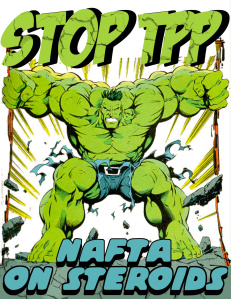
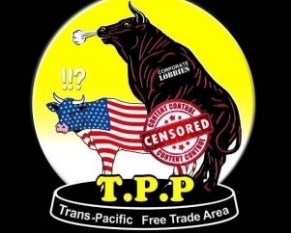
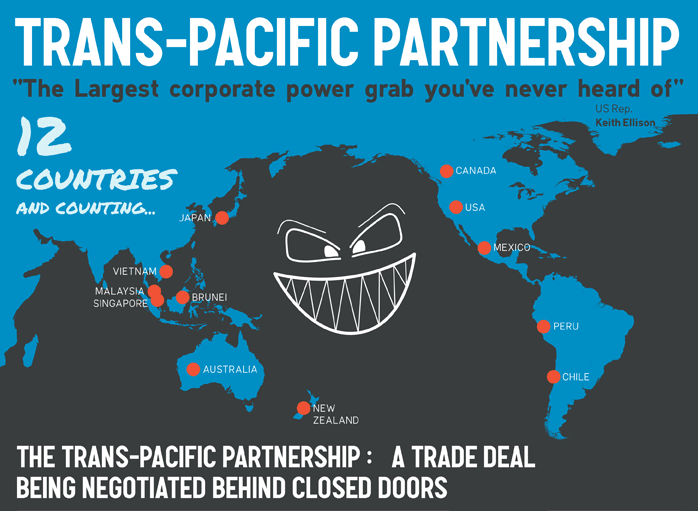
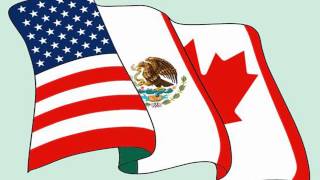


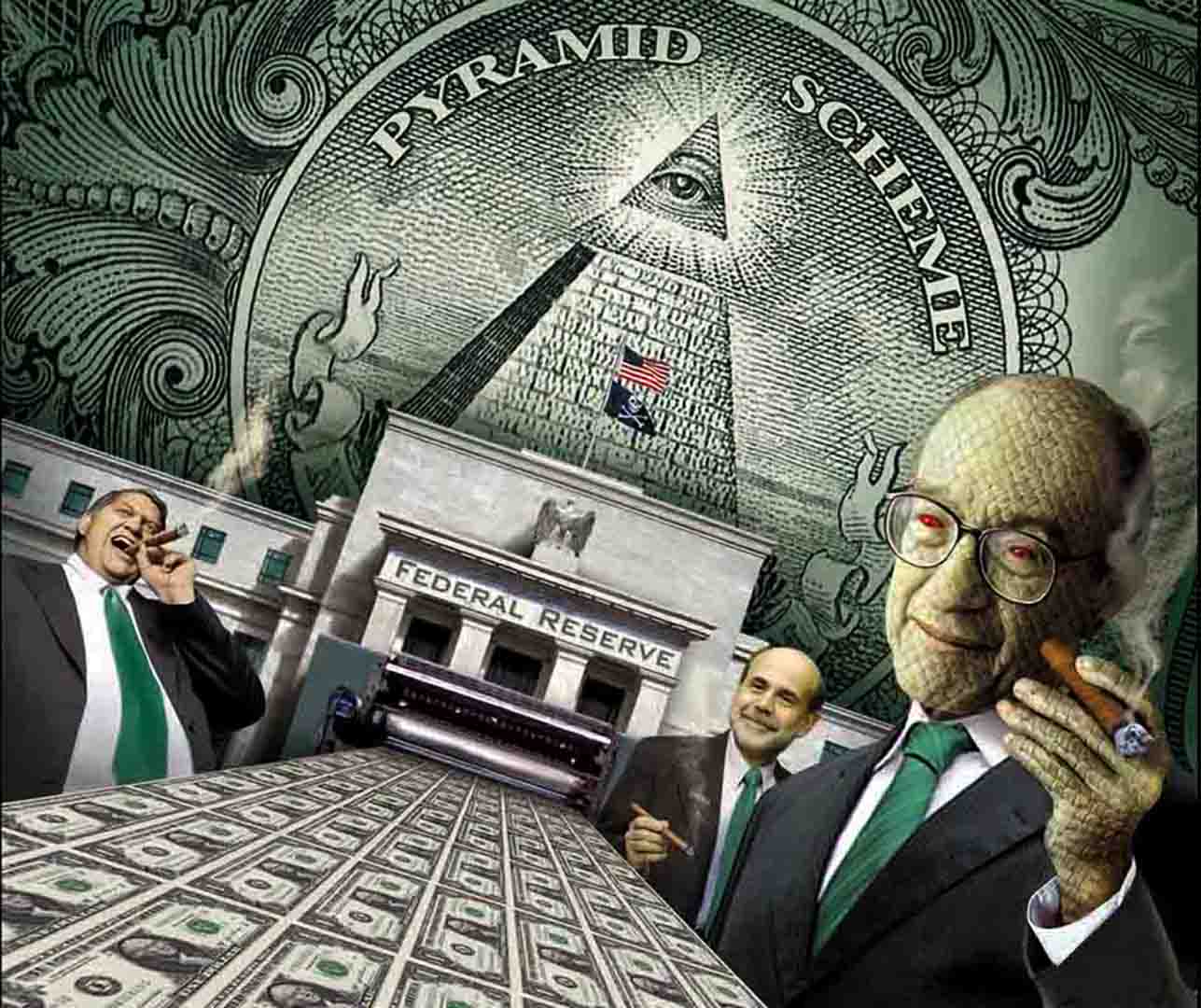


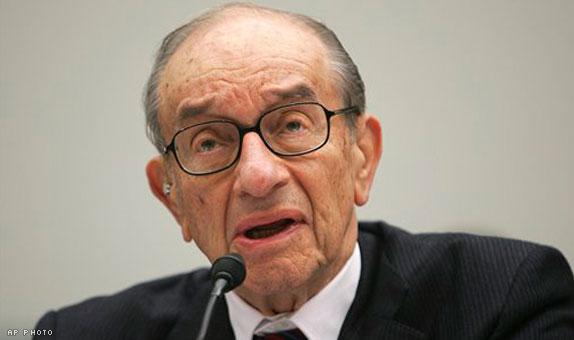

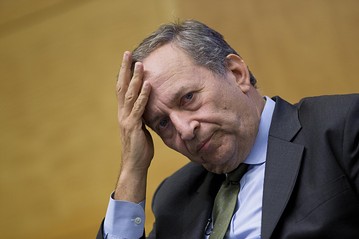


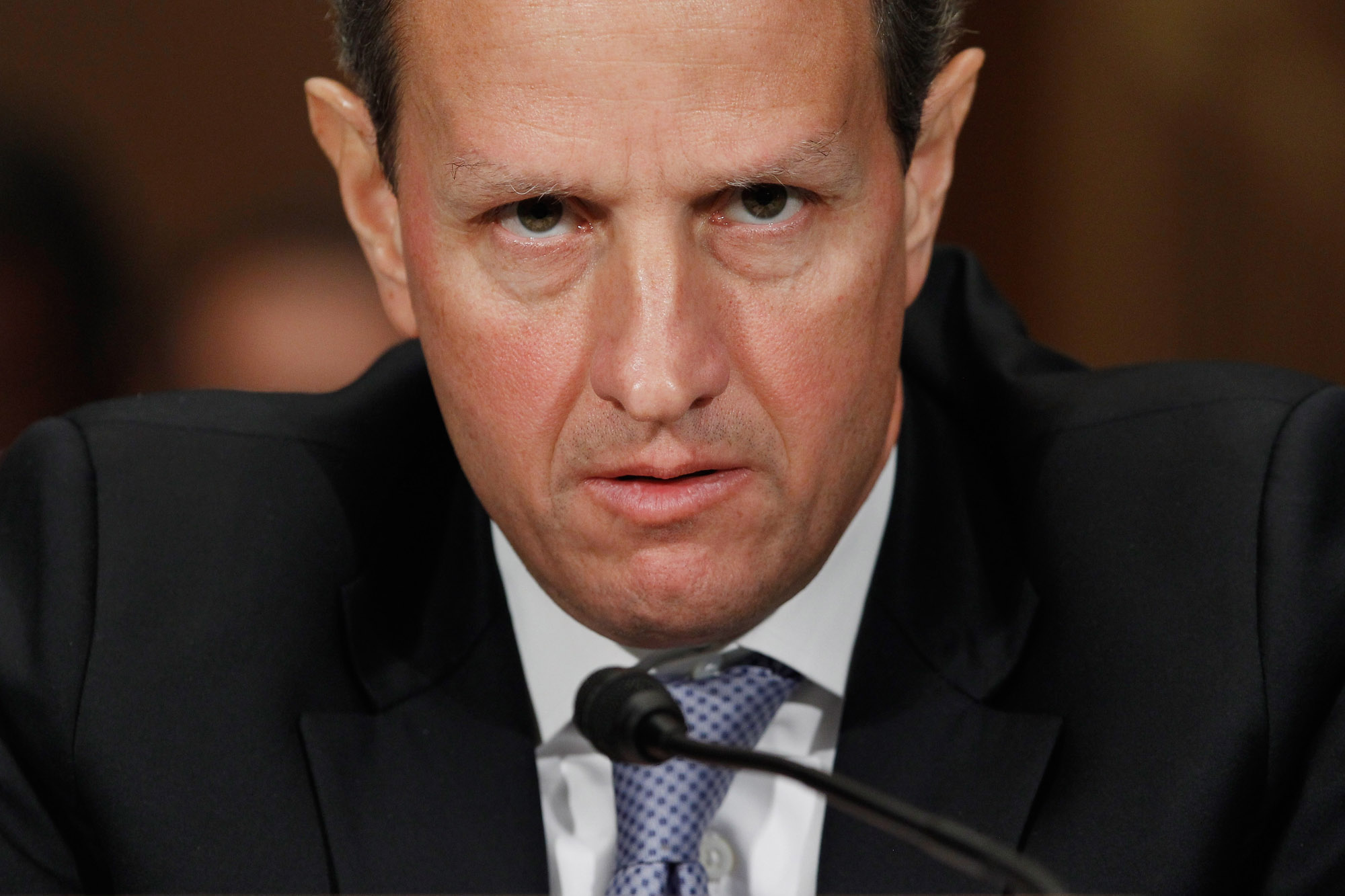









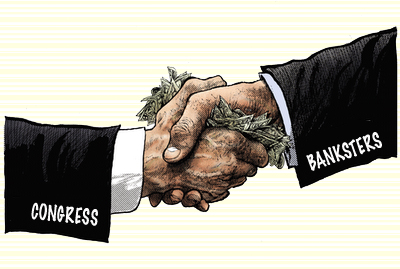


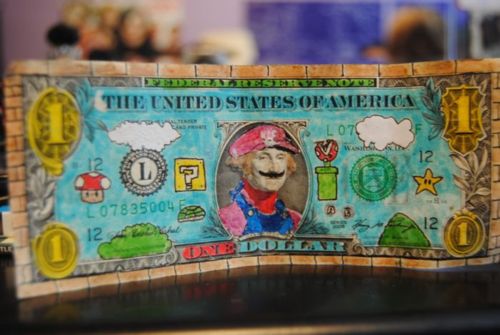




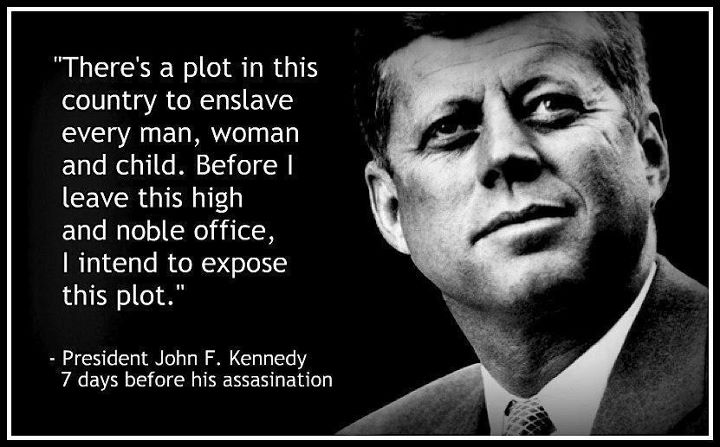
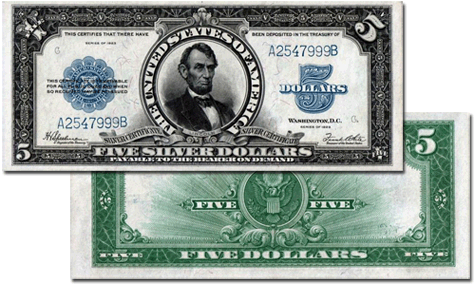
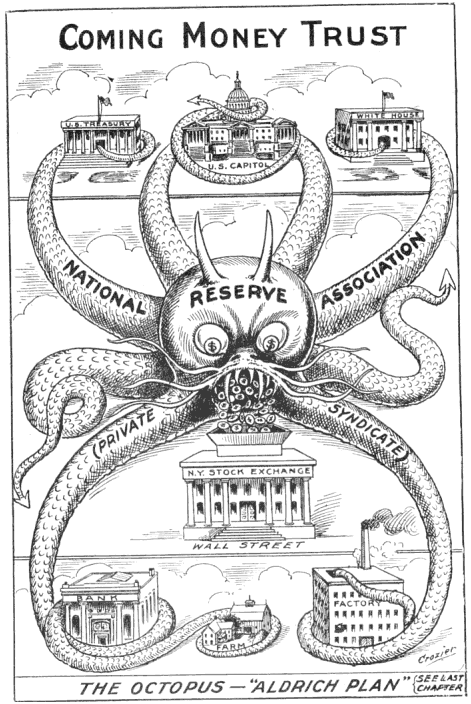


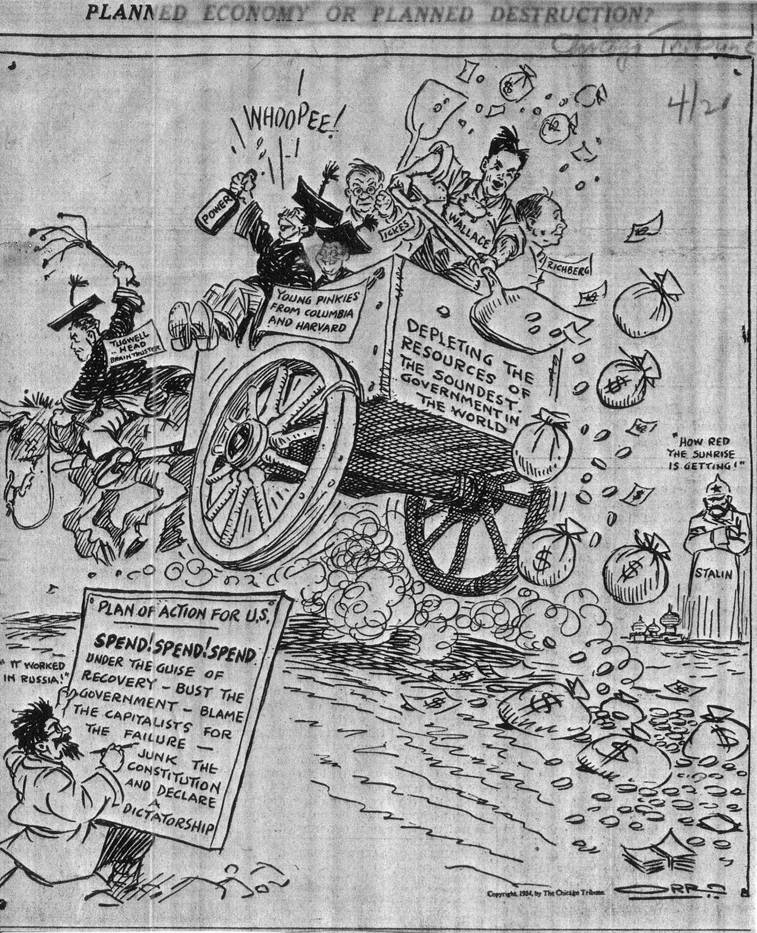
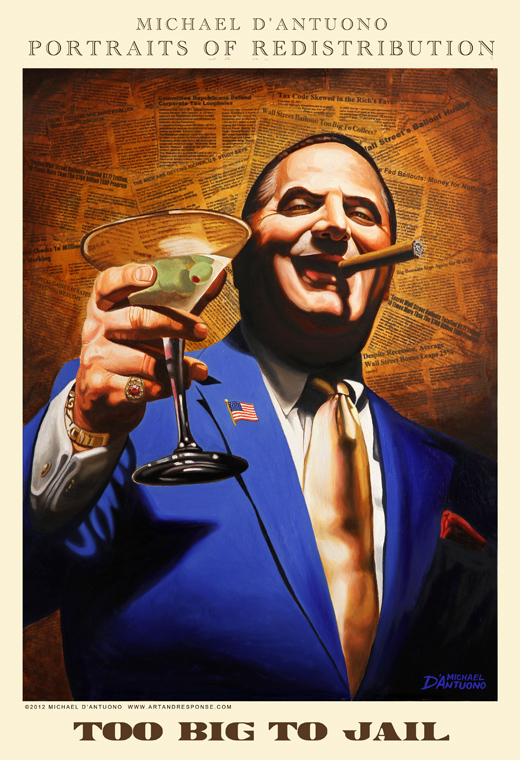




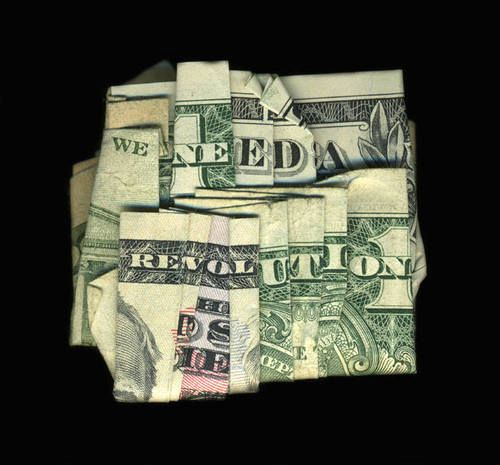


 Outer Limits Radio Show