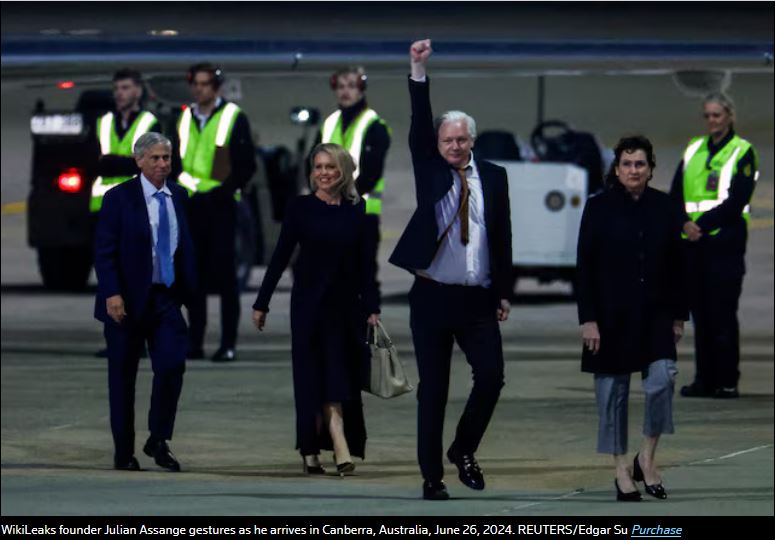
After nearly fourteen years in exile, WikiLeaks founder Julian Assange was finally reunited with his family last week. Assange survived a decade-and-a-half of incarceration, from his 2010 London arrest to seven years of “asylum” in the Equadorian embassy and then 1,901 days of solitary confinement that involved psychological torture (Assange endured a kind of “chemical lobotomy” when he was psychologically tortured with a psychotropic drug known as 3-quinuclidinyl benzilate, aka “BZ”).
What the American and British governments have done to the world’s most important journalist can be described as nothing short of monstrous and really shows how effective his organization was. WikiLeaks exposed more government corruption and corporate crimes than all other news agencies combined, delivering countless successive master strokes that cumulatively crippled the deep state.
WikiLeaks proved to the world that CIA created ISIS. WikiLeaks published the secret bibles of Scientology. WikiLeaks chronicled America’s illegal 2003 invasion in the Iraq War logs, confirmed the existence of the shadowy Bilderberg Group meetings, and made us aware of the monstrous “trade agreements” known as TPP, TISA and TTIP – elaborate corporate wish-lists aimed toward achieving total fascistic rule. Wikileaks also thoroughly documented Israel’s crimes against humanity.
The Afghan War Diaries outlined how, “U.S. Units are inclined to classify civilian kills as insurgent kills, downplay the number of people killed or otherwise make excuses for themselves.” The Stratfor emails revealed how activists were targeted by a private intelligence agency working on behalf of corporate America. The Guantanamo Bay Camp Delta Standard Operating Procedures confirmed the incarceration of the innocent.
In 2017 WikiLeaks posted a trove of CIA documents called “Vault 7,” revealing capabilities such as the ability to remotely commandeer phones, browsers, TVs and even automobiles, and then Vault 8 which revealed the source code behind CIA malware programs.
And let’s not forget that WikiLeaks was instrumental in scuttling Edward Snowden out of Hong Kong ahead of extradition efforts.
But the primary reason for Assange’s persecution was always the dissemination of the notorious Collateral Murder video and subsequent egg on the Pentagon’s face after the world watched in horror as the crew of an AH-64 Apache gunship audibly delight in mowing down a crowd of unarmed civilians (including two Reuters reporters) with recurrent volleys of 30mm rounds.
John Pilger puts it thusly:
“No investigative journalism in my lifetime can equal the importance of what WikiLeaks has done in calling rapacious power to account.”
Comedian and journalist Lee Camp elaborates:
“WikiLeaks posted videos of Tibetan dissidents in China fighting back, videos which were not allowed to be viewed in China. They revealed the Peru oil scandal, and that Russia was spying on its citizens’ cell phones, and the Minton Report on toxic dumping in Africa, and the Syria Files—showing the inner workings of the Syrian government. And WikiLeaks displayed to the global audience a secret Australian supreme court gag order that stopped the Australian press from reporting on a huge bribery scandal that involved the central bank and international leaders.”
None of the criminals implicated by the evidence supplied by Julian Assange were ever indicted or arrested for their crimes, but Assange was punished severely for revealing them. Assange embarrassed many of the world’s most powerful sociopaths who have since done everything in their power to destroy him. Nils Melzer, the United Nations’ special reporter on torture, determined that Assange has undergone “prolonged psychological torture” at the hands of British authorities:
“I was able to visit Mr. Assange in Belmarsh Prison,” Melzer said in the interview. “I was accompanied by two medical experts—a forensic expert and a psychiatrist. Both of them were specialized in identifying, examining and documenting psychological and physical torture. What we found was Mr. Assange showed all the symptoms that are typical for a person who has been exposed to prolonged psychological torture. What we’re talking about is severe traumatization. Chronic anxiety. Intense, constant stress, and an inability to relax or focus, to think in a structured, straight line. Someone who is in a constant, hyper-stimulated stage and can no longer relax.”
Washington has bent itself over backwards trying to destroy Julian Assange, but there’s arguably nobody who wanted his head more than Hillary Clinton, who is on record asking,
“Can’t we just drone this guy?”
The DNC emails provided proof that the Democratic primaries are rigged, that the corporate news media were colluding with Hillary, that Obama’s entire cabinet was chosen for him by Citibank, that Trump was chosen by Clinton as the Republican nominee, and that millions of Saudi dollars had found their way into the Clinton Foundation. As Chris Hedges put it:
“We learned from the emails published by WikiLeaks that the Clinton Foundation received millions of dollars from Saudi Arabia and Qatar, two of the major funders of Islamic State. As secretary of state, Hillary Clinton paid her donors back by approving $80 billion in weapons sales to Saudi Arabia, enabling the kingdom to carry out a devastating war in Yemen that has triggered a humanitarian crisis, including widespread food shortages and a cholera epidemic, and left close to 60,000 dead. We learned Clinton was paid $675,000 for speaking at Goldman Sachs, a sum so massive it can only be described as a bribe. … We learned the Clinton campaign worked to influence the Republican primaries to ensure that Donald Trump was the Republican nominee. We learned Clinton obtained advance information on primary-debate questions. We learned, because 1,700 of the 33,000 emails came from Hillary Clinton, she was the primary architect of the war in Libya. We learned she believed that the overthrow of Moammar Gadhafi would burnish her credentials as a presidential candidate.”
Writing for Mint Press, Alan MacLeod adds:
“The Hillary Clinton campaign alleges the emails were hacked from Podesta’s computer. The published communications, the authenticity of which is not in doubt, informed the country of the machinations of the Democratic Party, how it tipped the electoral scales in favor of Clinton and against Bernie Sanders in the primary, how Clinton stated to Wall Street that she had a “public” and a “private” position on regulation, insinuating she was lying to the nation, how representatives of Qatar wanted to meet with her husband Bill for “five minutes” to present him with a $1 million check for his birthday, and how her own staff held her in contempt.”
Many leading figures of the Anglo-American Empire have publicly endorsed the assassination of Julian Assange. The Snowden leaks revealed that Assange was on America’s “manhunt target list.” Pompeo, Trump’s CIA chief, referred to WikiLeaks a “non-state hostile intelligence service.” And while they certainly didn’t do anything as high profile as droning him, assassinations were nevertheless attempted, albeit with more conventional methods. According to WikiLeaks’ lawyer Edward Fitzgerald, American spies plotted to kidnap Julian Assange, poison him, and make it look like an accident, in cooperation with Ecuador’s security outfit UC Global.
When news of this assassination plot started making its way through the courts, a plea deal was suddenly negotiated and Assange was instantly freed.
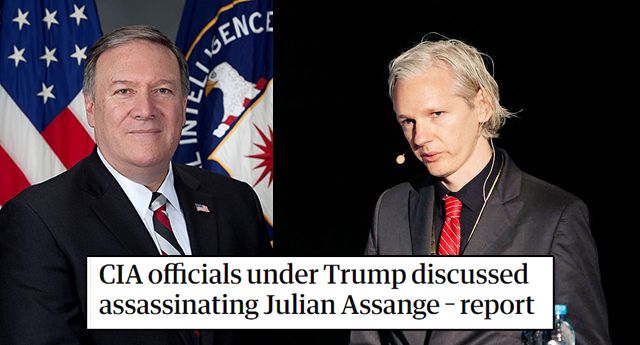
On Monday, 24 June 2024, Julian Assange was released from Britain’s Belmarsh Prison under the arrangement that he would be flown to a US court and plead guilty to a single count of Espionage Act violation. Assange was then flown to Saipan of the Pacific’s Northern Mariana Islands for his court appearance.
On Wednesday, 26 June 2024, Assange pled guilty to violations of the American Espionage Act, even though he’s not an American citizen, admitting to possessing and accessing materials related to America’s national defense.
From Anti War:
During the court proceedings, Assange said he was guilty of violating the Espionage Act. “Working as a journalist, I encouraged my source to provide classified information to publish it. I believe the First Amendment protected that,” he told the court. “I accept it’s a violation of an espionage statute.”
He added, “The First Amendment and the Espionage Act are in contradiction.”
The fact that Assange is the first-ever journalist to be prosecuted successfully under the Espionage Act has flustered free speech advocates as a precedent-setting decision in Law. However, as we’ll discuss more thoroughly in a moment, this plea doesn’t necessarily set legal precedent as much as it protects the US Government from future legal actions in the form of compensation for wrongful imprisonment, cruel and unusual punishment, etc.
WikiLeaks was so effective in its ability to expose the powerful that it quickly became a priority for the intelligence community to intervene. Since WikiLeaks publications couldn’t be disproved and Assange never committed any criminal acts, the Deep-State-“Blob“-brain-trust decided that the best way to undermine the organization was to destroy Assange’s image and discourage people visiting WikiLeaks, even if it meant portraying WikiLeaks as “in cahoots with the Taliban” and Osama Bin Laden.
Legendary journalist John Pilger outlined the DoD’s coordinated attack on Assange’s reputation, which included the Hollywood movie that deliberately insulted Assange’s character as “callous” and “damaged”:
“In 2008, a plan to destroy both WikiLeaks and Assange was laid out in a top secret document dated 8 March, 2008. The authors were the Cyber Counter-intelligence Assessments Branch of the US Defense Department. They described in detail how important it was to destroy the “feeling of trust” that is WikiLeaks’ ‘centre of gravity’.”

The intelligence community also manufactured and repeated the highly dubious accusation that the actions of Assange and WikiLeaks have somehow endangered American service personnel. According to Aaron Kesel :
“U.S. lawyers have falsely claimed that Assange’s publishing of the Iraq and Afghanistan war diaries endangered lives, a claim that is debunked by the Pentagon’s own admission that there is no evidence that any of WikiLeaks’ actions have caused even a single death, as Glenn Greenwald previously reported for Salon during the court trial of whistleblower Chelsea Manning.”
Assange didn’t endanger Americans, but he did expose Hillary Clinton. In retaliation, the Democratic Party sued Russia, Trump and WikiLeaks for “conspiring to hurt Hillary in 2016”. In another unprecedented move, the DNC served WikiLeaks with the lawsuit via twitter following what they claimed was a failed attempt to serve the papers by Email.
American intelligence services went on to claim that the Hillary and DNC Emails released by WikiLeaks were “stolen by Russian hackers.” As purported evidence of this claim, Guccifer 2.0 publicly postured as WikiLeaks’ source, first boasting that it hacked the DNC but then later admitting the documents originated from DNC staffer Seth Rich (whose murder led WikiLeaks to offer a $20,000 reward for finding the culprit). Then there was the “explosive” Guardian report about Secret Manafort-Assange Meetings that turned out to be nothing more than evidence-free propaganda puff.
As MintPress’ Mnar Muhawesh wrote in 2019:
The allegations that Assange conspired with Putin to undermine the 2016 election and American democracy as a whole fell completely flat earlier this month when a U.S. District Court for the Southern District of New York dismissed this case as “factually implausible,” with the judge noting that at no point does the prosecution’s “threadbare” argument show “any facts” at all, and concluding that the idea that Assange conspired with Russia against the Democratic Party or America is “entirely divorced from the facts.”
The “Blob” eventually abandoned their flimsy attempts to link Assange to Russia altogether. Shifting gears, it was decided that a good old sex scandal might finally do the trick, and Assange’s visit to Sweden would provide the setting for their next great plan. Researchers Kevin Zeese and Margaret Flowers outlined just a few of the eyebrow-raising circumstances of the Swedish sex fiasco:
“Sweden’s charges against Assange were initially dropped by the chief prosecutor, two weeks later they found a prosecutor to pursue a rape investigation. One of the women had CIA connections and bragged about her relationship with Assange in tweets she tried to erase. She even published a 7-step program for legal revenge against lovers. The actions of the women do not seem to show rape or any kind of abuse. One woman held a party with him after the encounter and another went out to eat with him. In November 2016, Assange was interviewed by Swedish prosecutors for four hours at the Ecuadorian embassy. In December 2016, Assange published tweets showing his innocence and the sex was consensual. Without making a statement on Assange’s guilt, the Swedish investigators dropped the charges in May 2017.”
Nils Melzer explained a critical detail that’s been overlooked by most western media outlets:
“What is called a rape allegation [in the Swedish case] is not what would be called a rape in English or Swedish or any other language in the world,” Melzer said. “I know what I’m talking about because I speak Swedish. What the rape allegation refers to is an offense that doesn’t involve any violence. He has been alleged of intentionally ripping a condom during consensual intercourse with a woman. She said it was intentional. He said it was an accident. Predictably, this is something no one will ever be able to prove. The piece of evidence submitted to the prosecution, the condom, was examined and did not have any DNA on it from him, or from the complainant, or anyone else.”
John Pilger also helped reveal that, “Neither woman claimed she had been raped. Indeed, both denied they were raped and one of them has since tweeted, ‘I have not been raped.’” Pilger went on to say that the Assange case has never been about Swedish sexual misconduct allegations, and the behavior of prominent officials in the case seemed inherently suspicious:
On 30 August [2010], Assange attended a police station in Stockholm voluntarily and answered the questions put to him. He understood that was the end of the matter. Two days later, Ny announced she was re-opening the case. …
For five weeks, Assange waited in Sweden for the renewed “rape investigation” to take its course. The Guardian was then on the brink of publishing the Iraq “War Logs”, based on WikiLeaks’ disclosures, which Assange was to oversee in London.
Finally, he was allowed to leave.As soon as he had left, Marianne Ny issued a European Arrest Warrant and an Interpol “red alert” normally used for terrorists and dangerous criminals.
After Swedish authorities issued the international arrest warrant, Assange turned himself in to the London police. In December 2010 the British court granted bail for Julian under the understanding that his extradition to Sweden was pending. Until his court cases were resolved, he was required to remain in England.
In August of 2012 Julian Assange was granted asylum at the Equadorian Embassy in London by then Ecuadorian president Rafael Correa, who was sympathetic to WikiLeaks and disliked by western industrial powers. The UK court declined to reverse Assange’s arrest warrant for violating his bail terms. It was understood that if Julian left the embassy at any time he would immediately arrested by British authorities for “skipping bail,” a situation he remained trapped within for over five years and depicted by CNN as a literal shit-smearing imposition upon the Ecuadorians.
While Assange was holed up in the embassy, a Spanish security company called UC Global conducted espionage operations targeting him on behalf of the CIA. Everything in the embassy from fire extinguishers to the women’s bathroom was bugged to monitor Assange’s every move.
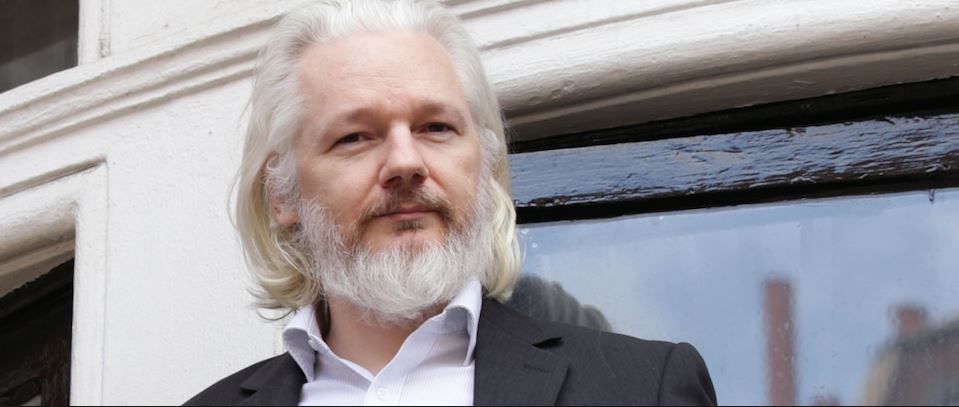
Glen Greenwald outlined how Assange’s rapport with Ecuador began to deteriorate when NATO became outraged that WikiLeaks was calling attention to Spain’s brutal treatment of the Catalan independence movement. Ecuador blamed Assange for putting its relationships with other countries at risk:
“The tensions between Ecuador and Assange center on the debate in Spain over Catalan independence. On October 1, 2017, the autonomous region of Catalonia held a referendum for independence. The Spanish government declared this referendum illegal. Protests and arrests of Catalan activists ensued, as well as the seizure of ballots and raids on polling stations by the government in Madrid. …
“El País, days later, began depicting Catalan activists as a tool of the Kremlin. The paper published an article alleging that not only Assange, but also Edward Snowden, were helping Russian propaganda networks spread “fake news” about Catalonia. El País repeated these claims in subsequent stories, which were echoed in reports from other anti-separatist organizations, such as the Spanish think tank Elcano Royal Institute, Atlantic Council’s Digital Forensics Research Lab, and NATO’s StratCom.”
In January 2018, Julian was granted citizenship by Ecuador. But just a few months later Lenín Moreno became the newly-elected president of Ecuador, which was bad for Assange. It would be an understatement to describe Moreno as less sympathetic to Assange’s situation and more subservient to the Anglo-American Empire. Ecuador’s former foreign minister Guillaume Long described Moreno as “a Shakespearean traitor” whom he says “betrayed Correa, he betrayed his party, he betrayed his electorate…he betrayed Ecuadorians, and he betrayed democracy, and he certainly betrayed Assange.”
Between March and October 2018 the Equadorian government cut off Assange’s access to internet and phone. Moreno’s administration immediately began preparations to hand Assange over to the British while publicly declaring that Assange was a “hacker“, “an inherited problem” and a “stone in the shoe.” Motivating these statements was the $4.2 billion worth of loan guarantees from the International Monetary Fund (IMF) to Ecuador in the form of a “debt relief package”:
“In March 2019, the International Monetary Fund (IMF) approved a $4.2 billion financing deal to support the Ecuador government over the next three years. Authorities subsequently “suspended” Assange’s citizenship and ended his asylum, without much notice, on April 11.”
Three weeks after Ecuador secured their giant IMF loan, Moreno authorized British authorities to circumvent international law by entering the Ecuadorian embassy in London. And on 11 April 2019 Julian Assange was forcibly removed from the embassy and subsequently placed into a year of solitary confinement in Belmarsh’s isolation wing.

The English court originally sentenced Assange to a single year in jail for the crime of skipping bail. But just a few months later the judge ordered Assange’s incarceration be extended indefinitely while his extradition was negotiated.
The US government pursued 18 charges against Assange in his 2020 extradition hearing that would have amounted to an unprecedented sentence totaling 175 years in prison. Caitlin Johnstone summed up the 2020 extradition hearings as “a self-contradictory kafkaesque nightmare.”
The judge had strong conflicts of interest and should have recused herself since her husband was previously exposed by WikiLeaks for his role in bribing officials in exchange for lucrative arms contracts.

Then there was the humiliating glass cabinet.
In a scene straight out of Mike Judge’s Idiocracy, Julian Assange was confined within in a glass box at the back of the courtroom during his 2020 extradition hearings. Beyond this humiliating exhibition of the state’s sadism grew a cacophony of bizarre circumstances that created incomprehensible delays throughout Assange’s extradition hearings.
The judge ultimately ruled against extradition, but only on the grounds that America’s draconian prison system was determined to present a high suicide risk to Assange.
Glenn Greenwald tweeted at the time of the ruling:
“This wasn’t a victory for press freedom. Quite the contrary: the judge made clear she believed there are grounds to prosecute Assange in connection with the 2010 publication. It was, instead, an indictment of the insanely oppressive US prison system for security ‘threats’.”
The 17 charges of Espionage Act violations attempted in vain to criminalize activities protected by the First Amendment, while the single hacking charge was demonstrably false given that Assange never hacked into anything. Even after Washington unveiled the Orwellian charge of “offering to hack into a government computer” (allegedly to help Chelsea Manning conceal her identity) the government was forced in the end to concede that no such hack ever took place because there wasn’t any evidence and Manning refused to testify.
Throughout their campaign to destroy WikiLeaks and ruin Julian Assange, Washington has consistently touted violations of its Espionage Act. But the notion that standard newsroom practices (like source protection) can be conflated with “criminal conspiracy” was always a flimsy claim founded on a dubious interpretation of law.
Ecuadorian President Moreno’s termination of Assange’s asylum was unlawful by international standards, as was UK Prime Minister Theresa May’s order of British police to cross onto sovereign territory to arrest a person who has never committed a crime. Going back even further, Attorney General Jeff Sessions insisted that arresting Assange was a top priority even though Assange was not an American citizen and his organization was not based in the states.
The fundamental question was articulated by Caitlin Johnstone:
“Should journalists be jailed for exposing US war crimes? Yes or no?”
Chris Hedges began answering this question in 2019:
“The publication of classified documents is not a crime in the United States, but if Assange is extradited and convicted it will become one. Assange is not an American citizen. WikiLeaks, which he founded and publishes, is not a U.S.-based publication. The message the U.S. government is sending is clear: No matter who or where you are, if you expose the inner workings of empire you will be hunted down, kidnapped and brought to the United States to be tried as a spy.”
While Hedges was correct to assert that publishing classified documents is not a crime, whether Assange’s extradition would have changed that seems dubious because there are countless constitutional lawyers who would have never stood for such a thing. It would have been challenged in court because selective enforcement of the Law does not then nullify the Law. Abuses are not precedent-changing when they were illegal to begin with. And on top of it all, Assange was never successfully extradited to the United States.
Beyond that, altering precedent requires a ruling by an appellate court:
[…] Bruce Afran, a US constitutional lawyer, argued that Assange’s plea will not expand the Justice Department’s powers to target journalists. “A plea is not precedent. Precedent consists of a decision interpreting a matter of law by an appeals court that will govern future cases on the same legal principle,” he explained. “In contrast, a plea is merely a factual agreement by a given defendant that they did a certain act, but does not bind future defendants in similar cases.”
It’s also important to acknowledge that Julian Assange’s plea was given under duress, further nullifying the entire legal process, and only as a mercy to prevent him from dying in prison. This brings us to Blob-Monster-Mike Pompeo’s preposterous double standard that First Amendment protections don’t extend to foreigners but our courts do:
“We also learned that the United States do not consider foreign nationals to have a First Amendment protection, so the US is effectively saying that the long arm of US law can extend to get you anywhere, but they also don’t have to extend its protections.”
Judges and juries are required to align their decisions based solely on the Law, and the First Amendment remains the judicial standard of the land here, regardless of circumstances. The US Constitution explicitly protects publishers, journalists and whistleblowers. The courts cannot lawfully ignore the First Amendment just because they don’t like a person. In fact, they’ll very likely be overturned later if they decide to forgo constitutional jurisprudence for a short-term gain. The First Amendment guarantees each citizen’s right to offend others, and others’ right to say offensive things back because that’s how arguments are resolved.
Bullshit legal presumptions can and should always be rebutted, and it’s the duty of active citizens to participate in swatting down the dangerous delusions of pernicious parasites and exploitative predators who abuse the law for their own profit and gain. Lawfare intimidation cannot ever be allowed to set legal precedent, which is why unlawful presumptions must always be challenged by citizens of conscience who understand that eternal vigilance is the price of liberty.
Throughout his career, Chris Hedges repeatedly told his audiences:
“I do not fight fascists because I will win. I fight fascists because they are fascists.”

Johnstone echoed this sentiment at the top of 2021 when she wrote,
“I’m not going to take that as a sign that we’ve won the war, or even the battle. But it is a sign that our punches are landing. And that we’ve got a fighting chance here.”
As soon as Assange was safely reunited with his family in Australia we learned about the $520,000 airplane bill. Because Assange was denied any opportunity to fly commercially, the Australian government chartered a private plane which left him half-a-million dollars in debt. Whether this debt amounted to a final “fuck you” from the authorities or not, it did not rain on the welcome parade.
After the airline’s price tag was announced on social media, donations poured in from every corner of the globe and within ten hours the debt was paid in full.

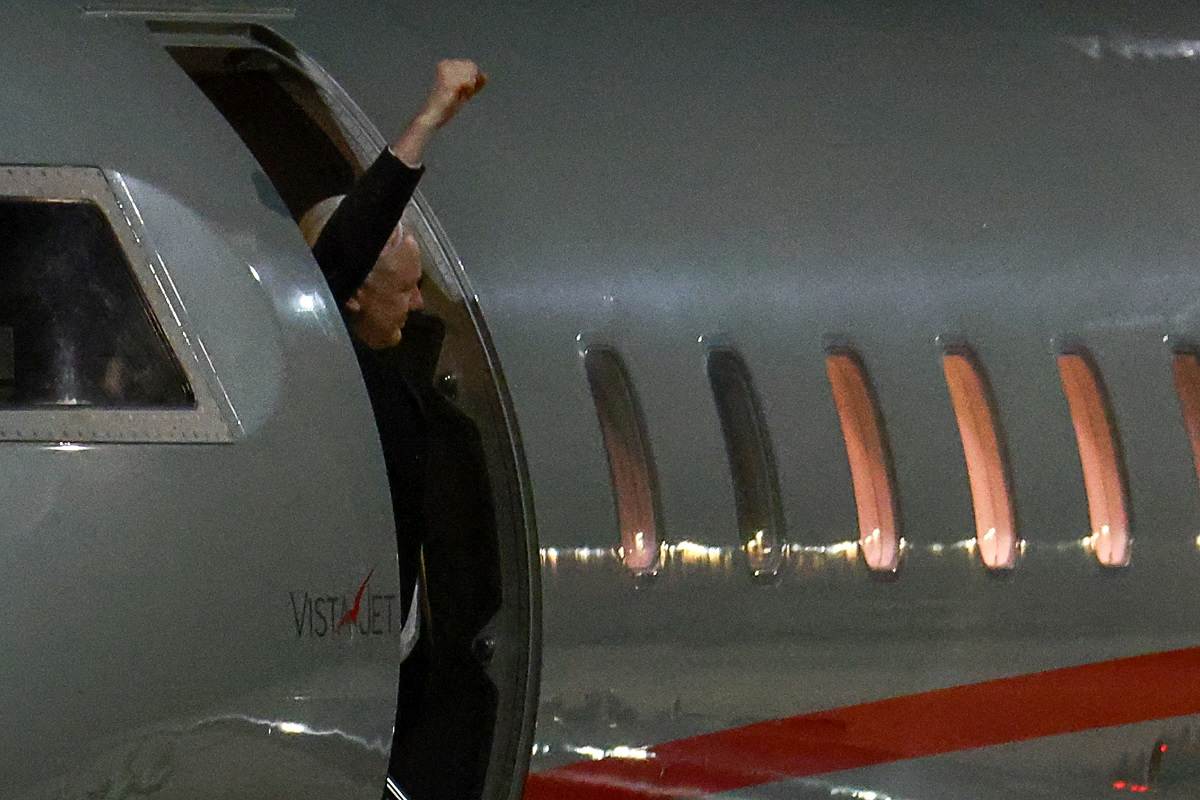
Assange’s supporters have achieved nothing short of a series of decisive victories for press and speech freedom by securing his release. They’ve succeeded in preserving his reputation in the face of an overwhelmingly well-funded and state-sanctioned smear campaign and in preventing his extradition to the United States. Many of us expected the government to make sure Assange died in prison, but public pressure ultimately prevailed. And even when it seemed his freedom had come with an enormous price tag, his supporters overcame that as well.
While it’s absolutely true that the powerful may try their damnedest to corrupt the law, that doesn’t mean the rest of us must accept their corruption. It’s the other way around. When authorities become irrational the citizenry must stop cooperating with them. And this spirit of defiance made manifest is the real triumph of WikiLeaks.





 Outer Limits Radio Show