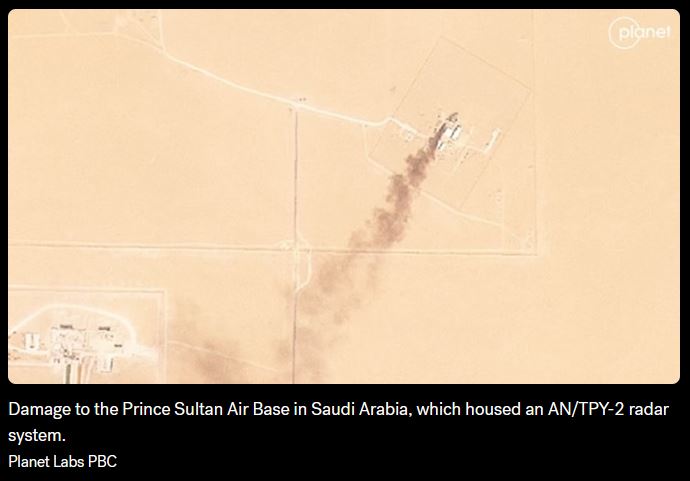
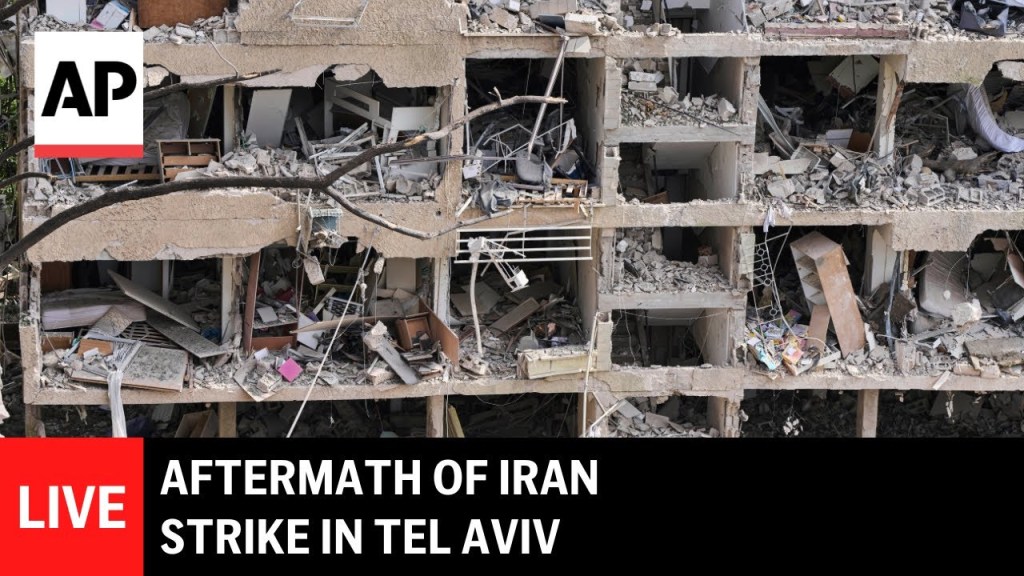
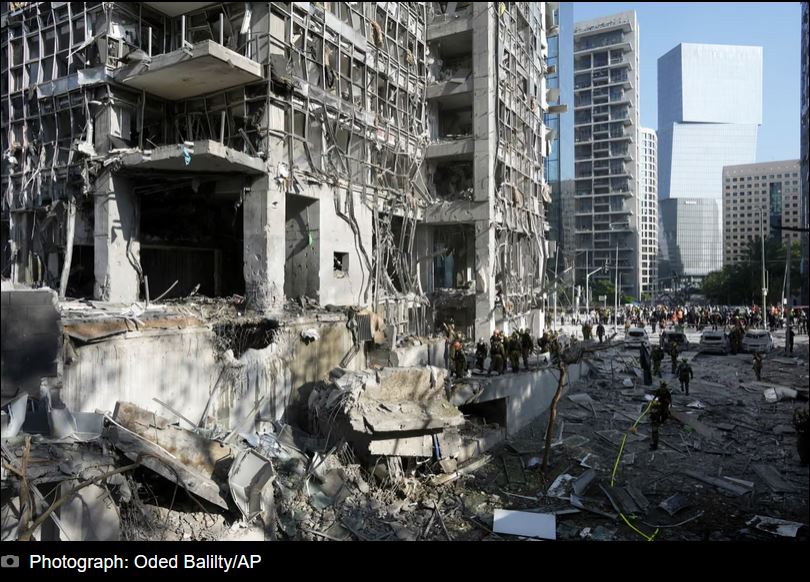
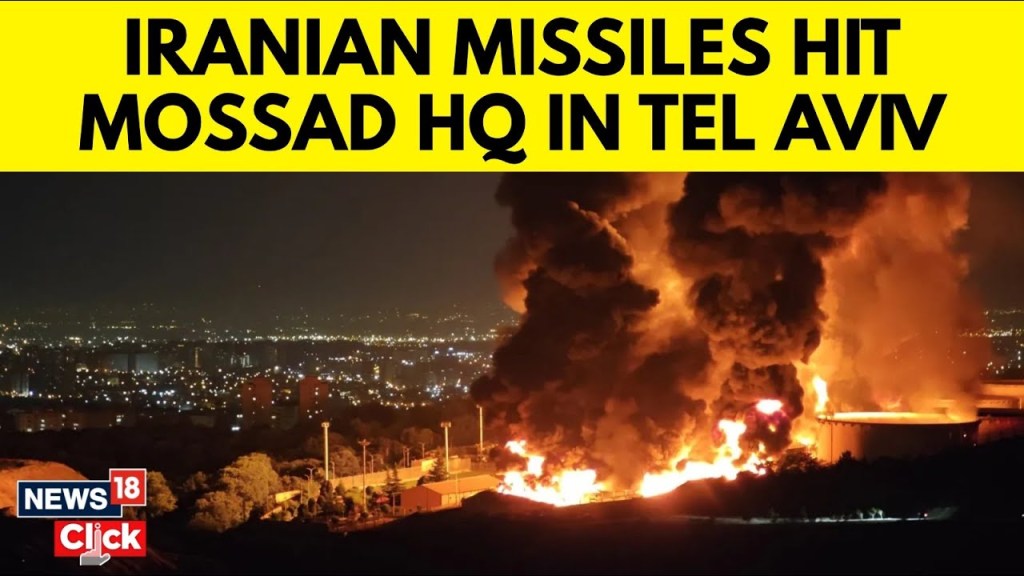
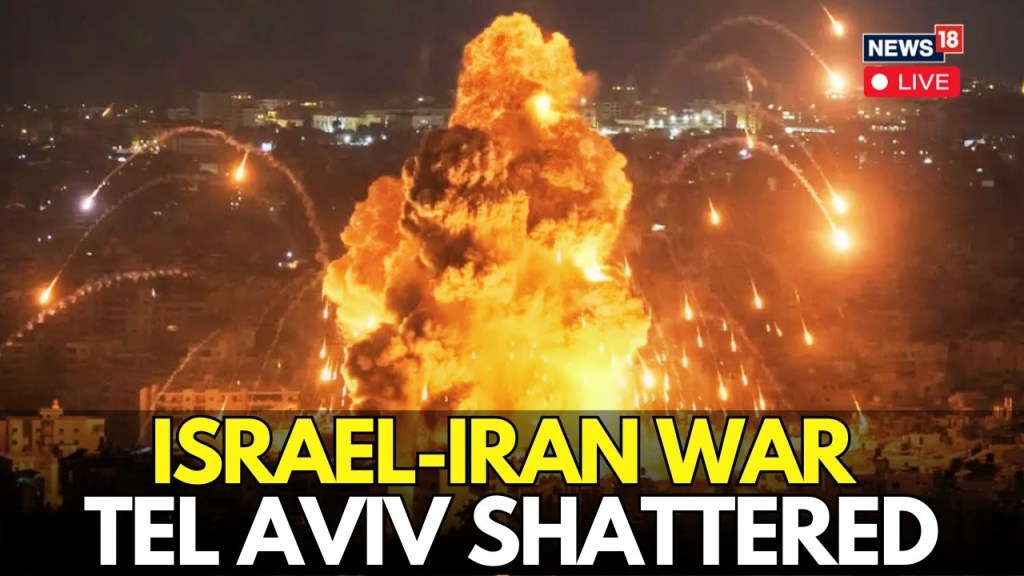
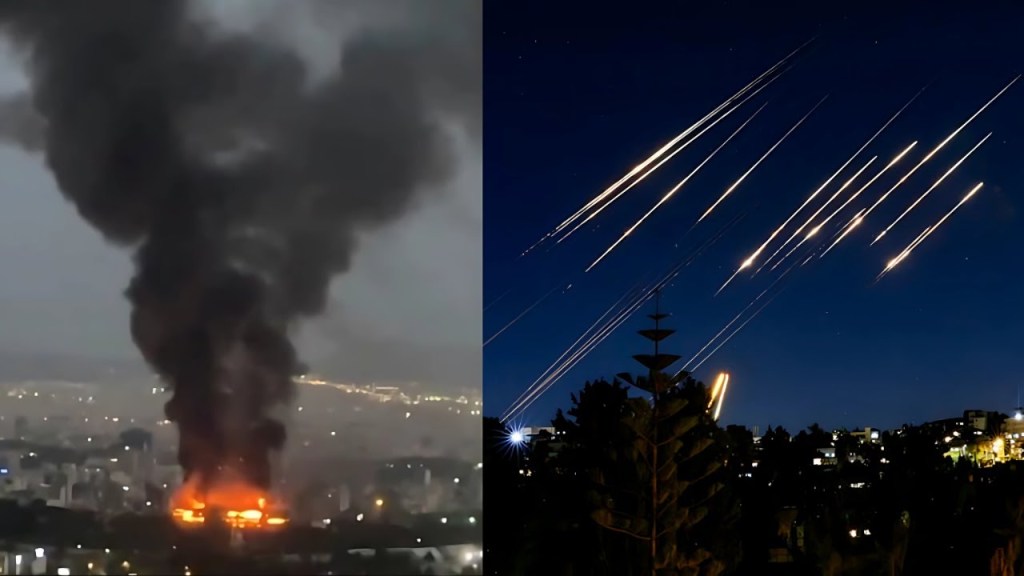
On 28 February 2026 Israel and its American marionette embarked on an unprovoked and disastrous campaign of bombing Iran’s military, industrial, commercial and civilian infrastructure. American and Israeli forces destroyed 339 hospitals, 857 schools, 32 universities and 100,000 homes, killing 3,000 Iranian civilians in the process. On the first day of the strikes, a girls elementary school in Minab was targeted with a “double tap” strike that Trump tried to blame on the Iranians but which the Pentagon later claimed responsibility for, waffling on whether it was due to AI targeting system glitches or the “human error” of outdated intelligence.
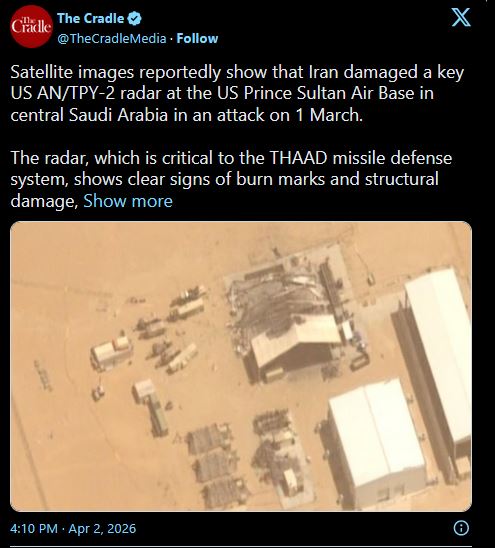
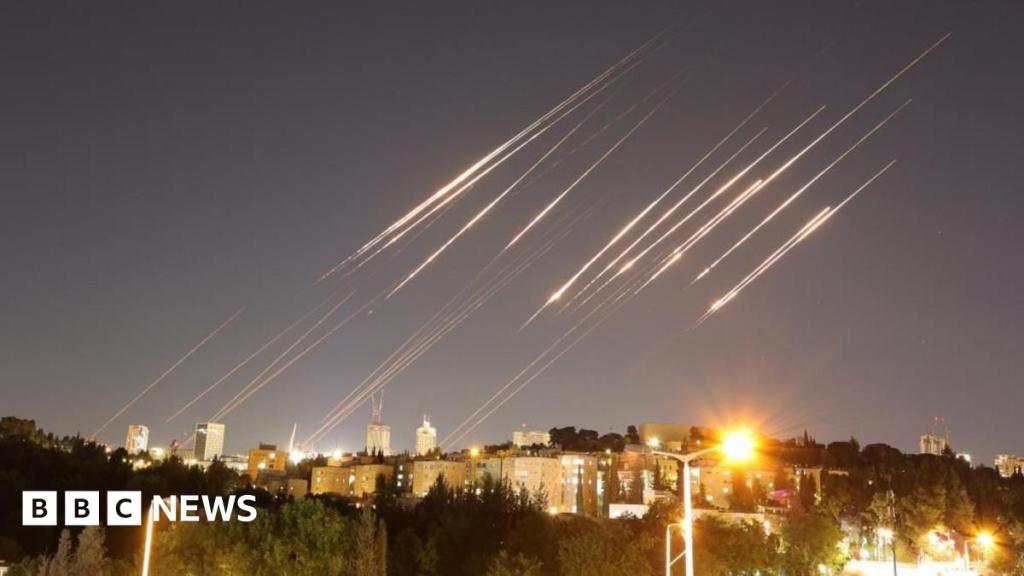
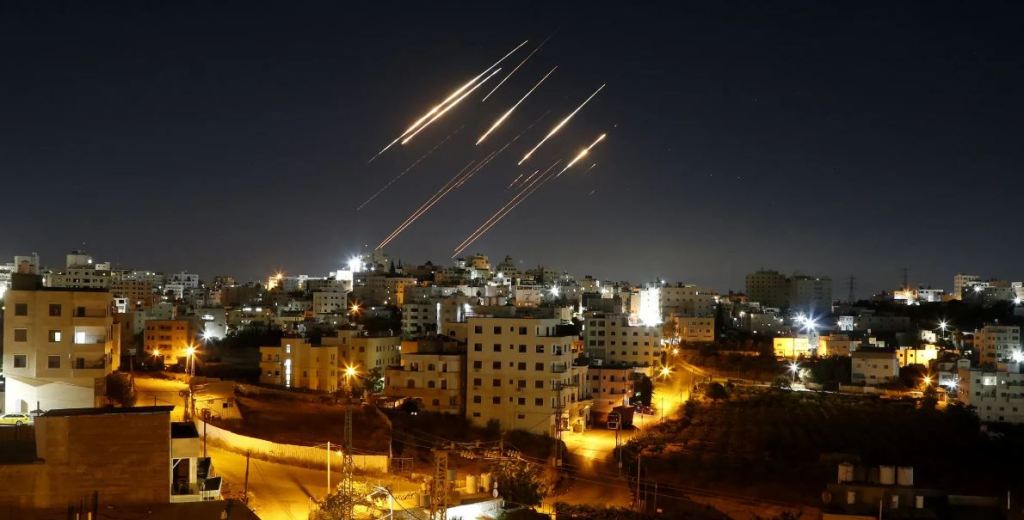
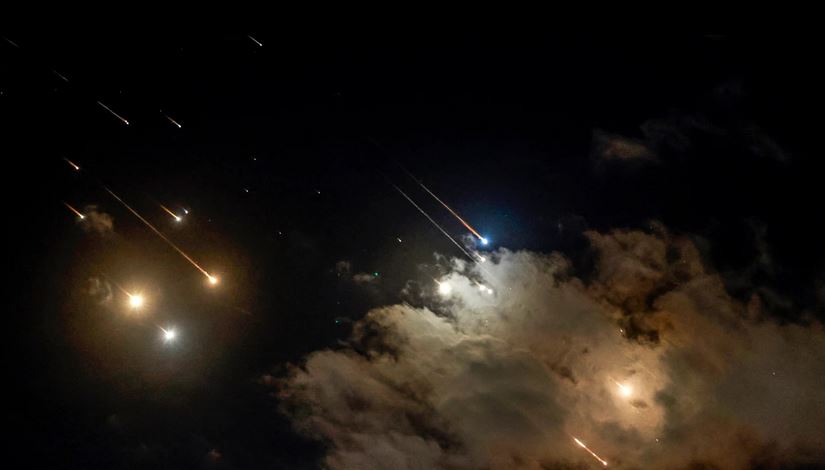
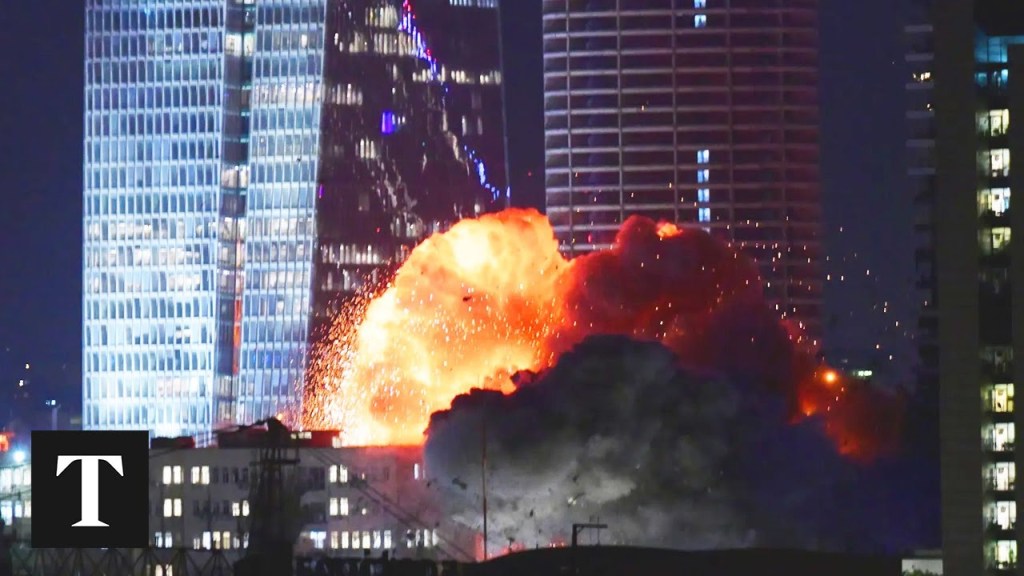
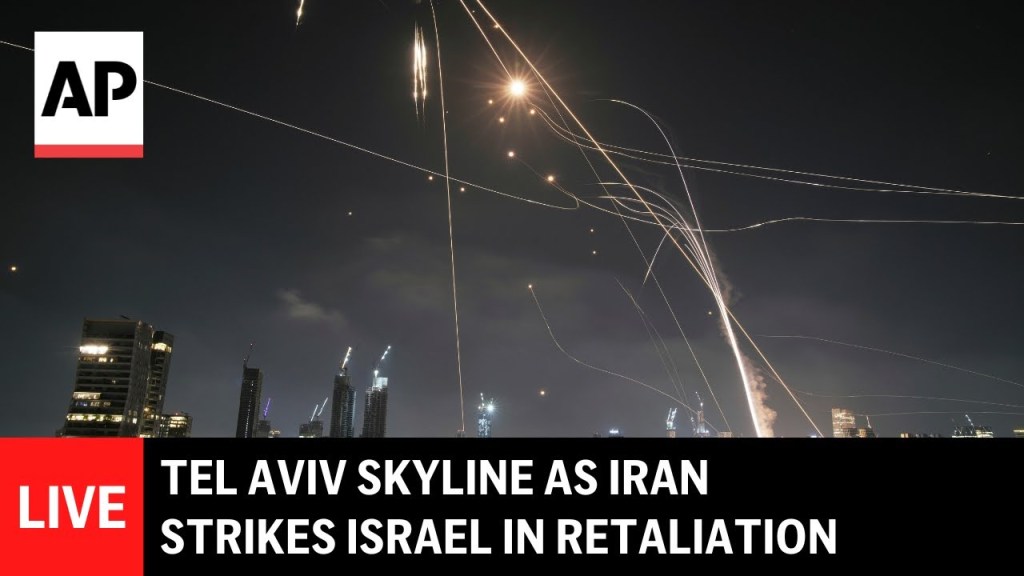
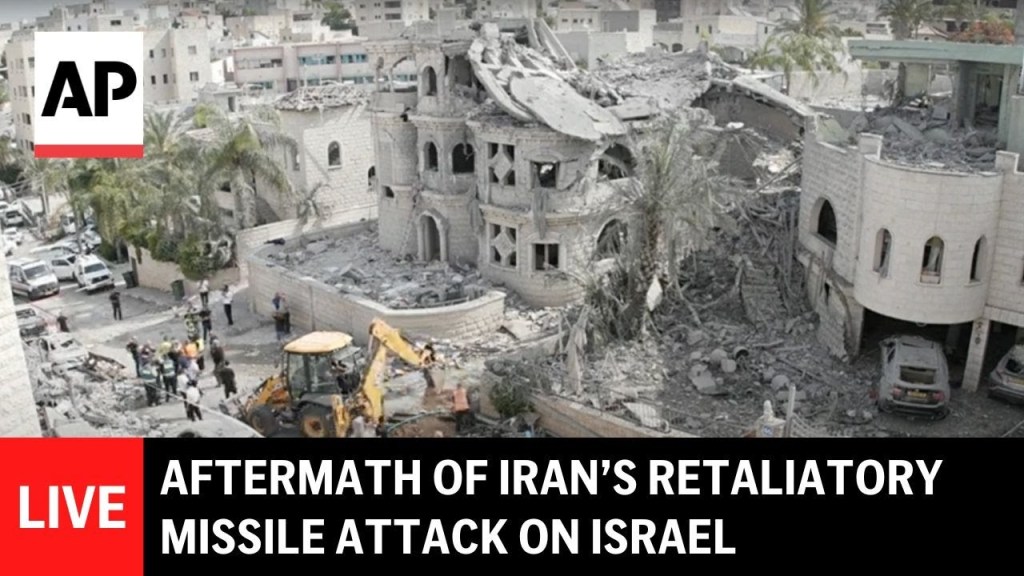
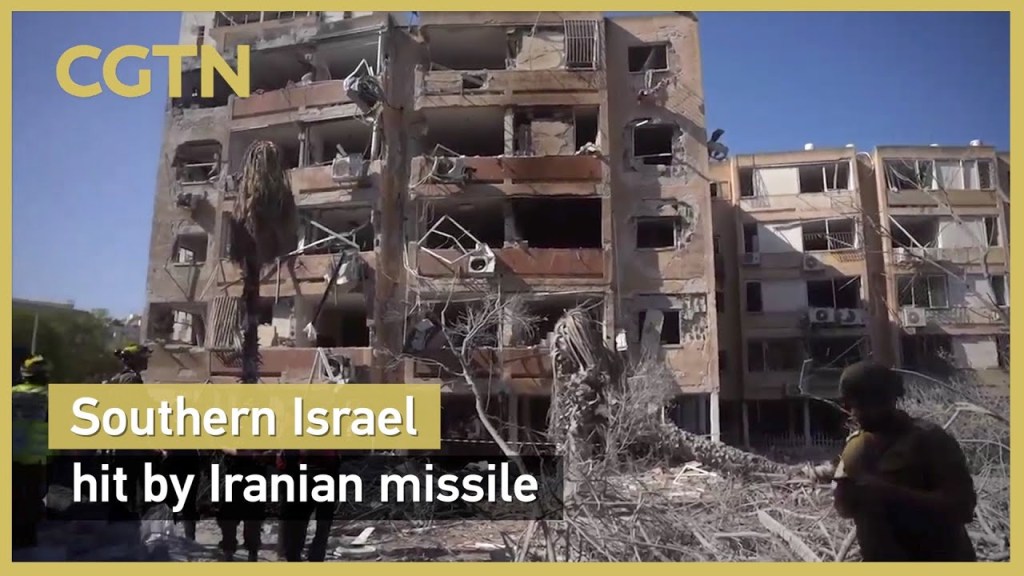
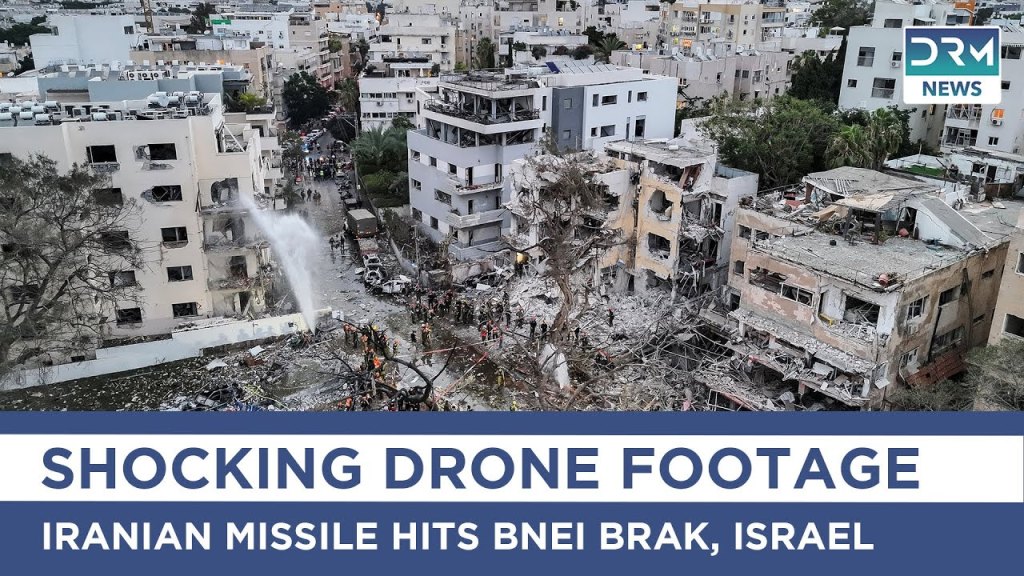
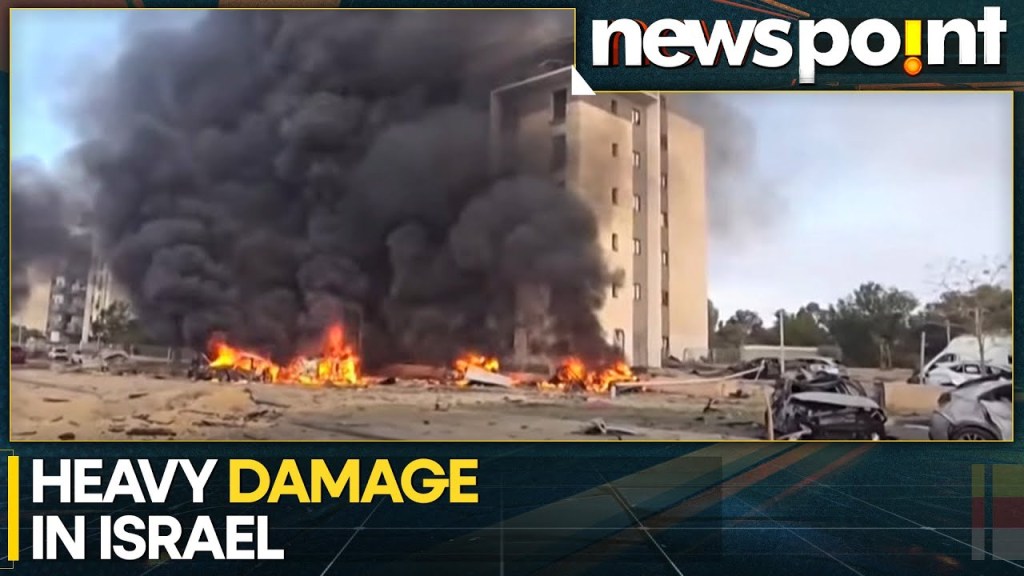
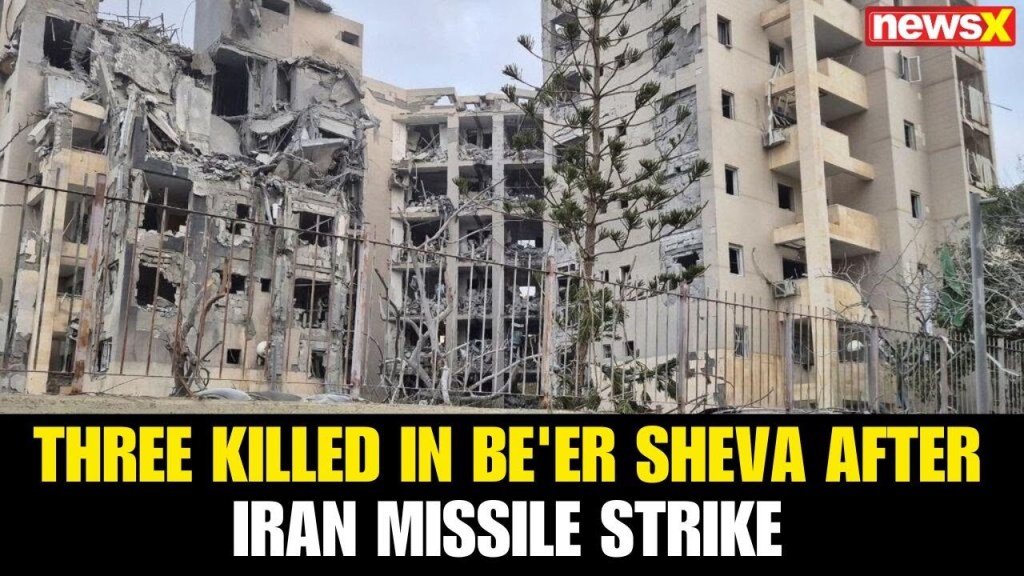
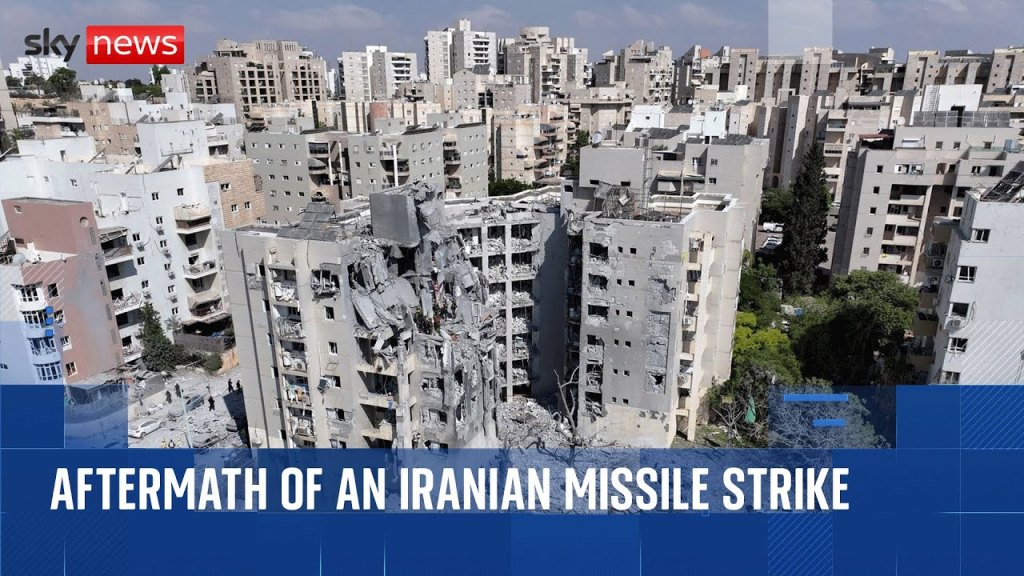
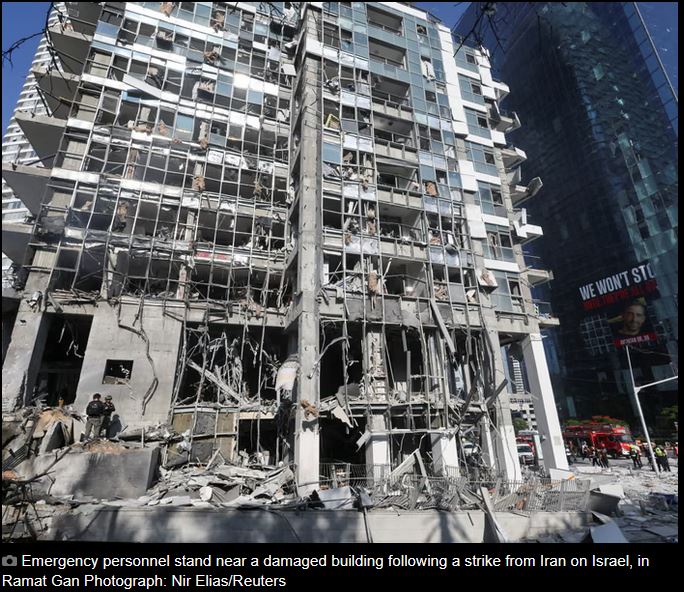
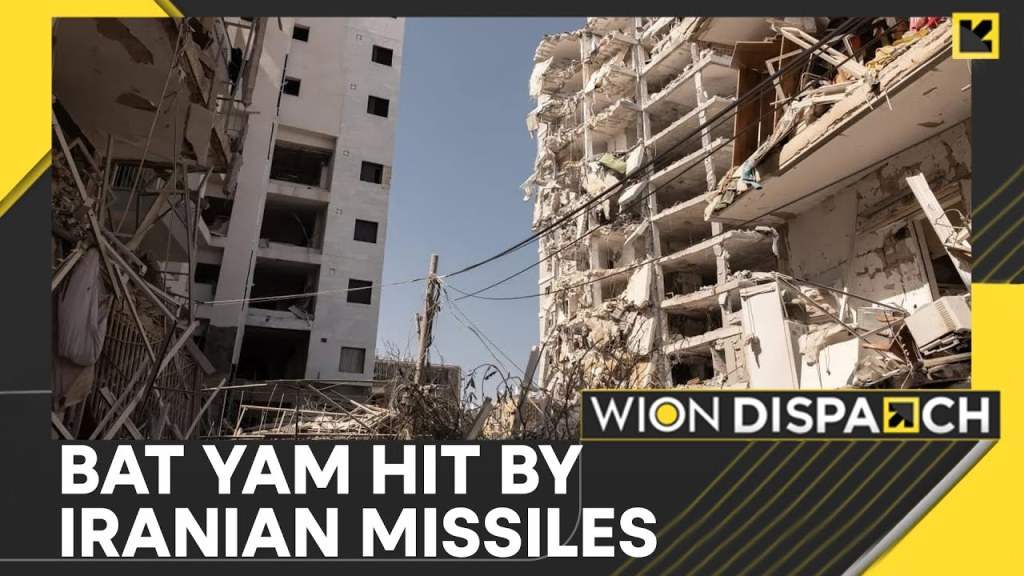
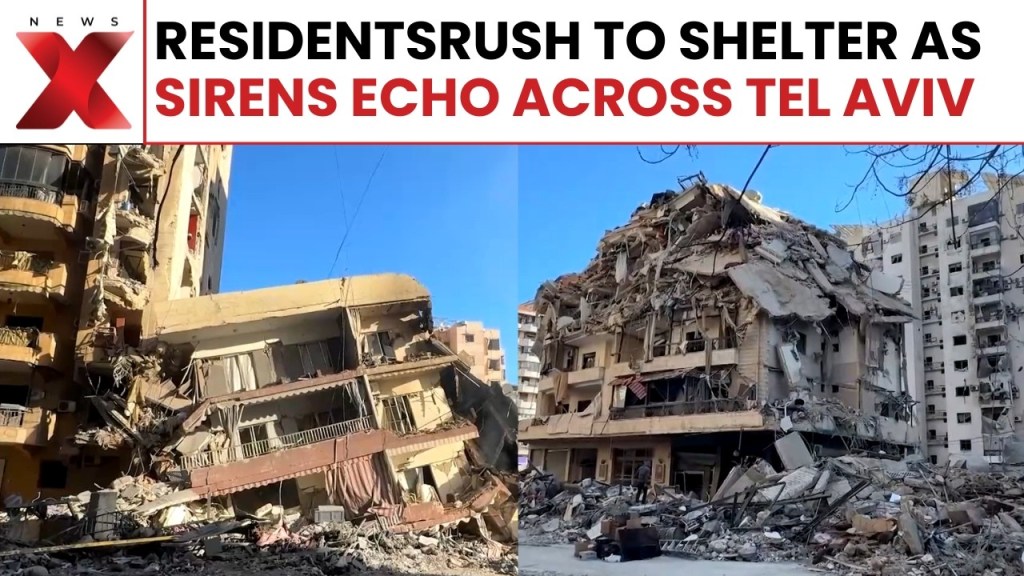
In retaliation, Iran initiated Operation True Promise 4, launching nearly 100 distinct waves of missile salvos and drone volleys at Israel and US military assets. The American Empire successively suffered unprecedented losses including the destruction of over a dozen military bases, nearly a dozen billion-dollar radar stations, and over 100 military aircraft. Iran successfully neutralized an F-35 stealth fighter, the crown jewel of the US Air Force. Meanwhile, Iranian missiles consistently penetrated Iron Dome air defenses and turned Israeli cities upside down.
Despite claims by Secretary of War Pete Hegseth that Iran’s missile program was “functionally destroyed” American military and intelligence sources estimate that a majority of Tehran’s missile stockpiles and launch capabilities remain intact. While the White House repeatedly declared itself “victorious” Trump also made his dissatisfaction of the results very clear, which is why ground forces were never taken “off the table” of possibilities.
After an attempted uranium heist south of the Isfahan nuclear research facility resulted in staggering aircraft losses, the White House spun the failed operation as a “pilot rescue” story replete with holes and contradictions. Strikes against aircraft carriers forced the American navy to retreat 700 miles from Iranian coastlines, proving that large navies are obsolete in the age of kamikaze drones, hypersonic missiles and computer viruses.
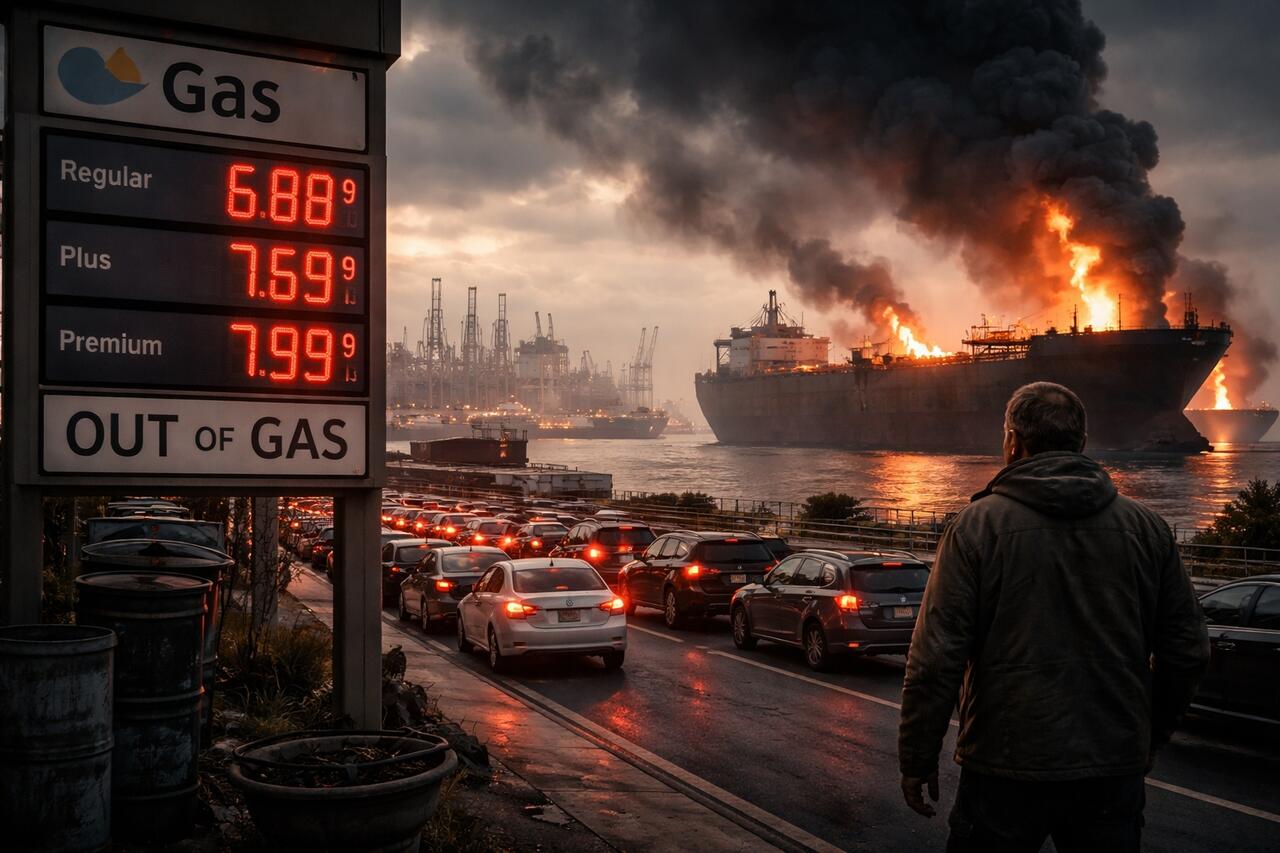
While Iran declared the Strait of Hormuz open to all except hostile nations, the multilateral effects of its closure have caused the UAE to leave OPEC and threaten the stability of the Petrodollar as the world’s reserve currency, with Iran proposing toll systems levied in yuan and bitcoin. Energy suddenly became scarce throughout Eurasia and supply disruptions interrupted industries globally. By the end of April the price of Brent crude skyrocketed above $120 per barrel. Two months of warfare spiked American gas prices. The halting of LNG exports through the Strait threatens to severely debilitate the global food system. Hormuz-related shortages also include cryogenic helium which is necessary for the microchip fabrication that powers the semiconductor industry behind the global AI economy, not to mention medical imaging and fibre-optic cable production.
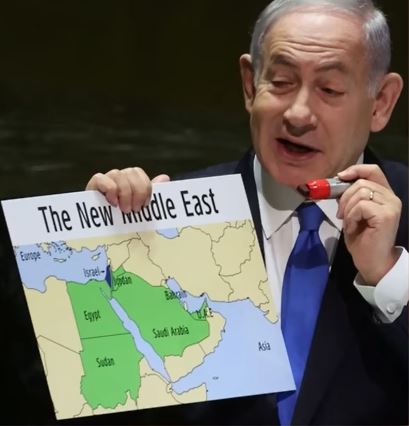
A tectonic wave of fluctuating justifications for initiating the unnecessary war spewed out of the White House and goal posts kept moving as American officials consistently demonstrated a complete lack of strategic literacy. There was never a declared strategy nor was there ever a casus belli to justify preemptive attack. While the Epstein Coalition (US and Israel) rationalized the preemptive/preventative attack as a necessary evil to counter the perceived threat of Iran’s nonexistent nuclear weapons program, American intelligence and IAEA authorities have all concluded that Iran never possessed nuclear weapons and was not in the process of creating them. The Israelis believe, however, that Iran stands in the way of their Greater Israel aspirations, and therefore must be crippled and Balkanized. But efforts toward these ends have backfired given that former Mossad deputy head Ehud Lavi stated that the “war on Iran has strategically failed.”
Meanwhile countless American officials admitted that Iran’s January “protests” were incited by Mossad provocateurs who opened fire on Iranian police stations and torched government buildings in a bid to stir chaos and incite an insurgent uprising. After this strategy failed, the White House and its parrots greatly exaggerated the casualty figures of the skirmishes they had themselves instigated in a desperate bid to legitimize the air strikes by convincing Americans that the regime was “killing its own people” – a familiar lie that’s justified the overthrow of many governments by the CIA. In the end, the Mossad insurgency claimed 3,117 lives. But Iran didn’t flatten Gaza, and if it were slaughtering noncombatants on anywhere near the same scale that Israel does there would be some coverage of it by now. Beyond this, The world is teaming with brutal regimes but, as John Quincy Adams once stated, it is not the job of the U.S. government to “go abroad in search of monsters to destroy.”
Citing Israeli influence over the president, Joe Kent quit his post as director of counterterrorism while the Pentagon finally admitted there was never an “imminent threat” from Iran. Additional political blowback manifested in many forms, including the 130 veterans and military family members who protested the illegal war at the Capitol rotunda on 20 April 2026, resulting in the arrest of 62 veterans. According to a poll by J Street, 60% of American Jews oppose war with Iran. More than two-thirds of Americans want America’s war with Iran to end whether “victory” can be declared or not, according to a Reuters poll taken on 31 March 2026:
An early March poll by Drop Site News and Zeteo found that a majority of US citizens believe Trump launched the war on Iran to “cover up” the Epstein scandal, with 52 percent agreeing he acted “at least in part to distract” from it. The survey also points to broader distrust, with nearly half of respondents saying Trump is more “responsive” to Israel than to US citizens, and half of independents believing he “prioritizes Israeli interests over Americans’.”
WAR IS HOW GOD TEACHES GEOGRAPHY TO AMERICANS
The city of Tehran is literally ancient, dating back 6,000 years. The Persian Empire has existed for millennia for many reasons, and one is geography. Iran is approximately the size of Alaska and surrounded by high mountains. The Zagros and Alborz mountain rangess create a natural fortress around Tehran that geographically force-funnels would-be invaders through predictable corridors or “pinch points”.
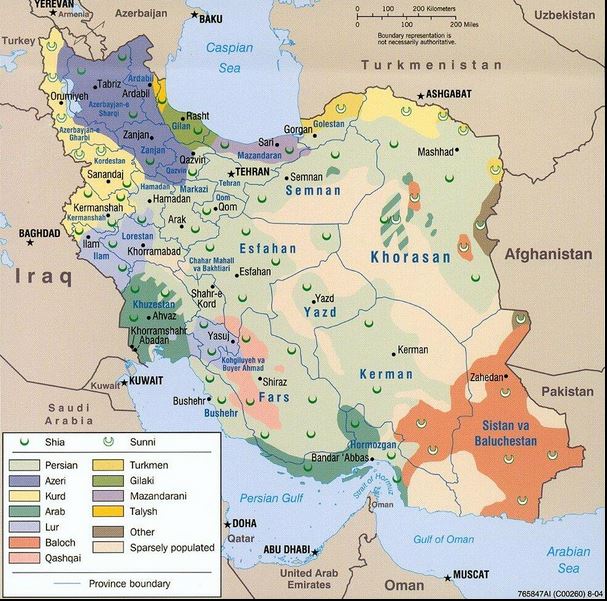
Iranians are highly-educated people whose culture has survived all of written history. The majority of Iran’s 93 million Farsi-speaking residents are not Muslims, and despite a Shi’a plurality Iran is increasingly secular. One of the central detriments plaguing the geopolitical debate involves Americans’ relative ignorance of the difference between Shi’a and Sunni Muslims and Iran’s attitudes toward freedom of religion generally:
Iran is a Shia Muslim country. Most terrorist attacks over the past 20 years have been carried out by Sunni extremist groups or individuals. … If Iran was serious about destroying Israel, then why does Iran let thousands of Jews live unmolested in Iran and have synagogues, schools, butchers, restaurants, and a matzah factory?
Of course, what this really meant is that Washington reserved the right to determine Iran’s foreign policy and to approve the states with which it wished to maintain relationships. Those which did not meet the approval of Washington and also Israel, in turn, were ipso facto terrorist states and Iran thereby became a leading state sponsor of terrorism. Presto. In the cold light of facts that was utter nonsense. If the truth had been told, forces within Saudi Arabia and other Sunni states in the Gulf had done far more by 2001 to support and fund actual terrorist attacks than had Iran, and by more than a country mile, too.
The Ayatollah, who is seen by Shi’a Muslims as a descendant of Muhammad himself (and thus allowed to wear the black turban) was killed during the height of the Muslim holy month of Ramadan, thus infuriating 250 million Shi’a Muslims all over the world, and especially in Iraq and Pakistan, spurring massive solidarity protests across the region. Not only were Shi’a Muslims incensed worldwide, but Iraq’s Sunni and Shi’a clerics both called for regional solidarity with the Islamic Republic, leaving Iran holding all of the cards and uniting Sunni and Shi’a like never before.
According to The Epoch Times, the country’s new supreme leader, Ayatollah Mojtaba Khamenei, was “safe” and “leading the country” as of 27 March. The US not only murdered the successor’s 86-year-old father, but also his mother, wife, sister and one of his sons. The supreme leader’s assassination united Iran’s ethnic minorities (whom Khamenei represented as an ethnic Azeri alongside President Pezeshkian and countless other members of Tehran’s elites) prompting massive demonstrations in support of Iran’s new leader. Rather than inciting an uprising against their government, the population of Iran began rallying around the flag in response to America’s bombs.
As was the case in Venezuela, claims of regime change in Iran are demonstrably false. Inaugurated in July 2024, President Masoud Pezeshkian is still the president of Iran, and the Ayatollah’s son took the reins as Iran’s supreme Shi’a cleric. Pezeshkian’s public appearances in Tehran throughout the conflict further prove there never was a “new regime.”
It’s important to keep in mind that Iran only has an Ayatollah in the first place because the CIA overthrew their democratically-elected Prime Minister Mohammad Mosaddegh in the August 1953 coup d’état known as Operation Ajax, a joint US-British intelligence operation. Mosaddegh tried to give the Iranian people a better deal than the one they’d been getting from British Petroleum, and moved to nationalize the Iranian oil industry, triggering western leaders to initiate the coup and install their puppet, Shah Mohammad Reza Pahlavi who ran a truly brutal regime of terror and torture. It was only when he got sick with cancer in the late 1970’s and his inner circle grew weary of losing their benefits and privileges that the people of Iran were allowed to rise up during the 1978 revolution. The military did not stop the uprising because Iran’s principal personalities were also tired of the Shah, especially if his illness meant an end to the gravy train. Iranians publicly demanded the return of the Ayatollah, who was living in France at the time, and the rest is history.
While economic sanctions have devastated Iran for decades it is also true that the Islamic Republic – like most of the oil monarchies throughout the Middle East – suffers from the inevitable consequences that an oil economy produces, namely, the concentration of wealth among select elites. Historically, countries with large oil reserves don’t need to rely on taxation for government revenue to buy the continued support of their essential coalition members, meaning there are generally fewer incentives to spend treasure on the citizenry. Having said this, Iran still ranks far higher in quality of life for the average citizen than most oil monarchies. Case in point, if Iran didn’t care about its citizens, their population wouldn’t have such high literacy because insecure autocratic governments never spend money educating their citizens since doing so inevitably creates political opposition groups.
Iran is misunderstood by America because it is not a monolithic system in the way it is often portrayed. Underestimating such a civilization seems like a fatal mistake as the Persian people are historically infamous for their resiliency, preparedness and cunning. As stated in Iranian President Masoud Pezeshkian’s open letter to the American people: “Throughout its millennia of proud history, Iran has outlasted many aggressors.”
UNDERESTIMATING PERSIA – THE COMBAT LOSSES
Despite bloviation from the White House, Iran’s armed forces continue to maintain offensive capabilities and have caused unprecedented military losses for the United States including radar sites, military bases and heavy aircraft losses that were characterized as a “disaster for the US Air Force over Iran”. The IRGC asserted it struck the USS Gerald Ford while Pentagon officials claimed it was just a “fire in the laundry room” of the supercarrier – a “laundry fire” that burned for a whopping 30 hours, injured many of the crew, destroyed sleeping quarters and caused damage far greater than initially reported requiring lengthy emergency repairs at its port in Croatia.
Iran has proven that large navies and air forces are obsolete in an age of kamikaze drones, hypersonic missiles and computer viruses. According to Press TV:
“These developments have complicated battlefield calculations and raised the operational cost of the [war]’s major military achievements over the past month include interception and successful strike on an advanced F-35 fighter jet for the first time in history, interception and destruction of a Boeing KC-135 Stratotanker for the first time in history, destruction of advanced THAAD and patriot radar systems for the first time in history, strike on the USS Gerald R. Ford rendering it inoperable for at least two years, operational strike on the USS Abraham Lincoln forcing it to withdraw from the battlefield, destruction of more than 140 advanced drones, the first all-out attack on US bases since World Wart Two.”
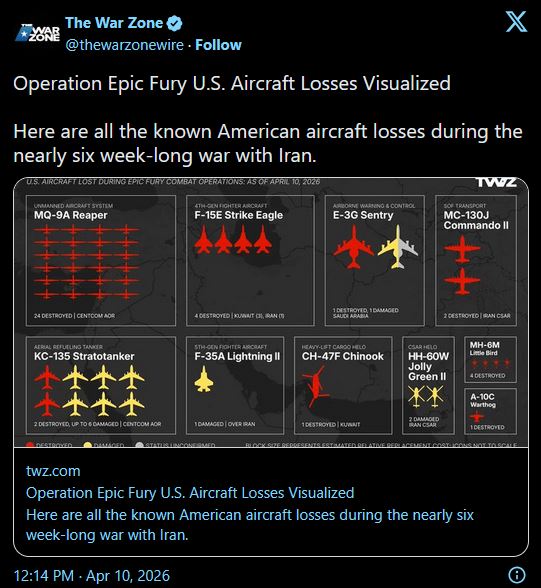
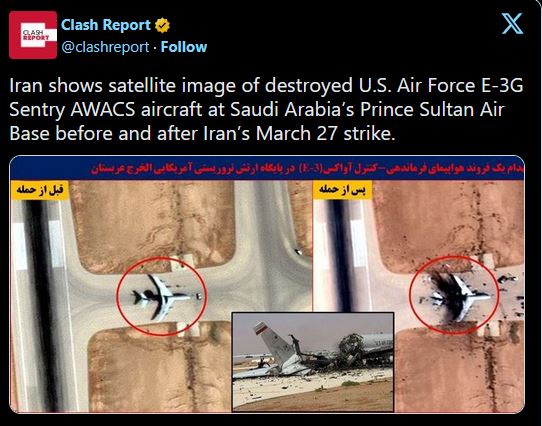
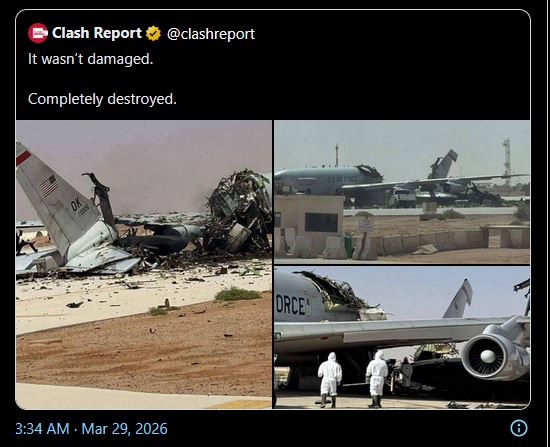
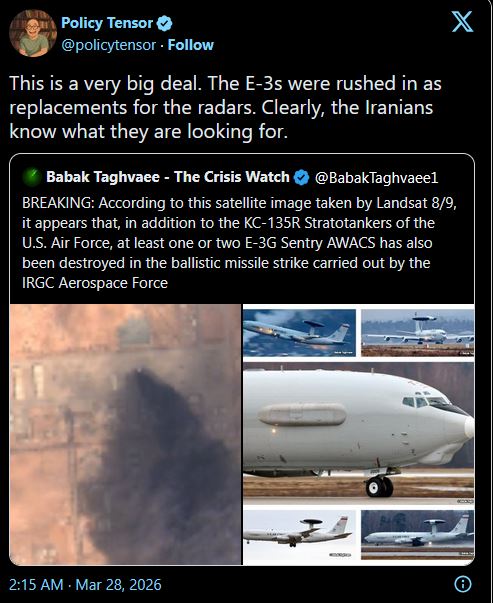
The US military never declared outright that air superiority was ever achieved, and White House claims of “air superiority” over the skies of Iran proved tragically false. Despite Trump’s repeated claims that Iran lost its anti-aircraft capabilities, the IRGC intercepted and destroyed a total of four F-15E Strike Eagles, two KC-135 Stratotankers, two C-130J Commando II transport planes, four MH-6 Little Bird helicopters, at least one E-3 Sentry AWACS (Airborne Warning And Control System) plane, a CH-47 Chinook helicopter, an A-10 Thunderbolt, and at least two dozen MQ-9 Reaper drones.
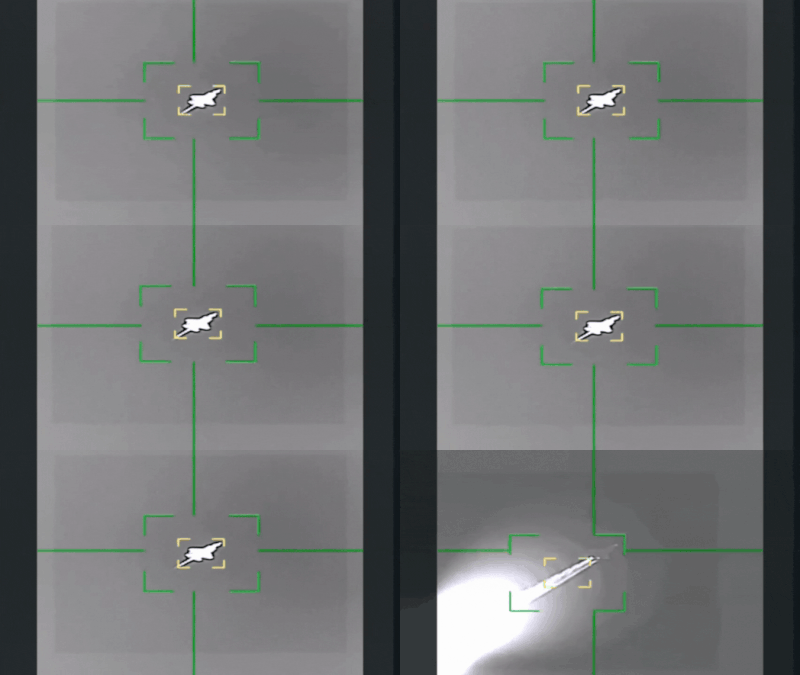
Just hours before losing an F-35 Lightning II stealth fighter, US “Secretary of War” Pete Hegseth insisted that Iran’s air defenses had been ‘flattened’. Using “passive thermal detection” Iran was able to target and intercept the F-35 causing the pilot to suffer “shrapnel wounds”. The successful counter strike on the US Air Force’s most advanced stealth combat aircraft exposes the myth of uncontested American “air superiority” for what it is:
For decades, stealth capability has been central to the narrative of western technological dominance in aerial warfare. The significance of Iran’s reported success lies not only in the physical damage inflicted but in the symbolic rupture it introduces into this narrative. For decades, US air campaigns relied on the assumption that technological superiority could offset geographic and political constraints. Iran’s response challenges that assumption at its core. …
Among Iran’s thermally guided systems is the Majid short-range mobile air defense platform, which uses photoelectric and infrared tracking to counter low-flying targets. Passive systems such as Herz-9 can monitor aircraft without emitting detectable radar signals. Shoulder-launched missiles like Misagh-2, with a range of approximately 6 kilometers, lock onto engine heat signatures with considerable precision. Earlier and upgraded variants, Misagh-1 and Misagh-3, have been refined to improve effectiveness against maneuvering targets. The Sayyad-1A missile incorporates infrared tracking elements to enhance interception accuracy at longer ranges. Together, these systems form part of a layered defensive architecture combining short, medium, and long-range coverage. This multi-tiered network enables Iran to detect and engage hostile aircraft at varying altitudes and distances. By dispersing mobile units and integrating passive detection tools, Iranian planners have sought to deny adversaries the predictable engagement corridors that stealth platforms traditionally exploit.
The Pentagon claimed they deliberately destroyed the C-130s themselves, that the KC-135s were lost in a “mid-air collision”, that the A-10 “crashed”, and that the F-15s were lost due to “friendly fire”. Anything to avoid admitting that Iran could still shoot back irrespective of the damage they’d absorbed. As reported on 26 April by NBC News, Iran caused far greater damage to US bases than the Trump Administration was willing to admit:
Iranian missile and drone attacks have targeted US bases in seven Middle Eastern countries: Bahrain, Kuwait, Saudi Arabia, [Israel], Iraq, Jordan, and Qatar. US officials said that an Iranian F-5 fighter jet was able to bomb the US base at Camp Buehring in Kuwait despite it having air defenses, marking the first time in many years that an enemy fixed-wing aircraft struck a US military installation.
The successful strike by the Iranian F-5 undermined Trump’s claims about the Iranian Air Force being “completely obliterated.” This historic offensive imposed overwhelming damages to American and Israeli command-control-and-logistical hubs throughout the Middle East. US officials told NBC, “The attacks struck warehouses, command headquarters, aircraft hangars, satellite communications infrastructure, runways, high-end radar systems, and dozens of aircraft.” As a result of the retaliatory strikes, the Pentagon lost billions in military assets including “intelligence sites belonging to the CIA and Mossad.”
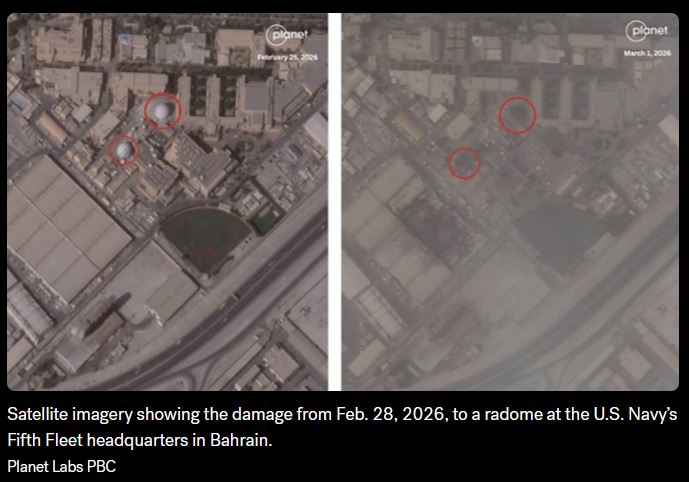
Iran forced the evacuation of the 5th Fleet “Naval Support Activity” base in Bahrain on 04 April 2026, with 1,500 American sailors withdrawn due to heavy missile activity. Every American base in the region was heavily damaged or destroyed, forcing “many American troops to relocate to hotels and office spaces throughout the region,” according to the New York Times:
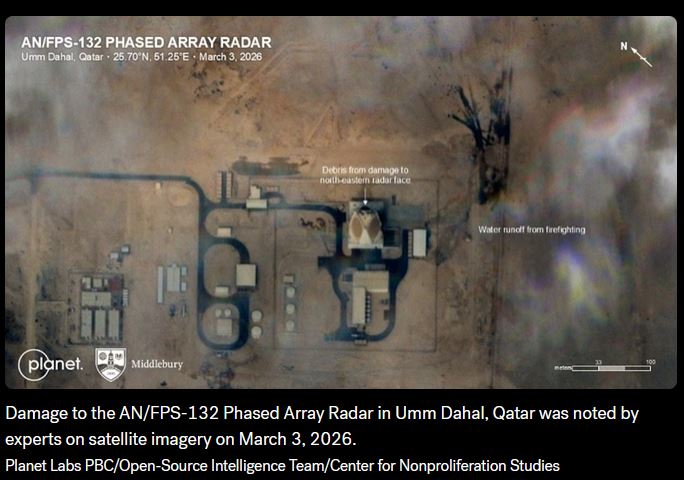
Six U.S. service members were killed in a strike on Port Shuaiba that destroyed an Army tactical operations center. Iranian drones and missiles also targeted Ali Al Salem Air Base, damaging aircraft structures and injuring personnel, and Camp Buehring, damaging maintenance and fuel facilities. In Qatar, Iran struck Al Udeid Air Base, the regional air headquarters of U.S. Central Command, damaging an early-warning radar system. In Bahrain, a one-way Iranian attack drone struck communications equipment at the headquarters of the U.S. Fifth Fleet. At Prince Sultan Air Base in Saudi Arabia, Iranian missiles and drones damaged communications equipment and several refueling tankers.
Anticipating retaliatory counter attacks, Washington purportedly evacuated its gulf bases weeks before Israel fired the opening shots of 28 February 2026. In January the military was calling these troop withdraws a “posture change”; by late February they were rebranded as a “precautionary evacuation”; when the missiles started flying, destroying bases and killing troops, these evacuation efforts were again rebranded as “strategic relocation”. The euphemisms grew softer as the situation became worse. Iranian missile salvos rendered at least 13 of America’s regional bases “uninhabitable” and annihilated numerous billion-dollar radar stations:
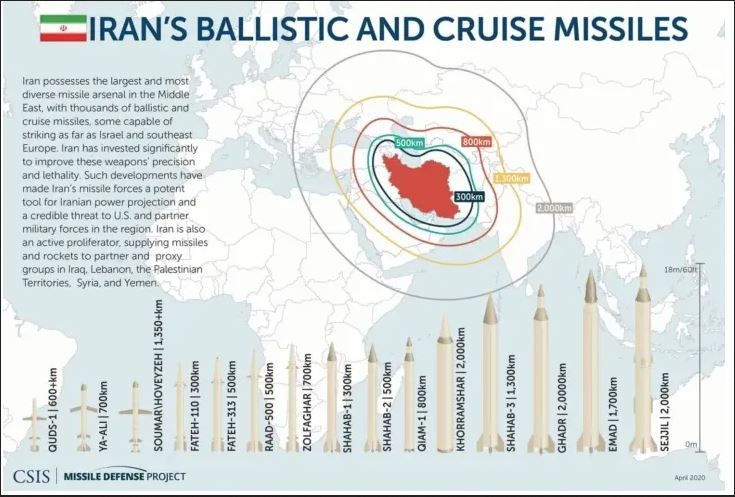
The shock of the outcome cannot be understated: Iran is literally blinding the US in the region. And following that, it is launching its most advanced hypersonic Khorramshahr-4—also known as the Kheybar—ballistic missiles at Israel, which are now impervious to interdiction. They are said to release upwards of 80 submunitions in a tight pattern.
China called citizens back from Israel, advising them to evacuate the Middle East “as soon as possible” due to “The scope, frequency, and intensity of missile and drone attacks on Israel”. The Iranians were firing a daily average north of 100 missiles and drones onto Israel and the GCC with salvos said to be turning Israel completely “upside down”.
According to former Pakistani ambassador Asif Durrani, Iran’s retaliatory strikes have successfully “broken the myth” of Israeli military supremacy. Even pro-war propagandists had to admit that Israel’s layered air defense system cannot stop Iranian missiles from raining down, in no small part because Iran destroyed all the regional radar systems used to anticipate and track such attacks. The loss of 10 radar stations effectively disabled the whole air defense network.
General Dan Caine, Chairman of the Joint Chiefs, warned that “a major operation against Iran would face challenges from a significantly depleted U.S. munitions stockpile due to Washington’s ongoing defense of Israel and support for Ukraine”. Indeed, during 40 days of engagement, the U.S. exhausted over 53% of its remaining Lockheed THAAD (Terminal High Altitude Area Defense) interceptors and 45% of Patriot missile interceptors. To add insult to injury, missile interception operations over Israel and the GCC proved a complete failure:
The Israelis fire three Patriot interceptors at an incoming Iranian missile—all of them miss. The Israelis fire a dozen Iron Dome interceptors at an incoming Iranian missile—all of them miss. The anti-missile intercept success rate seems somewhere between 0% and 5%. [MIT Professor] Postol went on to explain that many of the media reports of an 85-90% successful intercept rate had apparently come from the work of a Stanford political scientist named Scott Sagan, whom Postol ridiculed as an academic fraud.
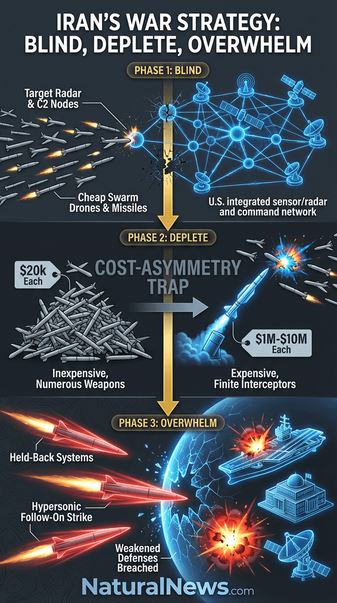
With Israeli missile systems depleted and American regional radars destroyed, Iranian missiles continued to rain down over Israel for six weeks without interruption, demonstrating the strategic folly of relying on ground-based defense systems for modern warfare. Analysis of Iranian military doctrine noted the obvious and devastating strategy:
First, blind US forces by hitting radar and early-warning sites, then saturate air defences with waves of low-cost drones and short-range missiles to deplete expensive interceptor stockpiles, and only once those batteries are strained or exhausted, bring in the larger, more dangerous ballistic or even hypersonic missiles
The limits of America’s military might are now on full display before the entire world with the US unable to protect either its military bases in the Middle East or the countries that host them. Despite claims to the contrary from the White House, Iran consistently fired drones and missiles at the same rate throughout the conflict with later strikes exhibiting greater precision. America’s inability to defend Israel stood out as the single loudest indicator that the empire had bitten off more than it could chew. Indonesian defense publication Airspace Review concluded that America’s outdated air defense doctrine was “obsolete” as missile interceptors and fighter aircraft are orders of magnitude more expensive than the IRGC’s tactically superior layered missile defense systems.
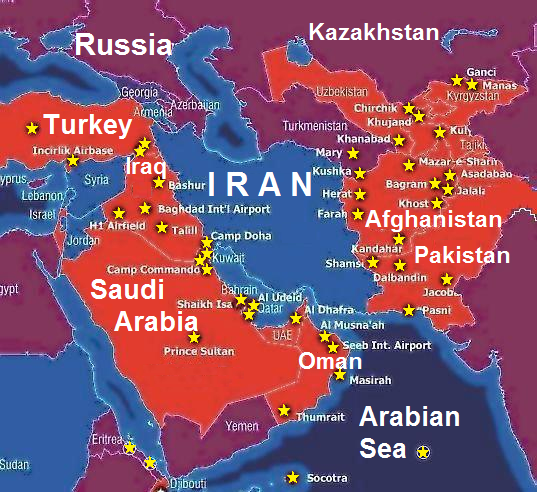
US military bases have encircled Iran for decades
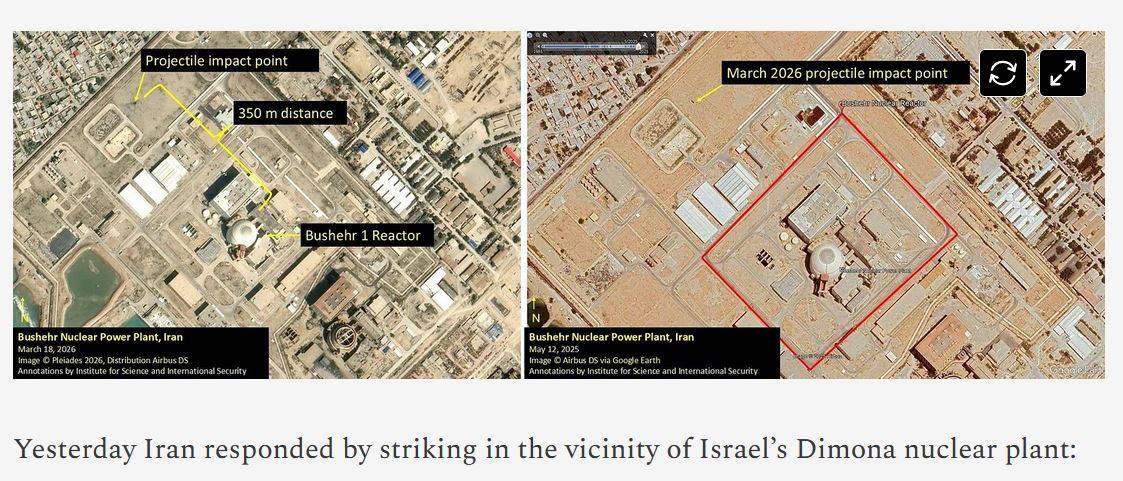
There’s also the inconvenient fact that GCC countries wouldn’t have drawn fire from Iranian missiles if they hadn’t hosted US military bases in the first place, changing the perception of American presence from a shield into a liability. Iranian drones destroyed British-owned oil facilities in Iraq. The Financial Timesreported that an IRGC strike damaged Amazon’s cloud computing infrastructure in Bahrain causing “disruptions” of services. Iran then named 18 US companies now considered “legitimate targets” including Cisco, HP, Intel, Oracle, IBM, Dell, Palantir, JPMorgan, Tesla, GE, Spire Solutions, Boeing, and UAE-based artificial intelligence company G42. The Pentagon’s lack of strategic foresight was further revealed when an Oracle data center in Dubai was reportedly targeted by the IRGC as well. According to ABC News, satellite imagery revealed that multiple American bases and at least 10 radar stations in the GCC were destroyed but censorship of the war prevents us from knowing more:
ABC News also reported that Iranian missiles have hit US bases in the Middle East at least 25 times since the latest conflict erupted in February. However, the true impact remains unknown, as the Pentagon has refused to release damage assessments, and satellite imagery that is typically publicly available has been withheld.
For reporters, researchers, and rights monitors, the effect is immediate. Commercial satellite imagery has become one of the few tools that can test official claims in near real time. It can show whether a bridge was hit, whether a fuel depot burned, whether a missile battery moved — and whether a government is lying. When access to that record narrows, public knowledge narrows with it. … Satellite images have helped journalists track bomb damage, verify military claims, and document attacks, such as that on the elementary school in Minab, that might otherwise disappear into propaganda.
Satellite imagery isn’t the only aspect of this war that’s been censored. CENTCOM reported over 200 US servicemen wounded and 13 dead as of 16 March 2026 and the numbers haven’t changed much since then, in part, because US officials are so reticent to discuss them. The Intercept alleged an astounding “casualty cover-up” by the Trump administration in a report outlining how the White House is hiding losses by blurring clarity with vague details:
Almost 750 U.S. troops have been wounded or killed in the Middle East since October 2023, an analysis by The Intercept has found. But the Pentagon won’t acknowledge it. U.S. Central Command, or CENTCOM, which oversees military operations in the Middle East, appears to be engaged in what a defense official called a “casualty cover-up,” offering The Intercept low-ball and outdated figures and failing to provide clarifications on military deaths and injuries.
After Hegseth and the Administration publicly expressed frustration that news coverage of the war wasn’t “patriotic enough,” Brenden Carr threatened to pull the FCC licenses of news organizations that reported too accurately. In another truly unprecedented move, the Pentagon is rumored to have designated casualty figures as “classified” information, making it a crime to report them. Most alarmingly, Americans in America are now vulnerable to arrest for criticizing Israel and making jokes about Netanyahu.
Censorship of the war initially threatened American tourists abroad with prison sentences, merely for sharingphotosandvideosof the destruction doled out byIran’sdronestrikesandmissilesalvos. The UAE conducted “widespread” arrests of anyone violating compulsory self-censorship, including 35 British citizens:
The group documented “widespread arrests, detention, and prosecution of residents, tourists, workers, and students of multiple nationalities,” as authorities intensify restrictions on content showing missile and drone attacks. At least 35 British citizens have been detained in Dubai, with a similar number reported in Abu Dhabi, according to Dubai Watch, which is representing eight of those arrested. The grounds for detention are reportedly low, with the group saying that “Forwarding or interacting with content can result in detention, even where the individual did not create it,” adding that “simply receiving an image and failing to delete it has reportedly led to arrest.” … A British airline worker was detained after photographing damage near Dubai International Airport, while a tourist faces up to two years in prison and fines of up to £40,000 (around $52,744) for filming missile strikes despite deleting the footage.
The unprovoked attacks against the people of Iran have resulted in the killing of over 3,000 Iranians as of 12 April 2026 (more than half of whom were civilians) while damaging or destroying 339 hospitals, 857 schools, 32 universities and 100,000 homes as well as desalination plants, energy facilities, police stations and banks. The death toll figures come from the US-based and funded NGO called the Human Rights Activists News Agency (HRANA) which is “very critical of the Iranian government.” As of 30 March 2026 the aims of the campaign were clear:
Iranian authorities say the pattern of attacks reflects a deliberate campaign targeting civilian life, with homes, schools, and medical centers having been repeatedly struck, placing millions under sustained pressure as Washington and Tel Aviv expand their assault beyond military targets.
The first casualty in war is always truth, so it’s no surprise that Iranian casualty figures don’t add up, especially when compared against the Pentagon’s reported numbers. Despite the media blackout, reports made their way through the censorship curtain, and as the war marched into its second month the “collateral damage” inside of Iran became so overwhelming that it could only be interpreted as the deliberate targeting of the civilian population:
Israel’s conception of the ‘battlefield’ is fundamentally different. The deliberate targeting of civilians and civilian infrastructure is not incidental, nor merely ‘collateral damage’; it is central to the strategy itself. … This is not collateral damage. It is the deliberate destruction of a civilian population, an act of genocide that is designed to force mass displacement and remake the political and demographic reality in Israel’s favor. The same logic extends beyond Gaza. It shapes Israel’s wars in Lebanon against Hezbollah and its broader confrontation with Iran.
More civilian infrastructure was targeted as American bombs struck several airports and at least 30 Iranian colleges and universities including Tehran’s Sharif University often referred to as the “MIT of Iran”. By 19 April, the Epstein coalition expanded strikes to include sports stadiums, entertainment complexes and critical civilian infrastructure including the Ebrahim Raisi Bridge (the tallest bridge in the Middle East which linked Tehran to Karaj) as well as the world-famous Pasteur Institute:
The Pasteur Institute of Iran, hit in today’s strikes, is far more than just a building. It is a century-old pillar of global health and the oldest medical research center in West Asia. Founded in 1920 in collaboration with the Pasteur Institute of Paris, it has spent over a hundred years combating outbreaks such as rabies, smallpox, and cholera.
Netanyahu bragged in early April about destroying 70% of Iran’s steel production capacity. By targeting heavy industries like steel, petrochemicals, pharmaceuticals, and transportation, the war further threatens jobs and supply chains within Iran. Iran’s economy was already struggling through massive hyperinflation as evidenced by the introduction of the 10-million Rial note but the American government has poured salt on the wound with the war, tossing literally millions of ordinary Iranian civilians into poverty overnight.
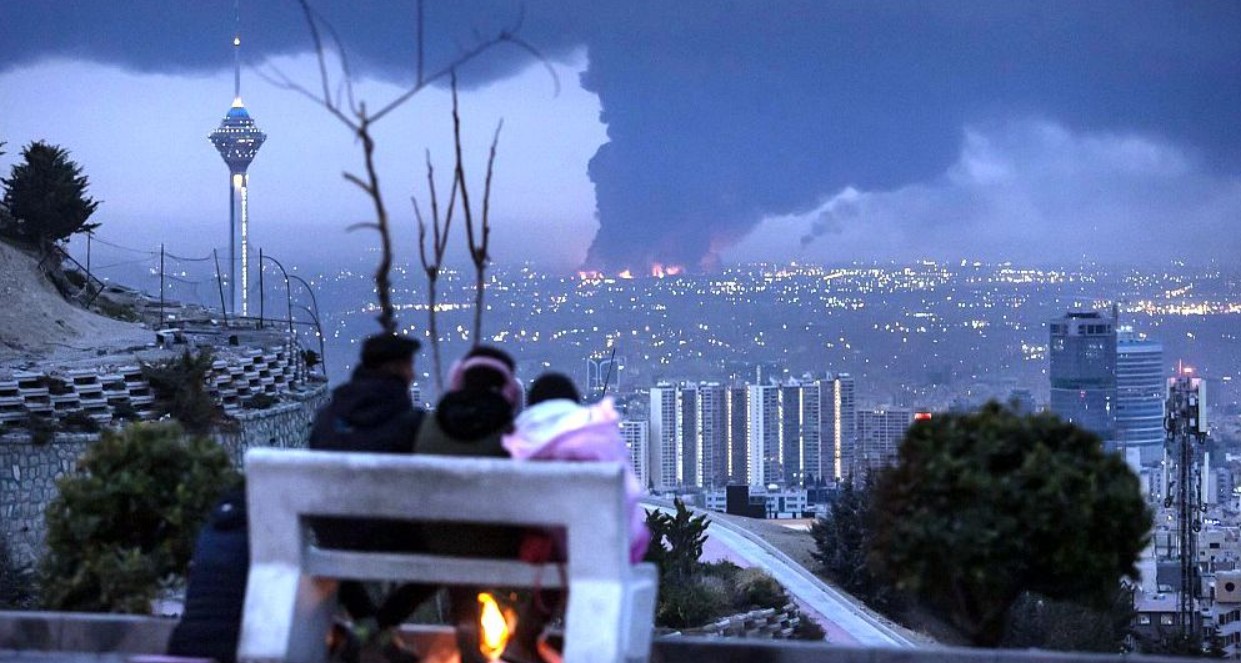
View of Tehran on 08 March 2026 following Israel’s bombing of five Iranian oil facilities
MINAB SCHOOL STRIKE – WINNING HEARTS AND MINDS
Just like Biden claimed that Russia blew up their own pipeline, Trump claimed that Iran hit their own school contradicting his own military and intelligence agencies. Trump even suggested to reporters on Air Force One that Iran did it with one of Raytheon’s American-made Tomahawk missiles. Then a missile fragment emerged from the rubble of the school marked “Made in USA”:
Iran has no Tomahawks, which are not “generic.” Originally developed by General Dynamics and now manufactured by Raytheon, the BGM-109 Tomahawk is a specific long-range cruise missile designed and produced in the United States. Only two other countries – Australia and the United Kingdom—are known to have Tomahawks in their arsenals, although Japan and the Netherlands have also agreed to buy them. … the New York Timespublished photos of fragments purportedly from a missile used in the school strike, which were marked with the names of multiple companies that produce Tomahawk components, a unique Department of Defense contract number, and “Made in USA.”
The Pentagon has since had to admit that the Tomahawk strike on the girl’s school was indeed brought to the world by the US military but waffled on whether it was due to AI targeting software or the human error of “decade old” intelligence. But the fact that Minab girls school massacre was a “double tap” strike confirms this was a deliberate act of state terrorism:
The US’s initial attack targeted, among other things, a girls’ school, killing over 170 children and teachers. When parents arrived to pick up their children, the US sent a second cruise missile at the school. The US admits that it fired Tomahawk cruise missiles at the school but says it was a mistake that resulted from letting an AI select the target for the attack, which based its decision on outdated data. Since many officers in the Iranian Revolutionary Guard Corps (IRGC) had their children at the school, which was subjected to two attacks 40 minutes apart, many doubt this explanation.
Many legal experts explained how the Trump Administration’s actions constitute war crimes given that the rhetoric of striking Iran “just for fun” resulted in the double-tap strike on the Shajareh Tayyebeh girls’ school in Minab, and that only one US Senator apologized for the butchery.
While UN Ambassador Mike Waltz toldMeet the Press that “we never deliberately attack civilians,” more than 430,000 civilians have been killed in over half a dozen countries in US-led wars since9/11, according to the Costs of War Project at Brown University’s Watson Institute for International and Public Affairs.
WE DON’T NEED NO STINKING STRATEGY
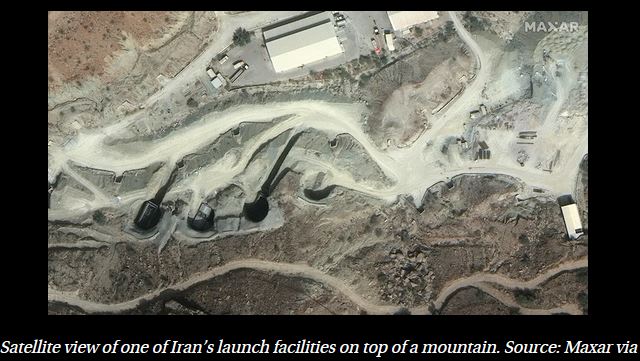
Efforts to destabilize Iran have not achieved their intended effect, causing massive blowback. After two months of warfare US campaign goals remained unachieved. Iranian society became more united, its missile reserves remained “safely underground” and its commitment to nuclear programs endured. Many of Iran’s above-ground missile bunkers and silos damaged by American airstrikes were excavated and repaired within hours.
Unable to achieve the destruction of Iran’s missile or nuclear programs, the Trump Administration seemed to improvise their way through the conflict in a state of “strategic bewilderment” as it continued moving the goal posts of definable objectives. Senior Administration officials contradicted each other as they struggled to articulate coherent goals or sound justifications for the war. The objective shifted from “denuclearization” to “regime change” to “bombing them into the stone age” (“where they belong”) and finally to “opening the Strait of Hormuz” which wasn’t closed until hostilities began (and was never closed to China, Pakistan, India, Russia, South Africa, France, &c.).
Claims of depleted Iranian arsenals turned out to be laughable propaganda as Iran continued launching wave after wave of salvos from stockpiles stored in below-ground “missile cities” carved into the mountains. After weeks of bombing, Washington’s effort to degrade Iran’s capabilities have completely failed:
The active use of decoys by Iran also makes destroying these missile launchers problematic for the US. … The United States’ reluctance to send more aircraft into Iranian airspace further suggests that the US’ claims that Iran’s air defense capabilities have been neutralized are also premature … The US’ attempt to sic Kurdish factions on Iran is tantamount to admission that their airstrike campaign did not produce the desired result
Trump cited a number of grievances to justify the war. The first was to protect Americans from the Iranian “imminent threat.” Another reason was to neutralize a regime that has posed a longstanding threat to American assets and allies in the region. The war is also revenge for Iranian proxy attacks on Americans, including the 1983 Marine barracks bombing in Beirut, Lebanon, that killed 241 Americans. And, the president added, Iran was “probably involved” in the 2000 attack on the USS Cole. Trump also said Iranian forces killed Americans in Iraq. And they were guilty of attacking commercial shipping lanes that affect U.S. interests. Iran was allegedly behind Hamas’ October 7 attack on Israel, which impacted American citizens, Trump pointed out. And, of course, there’s the claim of Iran’s dogged pursuit of nuclear weapons. The president even went as far as to say that Iran was working on building missiles that could reach the American homeland.
The administration was forced to bend itself into pretzels justifying the attack with the “47 years of war” narrative (omitting, of course, the 47 years of economic sanctions waged against Iran) because of how quickly their “imminent threat” narrative evaporated:
By the third day, even Washington’s own briefings could no longer sustain the myth that this was a last-ditch act of self-preservation. In closed-door sessions with members of Congress, Pentagon officials admitted they had no intelligence that Iran planned to attack US forces first, undercutting the administration’s repeated claims about an imminent threat, asReuters and others have reported. Senate Intelligence vice-chair Mark Warner said publicly that he had seen no evidence of an impending Iranian attack and described Trump’s campaign as a war of choice … The Pentagon now concedes there was no imminent attack to forestall.
On 02 March 2026 the Pentagon admitted there was no intelligence indicating Iran planned to attack America. Trump-Appointed Counter-terrorism Director Joe Kent resigned in protest over the war:
Kent declared he could not “in good conscience support the ongoing war in Iran,” stating unequivocally that Iran posed “no imminent threat to our nation” and that the conflict was initiated “due to pressure from Israel and its powerful American lobby.”
In his first briefing since 19 March, and more than one month into the US-Israeliwar on Iran, US Secretary of War Pete Hegseth openly conceded that Iranian ballistic missiles do not pose a threat to the US mainland, undercutting talk of the “imminent threat” repeated by the White House.
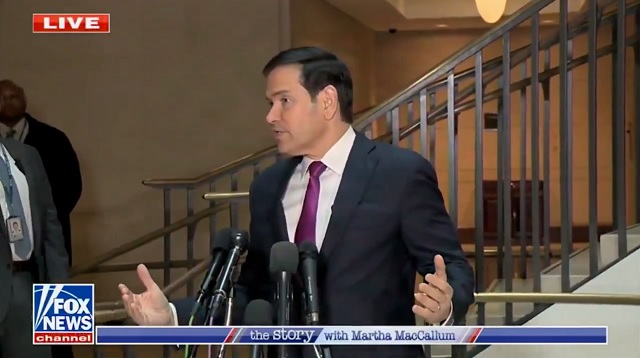
But US Secretary of State Marco Rubio raised eyebrows when he told reporters that the “imminent threat” faced by the United States — a key legal threshold as Congress constitutionally has the power to declare war — was that Israel had already decided to attack Iran, which would have then retaliated against US forces.
The “imminent threat” narrative becomes more absurd when we consider the fact that the Pentagon budget is at least three times the size of Iran’s total annual economic output. The prevailing Orwellian “War is Peace” mindset helps explain how Washington can rationalize dropping bombs on civilians in other countries while sanctimoniously claiming its all about “empowering” their citizenry:
But the question should not be if the Iranian regime is evil. The question should be if the imperial American state has the (moral) authority to forcefully initiate a regime change. It does not. The Iranian military had not attacked American soil, not a single Iranian drone had struck an American city, not a single Iranian citizen had attacked the United States, before the first US intervention.
Destroying critical civilian infrastructure can only cause hatred of the west and popular nationalization among Iranians, making regime change impossible. So if the point was really to entice Iranians to “rise up” then why target civilians?
“America is with you. I made a promise to you, and I fulfilled that promise,” Trump said at the outset. But that rhetoric soon hardened into menace. Trump later described Iranians as “a nation of terror and hate” and threatened to strike civilian infrastructure, including bridges and power plants, warning that a “whole civilization” could die, “never to be brought back again.”
The delusional concept of “liberation through bombing” becomes especially problematic because Iranians don’t want a violent regime change and claims to the contrary have turned out to be nothing more than a figment of Washington’s imagination, producing wave after wave of profoundly absurd statements from Washington, such as, “Trump insisted that the people of Iran were begging him to continue bombing until they were free.”
Meanwhile, Washington’s efforts to reimpose a puppet monarchy in Iran with the son of the disgraced Shah have become laughably implausible as evidenced by his complete lack of support. During a visit to Germany on a European tour campaigning to rule a new monarchy in Iran, Reza Pahlavi was snubbed by German officials and met with protesters who splashed him with tomato juice following his public statements denouncing ceasefire with Iran because “diplomacy has been given enough chance.” Pahlavi’s unpopularity doesn’t seem particularly surprising given that he was so public about “cheering on the bombing of his own people safely from the sidelines”.
BIBI BAFFLED BY FAILED COUP
The January “protests” in Iran proved to be the result of Mossad operations to incite uprisings that led to shootouts with police and the torching of government buildings, forcing the Iranian authorities to respond in kind. This was then parlayed by the American corporate media as “Iran killing their own citizens” with made-up casualty figures well beyond the actual reality, even though Israeli newspapers were already admitting responsibility for the insurgency:
Israeli media reported that Mossad had agents on the ground in Iran to organize armed groups and create chaos in advance of the US-Israeli bombing campaign launched weeks later, on 28 February.
Israeli officials convinced Trump that Mossad operations within Iran would create conditions ripe for regime change and Trump took the bait. Now it’s become obvious that Trump and Netanyahu failed to know their enemy before attacking. According to the Times, Mossad chief David Barnea predicted that fomenting rebellion could lead to revolutionary regime change in Iran within days, and Netanyahu became “frustrated” by his inability to deliver:
Israeli Prime Minister Benjamin Netanyahu embraced a Mossad plan to spark a popular uprising at the start of the Iran war and is now “frustrated” that the plan has failed, the New York Times (NYT) reported on 22 March. … US and Israeli intelligence already helped spark protests and violent riots in the Islamic Republic in early January, as a prelude to launching the war in late February. At least 3,000 Iranians were killed in the riots, including civilians and security forces, according to Iranian officials. US President Donald Trump claimed without evidence that Iranian security forces had killed some 32,000 Iranians, citing the number as justification to launch the February war alongside Israel. … US military leaders warned Trump that Iranians would not come out to protest against the government while the US and Israel were dropping bombs.
Because the uprising operation failed so spectacularly, Washington decided to embellish the lie about Iran killing its own citizens into absurd proportions in a bid to legitimize the bombings:
The reasoning behind the motivations for the war has also shifted repeatedly. One of the most prominent has been the alleged killing of tens of thousands of Iranian protesters back in January. Just prior to the war, Trump claimed that 32,000 Iranian protesters were killed. In early March he began claiming the number was really 35,000, before continuing to increase that number up to 45,000. After each contradictory number, the President has consistently insisted that the death toll was “perhaps much more,” leading some MAGA influencers to begin claiming the number was “over 100,000.”
Now Trump insists the number is 45,000. Larger numbers look better when it is the only fabrication that might be used as an excuse for dropping more bombs on Tehran and murdering more innocents in their sleep. … There are several problems with Trump’s preposterous claim. First and foremost, how does a government murder 45,000 people in a few days, or even a few weeks? How does the government dispose of 45,000 bodies without a single photograph or firsthand account? “Think about the logistics: morgues overflowing, mass graves that satellites or locals would spot, families demanding remains, and all under a blackout?” ponders DC Document Reports. “It smells like exaggeration from exile groups or media hype to amp up pressure on the regime.”
These “protests” were not spontaneous or “mostly peaceful” uprisings but Mossad-armed riots that opened fire on police stations and burned government buildings forcing authorities to take lethal action and resulting in 3,117 people dead, according to the Iranian government. US Treasury Secretary Scott Bessent also admitted to the US’ involvement in inciting the uprisings, with theNew York Times corroborating that Iran’s January “protests” were engineered by the Mossad. Nevertheless, American corporate media continued to portray the violent Mossad-incited terrorism as “largely peaceful”:
Western media has ignored a growing trove of video evidence showing terrorist tactics deployed across Iran by protesters described by Amnesty International and Human Rights Watch as “largely peaceful.” Recent videos published both by Iranian state media and anti-government forces reveal public lynchings of unarmed guards, the torching of mosques, arson attacks on municipal buildings, marketplaces and fire stations, and mobs of armed gunmen opening fire in the heart of Iranian cities. … In Kermanshah, where anti-government rioters shot and killed 3 year-old Melina Asadi, groups of militants were filmed firing automatic weapons at police. In cities from Hamedan to Lorestan, rioters have filmed themselves beating unarmed security guards to death for attempting to impede their rampages.
The genocide in Gaza that’s left 75,000 innocent people dead has not occurred at the hands of the Iranian regime and Israeli accusations of Iran’s “lawbreaking” represent the height of hypocrisy. Ashamed of nothing and offended by everything, every Israeli accusation represents a confession.
When efforts to incite a popular uprising didn’t work out, the Epstein Coalition sought to deputize Kurdish forces for a land invasion of Iran. Trump admitted to this strategy with his quip about how America “sent guns to the protesters – a lot of them.” Western corporate media reported that CIA-armed Kurds were going to mount an attack into Iran in a vain attempt to “start an uprising” but Kurdish forces responded that they had never received any weapons shipments of any kind. Ultimately, the US-Isreali plan to exploit the Kurds to farm out invasion of Iran failed to produce results because they began demanding “political guarantees” rather than just military support.
To say that the Epstein Coalition “miscalculated” on Iran would be an understatement, but the expectation that decapitation strikes could trigger some kind of populist revolution illustrates the disconnect between the White House and the history of revolutions generally, as explained by a former Mossad official:
“People don’t understand what a revolution is,” Igra said. “You need a popular movement – there is no popular movement in Iran. You need local leadership – not [Reza] Pahlavi from Los Angeles,”he added, referring to the exiled son of the last Iranian shah who has positioned himself as an alternative to the country’s current clerical leadership.
Israel has employed numerous efforts toward re-installing the Shah’s muppet-monarchy in Iran. The Gray Zone uncovered an AIPAC-funded NGO that claims to represent Iranians but creates propaganda aimed toward encouraging the return of the US-installed monarchy with the Shah’s son, Reza Pahlavi, as its King. Israeli and American leaders seem to have fooled themselves into believing that dissatisfaction with the Iranian government would translate into a popular upheaval and institutional overthrow:
Similarly, they convinced themselves that all these protesters were “anti-regime,” assuming that those demanding the return of their bank deposits were necessarily against Ayatollah Ali Khamenei. In doing so, they lumped together economic protesters, those opposed to religious totalitarianism, and those who aspired to Western-style governance. They are now discovering that one can be ruined by the banking system, resent the mullahs, be captivated by American series broadcast in Persian by some forty Western television channels, and still defend one’s country.
NUMEROUS ONGOING FALSE-FLAG OPERATIONS
On Saturday 21 March 2026, Iranian President Masoud Pezeshkian said that Iran has no intention of striking its regional “brothers”, stating that “Only Israel stands to benefit from any confrontation between Iran and its neighboring Muslim countries.”
Iran proudly claims responsibility for and publishes footage of their missile strikes and has repeatedly warned of commensurate retaliations in response to strikes against its infrastructure while limiting its own strikes to US and Israeli targets. In an apparent attempt to lure Kuwait into joining the war against Iran, Israel appears to have targeted Kuwaiti desalination plants and then blamed Iran:
The Iranian military denied on 30 March the recent attack, which hit a desalination plant in Kuwait, labeling the strike a US-Israeli false-flag operation aimed at “destabilizing and destroying the region.” “The brutal aggression by the Zionist regime against the desalination facility in Kuwait, carried out in recent hours under the pretext of accusing the Islamic Republic of Iran, is a sign of the vileness and depravity of the Zionist occupiers,” the Khatam al-Anbiya Central Headquarters of the Iranian army said in a statement. …
This is not the first attack Tehran has labeled a false flag. Iran has also denied recent strikes on fuel tankers in Oman and a refinery in Iraq’s Erbil, as well as one that targeted an Aramco facility in Saudi Arabia at the start of the month. US journalist Tucker Carlson reported earlier in March that Mossad agents were detained in Gulf states for planning bombings. Iran’s Foreign Minister Abbas Araghchi said on 15 March that the US has been using its new Lucas drone – modeled after the Iranian Shahed – to carry out false-flag attacks in the region and attribute them to the Islamic Republic.
Attacks on GCC countries and Aramco oil infrastructure were likely the result of Mossad activities as Qatari officials claimed to have arrested two Mossad agents suspected of sabotage. Strikes against Saudi Arabia were likewise largely carried out by Israel to try to lure them into a war against Iran, according to the Saudis themselves and corroborated by the Iranian government:
Iranian officials have accused Israel of carrying out some of the drone strikes on energy and civilian sites in the Arabian Gulf, calling the attacks a calculated bid to spark regional fury and pull Arab states into the war on Tehran. … “This is an Israeli effort to sabotage regional peace and alliances between neighbours,” the source added.
Jennifer Kavanagh, Senior Fellow & Director of Military Analysis at Defense Priorities, told me that “official U.S. Army accounts provide clear evidence that the U.S. has launched PRSM missiles from HIMARS in either Kuwait or Bahrain.” An explosion in Bahrain that injured 32 people that was originally blamed on Iran, has now been shown by an analysis to have been the result of interceptors fired from a U.S.-operated Patriot air defense battery in Bahrain.
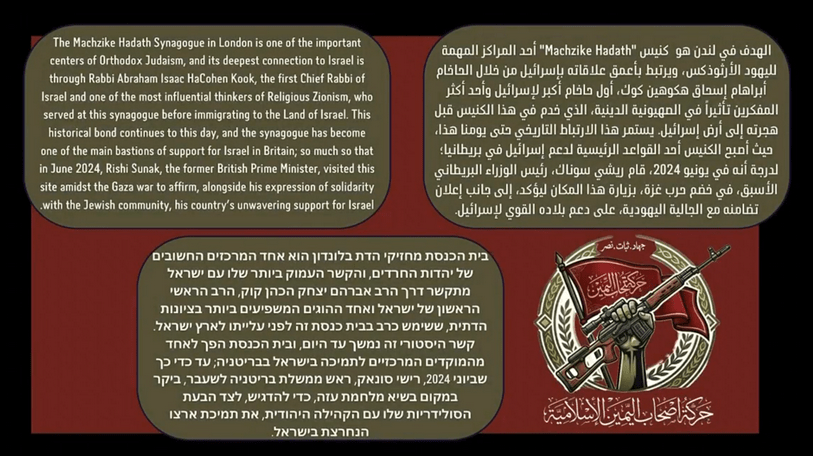
Meanwhile in England a different kind of false flag attack took place against the London ambulance service, with contrived manifestos apparently implicating Iran but proving highly suspicious for a number of reasons, first and foremost among them, the fact that Iranians don’t speak Arabic; even if they did, the Arabic scribbling on the image is incorrect gibberish that’s likely AI-generated and includes telling phrases that indicate what prompts were given to the LLM. Case in point, no Islamist has ever referred to Palestine as “The Land of Israel”:
There are some real red flags about its appearance. The first, as eloquently exposed by Lowkey, is that in its manifesto it uses the term “The Land of Israel” to refer to Palestine. No Islamic group, ever, referred to “The Land of Israel” and the phrase in Arabic is not even what complicit Gulf Arab elites use – they use just “Israel” or “The State of Israel”. “The Land of Israel” is unnatural in Arabic and evidently written by a Zionist and translated into Arabic.
URANIUM HEIST TURNED “PILOT RESCUE”
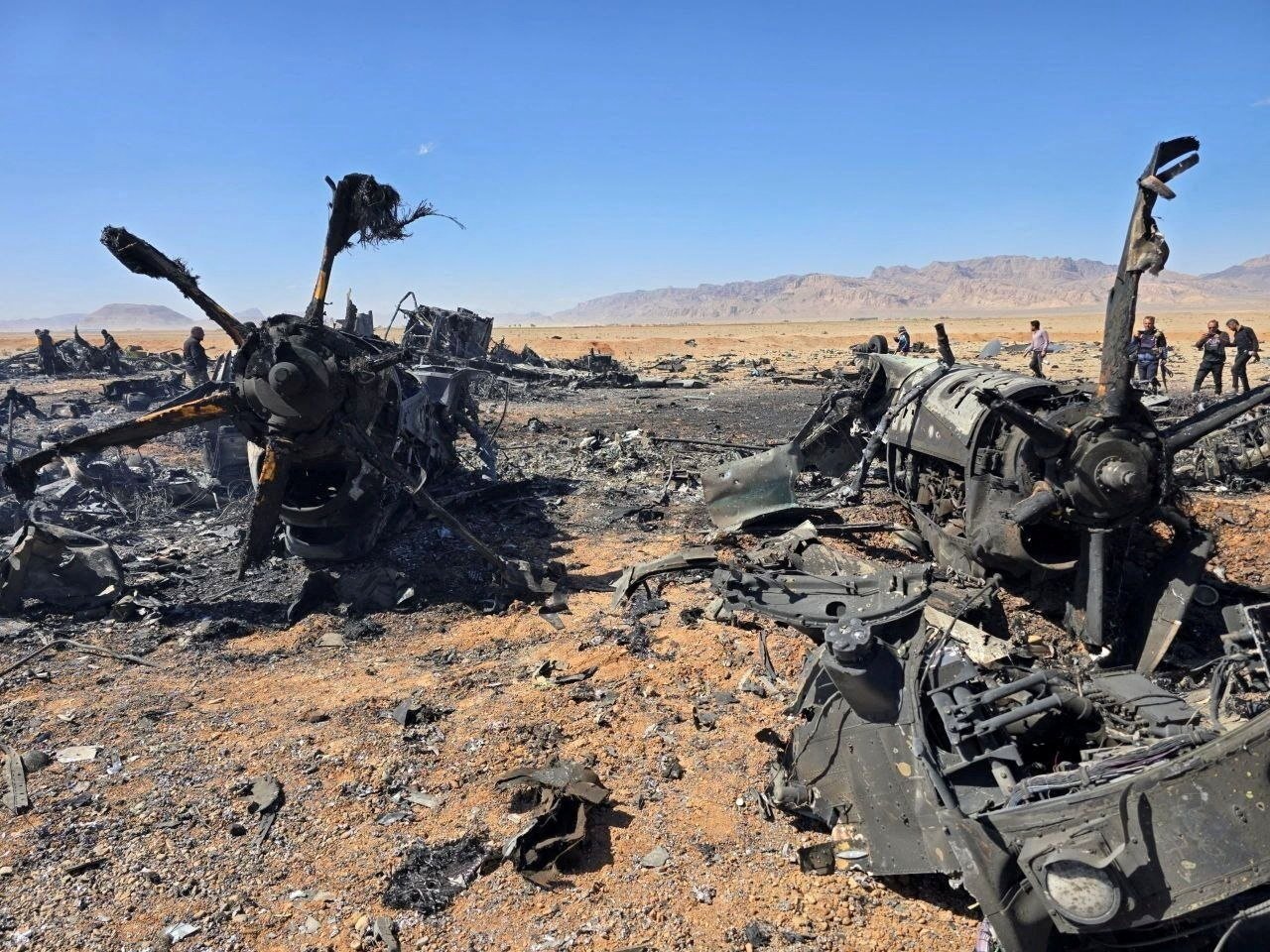
The highly publicized F-15 pilot “rescue mission” was more than likely cover for a uranium theft mission, occurring just south of Isfahan where Iran’s largest nuclear research facility is located. The IRGC accusation that Trump fabricated a successful rescue story to conceal a “heavy defeat” appeared more plausible than the official explanations from Washington as evidence mounted that an attempted uranium confiscation operation was caught in an Iranian trap:
The real objective was to infiltrate and attack one of Iran’s nuclear facilities in Isfahan. … Social media users and observers noted other discrepancies in Washington’s official story, including the fact that the airman had to climb a mountain to transmit his emergency signal. An article published by Substack user SIMPLICIUS also noted the use of two C-130 aircraft – each meant to carry around 100 personnel – to extract one pilot.
We’re told not only that the Weapon Systems Officer (WSO) was a high-ranking Colonel sent on a dangerous mission that might lead to his capture and disclosure of need-to-know information, but we’re also supposed to believe that his F-15 pilot – after ejecting from the aircraft and breaking his leg –walked five miles and then climbed a mountain?
Now here is the kicker… The geolocated wreckage of the C-130s which were apparently using a local “agricultural airstrip” … just happens to be right over a mountain, about 35km (21 miles) away, from Isfahan’s nuclear facility, where Iran’s ‘near-weapons grade’ enriched uranium is alleged to be stored. Was this whole affair a botched raid by US Special Operations forces to seize Iranian uranium [from] the Isfahan facility?
After three decades of repetition, the popular myth that Iran seeks nuclear weapons and is just “days away” from achieving them has become one of the most cliché lies of modern American political life, in part because it appears as the most straightforward justification for military operations.
It’s an open secret in Washington that Iran has formally forbidden the development of nuclear technology into weapons, and widely understood that the 60% enrichment payloads were always a bargaining chip for negotiations with the west. But every time negotiations got underway, America and Israel used the talks as a distraction to inflict more bombing campaigns. After the “12 Day War” in the summer of 2025, the Russian government even floated the idea of gifting nuclear missiles to the Iranian government as a deterrent against the west’s insatiable military abuses, but the Ayatollah declined the gift on the grounds that it was against their religion to do so, having issued a Fatwah against it in 2003.
Iran was a signatory nation to the Nuclear Nonproliferation Treaty of 1970. During the Obama Administration a deal was struck in 2015 called the Joint Comprehensive Plan of Action (JCPOA) as a direct result of the 2010 StuxNet computer virus attack (Operation Olympic Games) against Iran’s nuclear centrifuge program and the subsequent cyber war that followed. And after the first Trump Administration tore it up in May 2018 resulting in catastrophic backtracking, the second Trump Administration now seeks to restore Iran’s compliance with the conditions of that torn-up agreement following yet another preemptive military attack.
The U.S. intelligence community’s 2025 Annual Threat Assessment states plainly that Iran “is not building a nuclear weapon,” a judgment echoed by other reporting about intelligence assessments. History is even less convenient for the war pitch. The declassified key judgments of the 2007 National Intelligence Estimate concluded, “with high confidence,” that Tehran halted its nuclear weapons program in fall 2003.
More immediately, Trump’s denuclearization claims didn’t hold water simply because of his insistence eight months earlier that the 2025 Midnight Hammer strikes “obliterated” Iran’s nuclear program, and that “suggestions otherwise are fake news”:
Fast forward just eight months and an administration official was issuing the dire warningthat Iran was ‘probably a week away from having industrial-grade bombmaking material’ – deploying thirty-year-old rhetorical shtick so hackneyed that it is a marvel anyone still believes it. Now we are at war with Iran, the cocky ‘one and done’ chatter suddenly thrust down the memory hole.
Given the dubious reality of nuclear weapons, all of the anxious hyperventilating about nuclear war appears to be a giant red herring sold to the world in a bid to sow crippling fear and justify irrational authority. There’s a great deal of evidence to support the claim that nukes were just another well-engineered and brilliant psyop, making continued debate about “containing” Iran supremely ridiculous.
IRAN IS FULL OF SURPRISES
If there is one key takeaway to Iran’s geopolitical strategy, it’s decentralization. Disabling Iran’s hardened power grid is not a one-strike operation because of its wide dispersion and redundant connections. Murdering senior politicians cannot cripple the government because it’s been structured to withstand such an attack. Iran’s key strategy of decentralization means that the regime maintains operational continuity regardless of the “presence or absence of a single individual”.The IRGC is not a conventional military vulnerable to decapitation, but a parallel state with its own economy and fanatic loyalty to the supreme leader that’s kept politically in check by Iran’s other, separate military, the Iranian Armed Forces.
Iran didn’t need a navy or air force to close the Strait of Hormuz and disrupt the entire global economy, and apparently nobody in charge thought the Iranians had the minerals to do it anyway. While Iran suffered the loss of several large capital ships, their navy remains reportedly intact with most assets hidden strategically800 meters underground. The military capabilities of the IRGC and its regional alliances are not well understood and there is no obvious way to immobilize the system they’ve created.
The ability to absorb attacks is necessary to prevail in combat against an adversary with a superior military like the US. In anticipation that their top generals and politicians would be targeted, Iran developed a system characterized by endurance, adaptability and flexibility that can handle sudden leadership changes, and continuity of the regime prevails through organized personnel rotations. In Iran’s military sphere this is known as the Mosaic Defense strategy, created in response to America’s invasion protocols against Iraq and Afghanistan:
The strategy is called Mosaic Defense and was developed by Major General Mohammad Ali Jafari after he witnessed in 2003 how the US managed to completely paralyze Iraq by knocking out its leadership. When Jafari became head of Iran’s Revolutionary Guard in 2007, he divided Iran into 31 autonomous military districts, each of which is completely self-governing, with its own ammunition depots, independent leadership and predetermined targets. Their orders are to initiate retaliation to the best of their ability without waiting for confirmation from above. In this way, Iran’s defense could go on “autopilot” with each district acting independently but in a coordinated manner.
Iran’s military forces are capable of mobilizing one million soldiers divided into 31 autonomous ground divisions, each designed for operating independently, and each with independent authority over the launch control of missiles, rockets, drones and artillery. This decentralized defense system is “autonomously controlled by each district” meaning the war will go on no matter what kind of damage is sustained to the country as a whole.
In their 2009 publication, Which Path To Persia: Options for a New American Strategy Toward Iran, The Brookings Institute revealed another hidden layer of Persia’s geopolitical mosaic:
“It has two complete militaries – the Iranian Armed Forces and the Islamic Revolutionary Guard Corps – which compete for the regime’s favor and are used to watch and balance each other.” (Brookings, 170)
Iran’s ground units are diversified and highly-capable commando brigades that compose multiple layers of defensive capabilities (distinct from the Quds Forces, handling operations outside Iran’s borders):
Local IRGC and Basij elements move first to secure the immediate environment, followed by Saberin-type formations acting as mobile reinforcements. In parallel, if maritime conditions apply, IRGC naval special forces move to control or disrupt sea access, while Artesh units such as NOHED can be introduced as higher-tier reinforcement where escalation demands it.
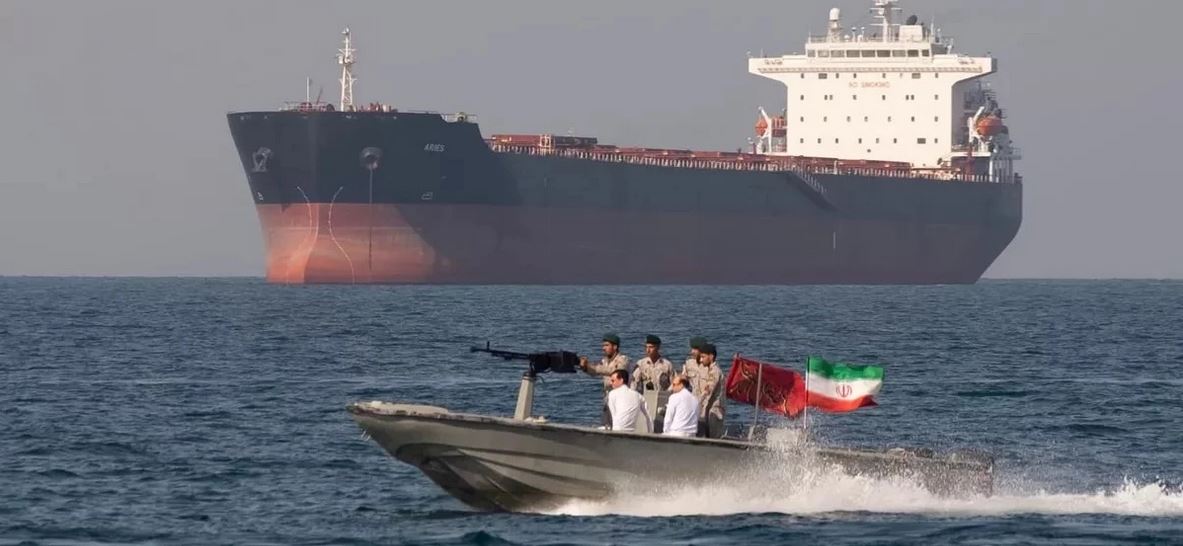
Iran’s islands in the Strait of Hormuz – Abu Musa, Greater Tunb, and Lesser Tunb – are now being treated as “unsinkable enforcement platforms” by the Islamic Republic. Composed of coastal missile launcher honeycombs, drones, naval mines and fast attack boats carefully folded into a geography that overwhelmingly favors Tehran, the multilayered defense network has proven blue-water navies and carrier-dominated air power obsolete:
Back in the Persian Gulf today, the Navy grasps the reality of the circumstances, recognizing that it simply can’t sail into the strait without risk[ing] getting blown to smithereens by Iran’s missiles. Today, its carriers are stationed well outside the Gulf and the ranges of Iranian missiles. … Simply put, Iran is threatening extremely expensive and manpower-intensive U.S. ships with weapons that are a fraction of the cost in exchange. Moreover, the United States can’t easily replace destroyed or damaged vessels due to the well-documented decline of the shipbuilding industrial base. … There is no decisive military solution to this problem given Iran’s geography and military capabilities.
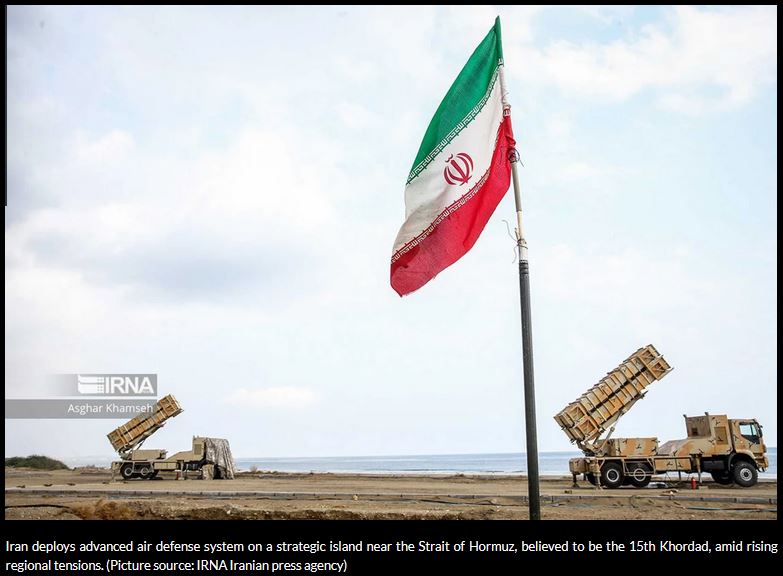
The 15th Khordad air defense missile system, developed by the Iran Aviation Industries Organization (IAIO), is among Iran’s most advanced domestically-produced systems. It is capable of detecting, tracking, and engaging a range of aerial threats, including stealth aircraft, unmanned combat aerial vehicles (UCAVs), cruise missiles, and conventional fighter jets. With a detection range of up to 150 km and an engagement range of up to 200 km using Sayyad-3 missiles, the system provides Iran with a substantial boost to its air denial capability. It can engage stealth targets from 45 kilometers and simultaneously track and engage six targets, all with a rapid deployment time of under five minutes.
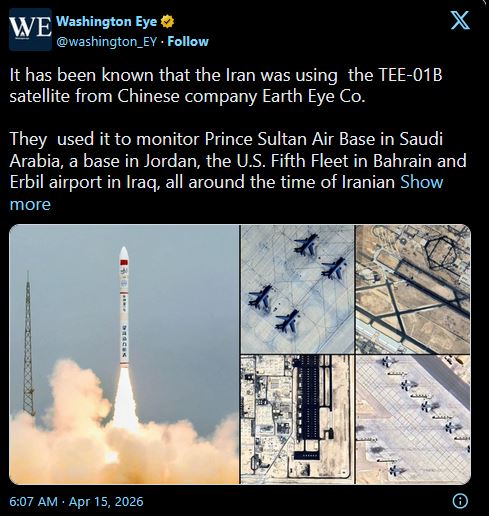
To improve the accuracy of its missile programs, Iran covertly acquired a Chinese satellite (Earth Eye TEE-01B) launched by China, providing the IRGC with the means to “identify targets ahead of time and check the success of its strikes”. Both China and Russia reportedly began supplying satellite intelligence to Iran as soon as the conflict began, dramatically improving Iran’s already sophisticated anti-access defense architecture. Iran’s technical integration with China’s BeiDou satellite system resulted in improved Iranian missile accuracy and increased resistance to jamming.
Meanwhile Russia provided methods of coordinating drone swarms with ballistic missile volleys perfected during the Ukraine proxy war. Russia’s coordination with the Islamic State is easy to understand given the open hostility that Israel has exhibited toward both. In March, Israeli military spokeswoman Anna Ukolova threatened the “elimination” of Russian officials that “wish Israel ill” and in April Russia arrested 40 Israelis at the Moscow airport, with security personnel informing the detainees that an enemy of Iran “is our enemy as well” and emphasizing that “they were not welcome and should not have come”.
Another key aspect to Iran’s defense apparatus involves their sophisticated cyber warfare division. The Iranian hacker group known as Handala is a direct consequence of the StuxNet cyber attacks that inspired its existence:
Iran has increasingly turned to cyber warfare, particularly after the 2010 Stuxnet attack, attributed to the U.S. and Israel, which damaged Iran’s nuclear program and heightened the nation’s investment in cyber warfare capabilities, according to a report by the Georgetown Security Studies Review. … Iran has built up cyber units within the Islamic Revolutionary Guard Corps and the Ministry of Intelligence and Security. Over the past decade, Iranian cyber activity has evolved from espionage and influence campaigns to more disruptive attacks, including the 2012 Shamoon malware attack on Saudi Aramco and multiple attacks on U.S. banks.
Handala cyber attacks disrupted operations for Stryker medical equipment whose employees were unable to access company systems and found their remote devices wiped. Iranian hackers also sent mass messages to Israelis urging them to evacuate their towns, notifying them that Prime Minister Benjamin Netanyahu had been killed, and prompting them to download fraudulent emergency applications designed to harvest data. Reuters initially reported that FBI Director Cash Patel’s email was hacked by Handala though it was later revealed that the information was lifted from Israeli computers meaning Iran merely peeked at something the Israelis had already stolen.
On 02 May Handala struck again, publishing the emails and private chats of former Obama Administration official (and lead JCPOA negotiator) Robert Malley whose sanctions team was responsible for creating significant economic pain in Iran. Two days later Handala published the names of 400 senior US Navy officers deployed with the blockade and sent direct alerts to the secure phones of those officers warning “death and destruction” for aggression against Iran.
Beyond its tactical capabilities, Iran employs a long-term strategy of indirect leverage that achieves results by applying force in unpredictable ways against its adversary’s most vulnerable points. This brings us to the now infamous Strait of Hormuz – a maritime choke point through which twenty percent of the world’s oil passes (along with significant quantities of LNG and cryogenic helium) that few people had ever heard of before it began causing massive economic pain in 2026. Historically, Iran is really just reclaiming the Strait since Persia controlled it until 1763 when the British East-India company muscled its way into Basra.
The Iranians closing the strait was among the least-surprising developments in this war. For decades, they said they would do exactly that if ever attacked. Even in the leadup to the war, Chairman of the Joint Chiefs of Staff General Dan Caine told the president the Iranians would close the strait if attacked, part of a list of reservations he reportedly had about launching the war. Nevertheless, neither Israel nor the United States had an effective strategy for dealing with it.
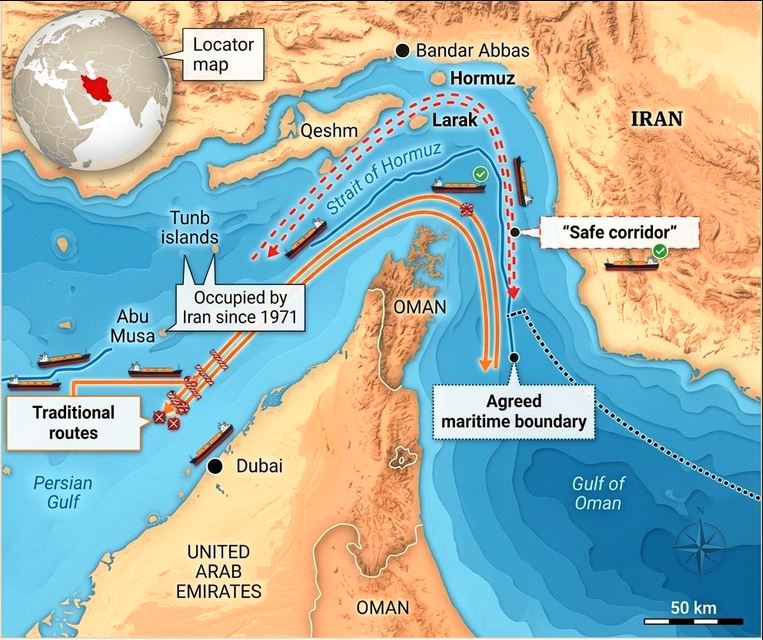
The Strait of Hormuzhas not been shut, and that is exactly why what Iran has done matters more. What has emerged around Larak is not a crude blockade but a controlled passage system, a wartime checkpoint laid across one of the most important arteries of the world economy. … That is the part of the story that cuts through the propaganda. A total closure would have been easy to denounce and easy to rally against. A selective corridor is harder to attack because it allows Tehran to say that passage has not ended, only the assumption that ships can move through Iranian waters during an illegal war on Iran without submitting to Iranian conditions. … Calling this a blockade is comfortable for Western officials, but it is wrong.
Blocking Hormuz passage causes undeniable economic pain the world over in part because it threatens global food security that’s now dependent on fertilizer made from natural gas, a large portion of which is trapped in the Middle East. Retired US Army Lieutenant Colonel Earl Rasmussen, the former Vice President of the Washington-based Eurasia Center, called the impending food shortage a “global humanitarian crisis,” anticipating severe and multilateral consequences for the Yuxi Circle (which accounts for more than half of the world’s human population) if ongoing energy disruptions persist. Hormuz-related misery begins with unavailable fertilizers that will result in food shortages, price spikes and authoritarian rationing, spelling long-term doom for farmers and the global food system:
Fertilizer is the link between energy and food. Natural gas is not just a fuel; it is the primary feedstock for synthetic nitrogen fertilizers through a process developed over a century ago called the Haber–Bosch method. Natural gas goes in, ammonia comes out, ammonia becomes urea, urea gets spread on cornfields in Iowa and wheat fields in Kansas and rice paddies in Asia. About 80 percent of nitrogen fertilizer production costs are attributable to natural gas.
The Strait of Hormuz is also the choke-point for Qatari cryogenic helium (one of many byproducts created from natural gas extraction) upon which the entireAI datacentereconomy relies because of the semiconductor industry’s dependence on it for microchip fabrication. Medical imaging and fibre-optic cable production are also impacted by helium shortages.
Iran’s vast natural resource wealth enables the self-sufficiency necessary to withstand a protracted stand-off with the west and its society has prepared for this inevitable moment since the military takeover of their neighbors. Persians are prepared for the long haul:
“We are prepared for a long war, possibly lasting up to ten years. Our armed forces operate according to preplanned scenarios and will continue until the US is expelled from the region and forced to retreat,” [IRGC General] Jabari added. … “We have capabilities not yet disclosed.”
As US ground troops mobilized to the Middle East, Iran threatened to make the energy crisis worse by concurrently shutting down the Bab el-Mandeb Strait with their strategic alliances in Yemen, affecting container shipping, industrial supply chains and global trade generally. By early April Yemen’s Houthis entered the war, firing missiles at southern Israel and implicitly threatening to further cut off the vital energy-shipping artery contiguous with the Red Sea.
THE FLEDGLING PETRODOLLAR
The Gulf Cooperation Council is a regional, intergovernmental alliance comprising Bahrain, Kuwait, Oman, Qatar, Saudi Arabia, and the United Arab Emirates (or UAE, an “artificial construct” carved out of the Sultanate of Oman by the British). Following the 1973 oil panic, the GCC and OPEC agreed to trade oil exclusively in US dollars and these organizations became a key basis underpinning the Petrodollar. Oil exporters recycled profits back into US Treasury bonds and stocks thus reinforcing the dollar as the world’s reserve currency.
The Petrodollar scheme to back the dollar with something of worth was Henry Kissinger’s idea under Nixon in the early 1970’s when Americans finally realized their currency was no longer backed by gold. Oil-producing nations agreed to transact in dollars and “recycle” oil profits back into American Treasury securities and real estate thereby reinforcing global demand for the US dollar as the world’s reserve currency and underpinning America’s weaponization of the world’s oil trade.
The war with the Islamic Republic has threatened the Petrodollar system ever since Iran began imposing tolls on Hormuz traffic and conducting transactions in Chinese Yuan, which cannot be seized by NATO.
However, the ships paying Iranian tolls in Yuan may have been Chinese-flagged vessels, providing China a unique opportunity to claim de-dollarization was already underway. Conversely, Russia signaled a desire to return to the dollar in a move to avoid dependency on the Chinese financial system. Iran also proposed ditching the Petrodollar for a sanction-evadingdigital currency:
Iran plans to require shipping companies to pay transit tolls in Bitcoin for vessels passing through the Strait of Hormuz, according to a Financial Times report. … For Iran, Bitcoin offers a tool to collect revenue and assert control without reliance on intermediaries. For global shipping, it signals a potential change in how access to key infrastructure could be priced and enforced.
With the United Arab Emiratesmaking their exit from OPEC – citing an inability to fulfill quotas because of the war – questions persist about the continued viability of the cartel. Meanwhile Iran’s “resistance economy” is poised to handle longer-term disruptions because its pain thresholds seem higher than those of their western aggressors:
As with Russia, the Western mainstream media continually reports on the likely implosion of Iran’s economy as sanctions and global isolation intensify as a way to legitimize the war’s continuance. But, if Iran wasn’t going to buckle economically in the years before the war when its oil exports and earnings were sagging, it isn’t going to do so now, with the oil market booming in its favor.
INSIDER TRADING AND THE POLYMARKET CASINO
Steve Bannon called for the military deployment of Netahnayhu’s son and Middle East royals who are currently gambling on the war with insider-trading through PolyMarket from the safety of their Miami estates. “And throw in a couple of Qatar princes” Bannon added. “Throw in the Saudi princes in there, too. Get them out of London. Get them out of the casinos and whore houses in London.”
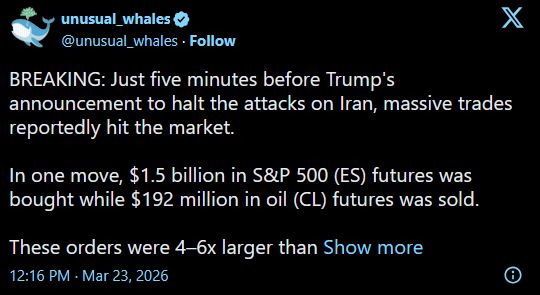
Oil speculation-fueled insider trading was visibly rampant throughout the conflict and especially during the fourth week of the war. Unknown traders placed cumulative bets amounting to half-a-billion bucks on petroleum markets fifteen minutes before Trump announced his alleged “productive talks” with Iranian leadership:
Traders placed more than $500 million in oil bets just minutes before US President Donald Trump claimed talks were happening with Iran and that he was postponing his planned strikes on the Islamic Republic’s power infrastructure, according to the Financial Times (FT). … “It’s hard to prove causality … but you have to wonder who would have been relatively aggressive at selling futures at that point, 15 minutes before Trump’s post,” a broker strategist told FT.
Hegseth’s alleged “Defense Investments” demonstrate the willingness of cabinet officials to attempt war profiteering through insider trading, suggesting that numerous political insiders are making trades based on Trump’s public announcements:
Someone is making money on Trump’s announcements. Moon of Alabama reports that 20 minutes before Trump’s announcement that the Strait of Hormuz was open, 7,990 Brent crude futures were sold, a bet that the oil price would fall that resulted in huge gains. Was this insider trading? Who knew Trump’s announcement before he made it? Does Trump trade on his own announcements?
An Israeli Air Force major and his civilian partner have been formally charged with using classified military information to place bets on the Polymarket prediction platform. The indictment includes serious national security violations, bribery, and obstruction of justice. … The two reportedly earned more than $162,000 in winnings. The civilian set up a digital wallet to send the cryptocurrency proceeds to the reservist.
In an interview with NBC, Iranian Foreign Minister Abbas Araghchi said Tehran is “not asking for a ceasefire” and sees no reason to negotiate with the United States.“When we negotiated with them twice, every time they attacked us in the middle of negotiations,” he said.
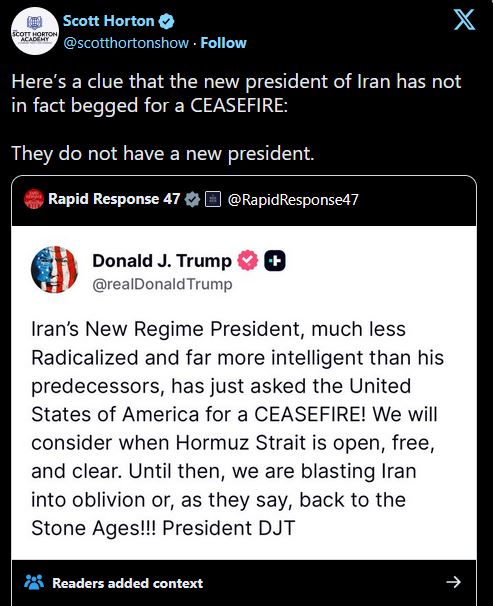
Iran initially rejected temporary ceasefires as the “normalization of war crimes.” Iranian officials publicly mocked Trump’s assertion that they were willing to negotiate with the US. Iranian Parliament Speaker Mohammad Bagher Ghalibaf called the claims fake news designed to manipulate oil markets while other Iranian officials called Trump’s negotiation confabulation “false and baseless”. Trump began moving the goal post on “regime change” and desperately insisted that negotiations were underway when they clearly weren’t, alleging that his goal of regime change was already successful because of an imagined “complete turnover at the highest levels of the government and military.”
American media continued to lie about Iran’s requests for a ceasefire when Iran never asked for one since bombing began in February and was never the party seeking an off-ramp to the conflict. Meanwhile, every Iranian spokesperson and official denied that any negotiations were taking place while repeatedly and publicly rejecting Washington’s 15-point proposal, questioning the dubious authenticity of American diplomacy efforts as yet another opportunity for treachery. While Trump insisted that talks were “productive” he failed to mention with whom he was talking. Iran’s army spokesman accused Washington of “negotiating with itself” and advised The White House, “Do not call your defeat an agreement.”
Iranian leadership further clarified that the exchange of messages through mediators does not signify “negotiation” with the US. The White House’s continuous claims about “talks” with Iran were finally answered by IranianForeign Minister Abbas Araghchi who emphasized that the “Strait of Hormuz is closed only for the countries who wage war against Iran.” Iran’s foreign ministry further stated that “Negotiation is in no way compatible with ultimatum, crime, or the threat to commit war crimes.”
IRGC Spokesman Ebrahim Zolfaghari mocked Trump in English with his own Apprentice slogan, “Hey Trump – you are fired! You are familiar with this sentence. Thank you for your attention to this matter.”
In a fantastic instance of masking insecurity with strong language, Trump finally resorted to threatening to target Iran’s power plants – starting with “the biggest one first” – before walking the threat back (admitting a “strategic defeat” for America) and posturing as if negotiations were taking place, which Iran fervently denied:
“Our people demand the complete and humiliating punishment of the aggressors. All officials stand firmly behind their Leader and people until this goal is achieved,” [Iran’s parliament speaker Mohammad Bagher] Ghalibaf wrote on X.
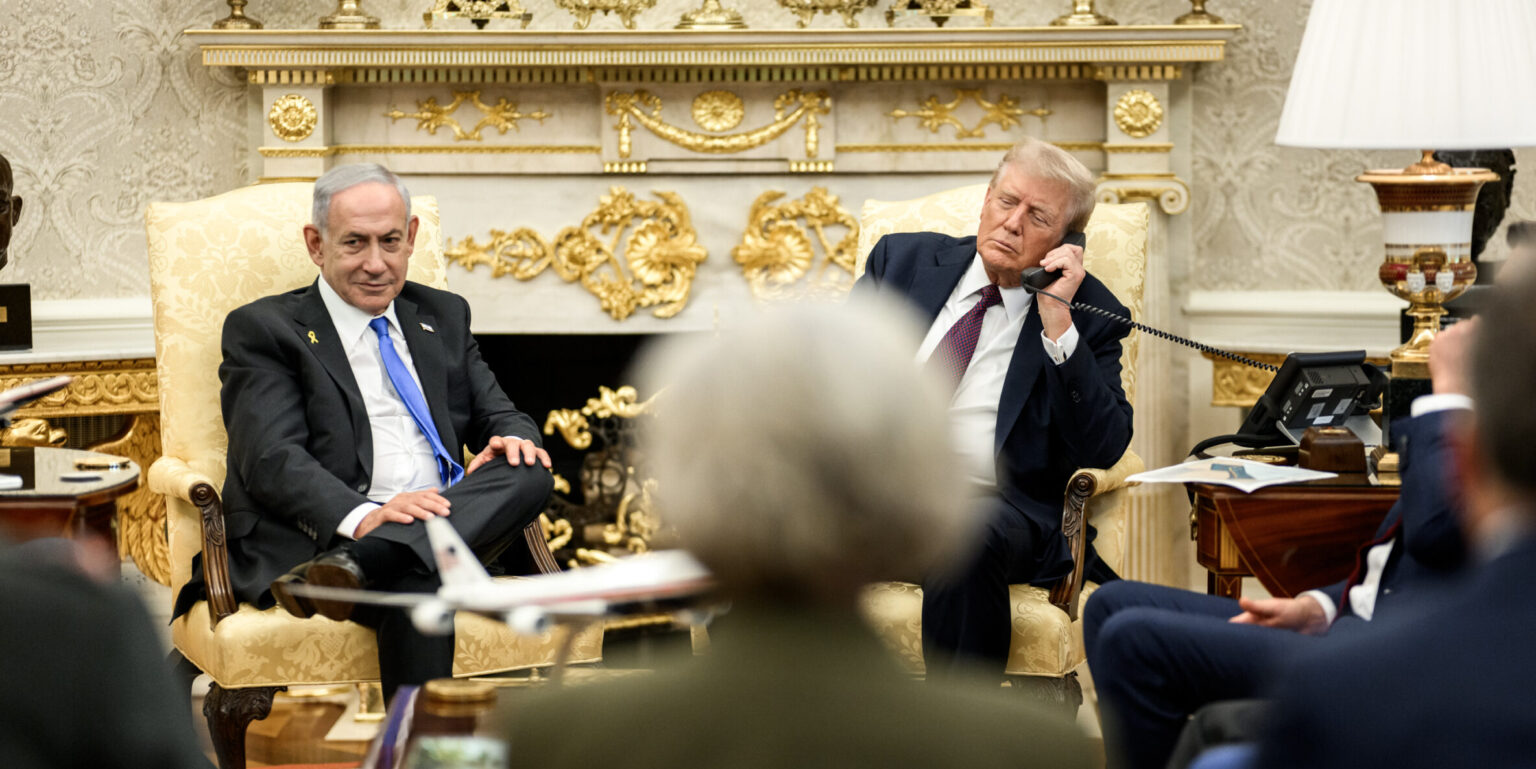
Two hours before his self-declared deadline, Trump announced a “two week” ceasefire (brokered by Pakistan) whereupon Iran claimed “victory” because Washington agreed to their terms ahead of any proposed talks. In a bid to save face, Washington also declared victory:
Both sides have claimed military gains, with Washington saying it achieved its core objectives and Tehran saying it forced the United States to accept the framework of its demands.
If victory were really in his grasp, Trump wouldn’t be begging NATO to deploy naval forces to Hormuz. Tactical successes have led to strategic failure for the Epstein Coalition as the economic consequences spilled over into a self-defeating whirlwind of inflationary oil and food price shocks that caused investor panic and political unrest, whereupon Trump resorted to outright double speak:
In a blatant example of real-life double speak, the President asserts that by starting a war with Iran, he is in fact ending one, a “47-year-long” conflict. The absurdity of this is compounded by the fact that the 2024 Republican “pro-peace ticket” did not seem to care much about it on the campaign trail.
Talks in Islamabad concluded on 11 April 2026 and ultimately resulted in the scheduling of more talks. The history of America’s “negotiation” efforts suggested the talks could just be more delay tactics allowing US forces time to regroup, with 70 American military transport planes landing in the Middle East on the first day of the “ceasefire”.
While the Islamabad talks were widely branded a “failure” such dismissal may be overly simplistic as deliberate pacing exemplifies Persia’s long history of methodical diplomatic strategy. Iran’s Supreme National Security Council stated the Islamic Republic’s demands clearly in their 10-point proposal, but no single round of negotiations could end this particular conflict because the west cannot negotiate with a regime that Washington simultaneously seeks to destroy.
Negotiations were always doomed to fail because Israel isn’t interested in peace and Washington cannot stop Netanyahu’s blood lust. Demonstrating their fervent unwillingness to coexist with regional neighbors, Israel sabotaged potential diplomacy efforts by deliberately targetingmoderates like Kamal Kharazi for allegedly trying to back-channel negotiations with J.D. Vance. Supreme National Security Council Secretary Ali Larijani was another such pragmatist that may now be replaced by the kind of vengeful belligerent more likely to give the Zionists the war they so desire.
Fundamentally, negotiations can no longer be possible because they’ve been so consistently used as a deceptive pretext for bombing and because the interests of both parties are diametrically opposed with each side interpreting “the central command of the other as a form of strategic deception.” In fact, the February negotiations were held with the explicit intent of getting Iran’s leadership to have a meeting about the proposed conditions – regardless of what kind of concessions they were willing to make – so all the “high value targets” would be in a single room at one time thus enabling the murder of so many top Iranian officials in a single strike:
The Iranians naturally had to think long and hard before agreeing to all our terms. Therefore, they held a full meeting of their top leadership to decide whether to do so. But prompting the Iranians to hold such a high-level meeting had apparently been the underlying goal of our entire negotiating strategy. As the New York Times reported the next day, with so many of Iran’s leaders thus gathered together in one place, they were all killed by an Israeli missile strike, an attack that essentially constituted our official declaration of war
America has been thoroughly humiliated throughout negotiations with Iran due to a lack of a “convincing strategy” to bring to the table. The Iranians can never trust Trump’s “negotiation team” because it’s composed of his son-in-law Jared Kushner and real estate mogul Steve Witkoff, both fanatical Zionists who lack the “necessary technical expertise to understand that Iran had made significant concessions in the talks.” Kushner and Witkoff are almost certainly working for Israel to lie to the president, with ambassadors divulging that, during negotiations, the pair are regarded as “Israeli assets that dragged a president into a war he wants to get out of.”
Witkoff and Kushner
MODUS OPERANDI
The so-called “Peace President” has, in the last 16 months of his tenure, green-lit more than 600 military strikes in at least four countries while threatening military actions against three more. Instead of halving the military budget as he said he would in early 2025, Trump doubled it to $1.5 Trillion. But in spite of all the other military adventurism occurring under his administration, the Iran war stands as Trump’s ultimate betrayal of the MAGA base who once believed in him:
For Americans, the question remains: why did Donald Trump – who repeatedly campaigned against “endless wars” – allow the US to enter yet another Middle Eastern conflict? During his 2016 presidential campaign, Trump famously declared: “We should have never been in Iraq. We have destabilized the Middle East.” Yet nearly a decade later, his administration has plunged Washington into a confrontation whose potential consequences dwarf those of the earlier wars.
According to a consortium of sources, the president contradicted and ignored his own military and intelligence experts after Netanyahu lied about an easy victory against Iran while planning the strikes during a visit to Mar a Lago in December 2025. Trump then took America to war based not on the intelligence recommendations of the Joint Chiefs but from his Zionist son-in-law, and later admitted on 29 March that “Israel was under threat so we had to attack.” This fact was also admitted by Marco Rubio:
“We knew that there was going to be an Israeli action, we knew that that would precipitate an attack against American forces, and we knew that if we didn’t preemptively go after them before they launched those attacks, we would suffer higher casualties, and perhaps even higher [numbers] killed.”
That the war is taking place at all is due to Israel’s absolute control over America’s political class, a reality that Netanyahu and his predecessors in office have not been exactly shy about admitting. The US is a hapless giant that has been corrupted by Jewish billionaire money from within, totally committed to the expansion of greater Israel no matter how many have to die in the process.
Former Tennessee Congressman John J. Duncan Jr. said a majority of Americans seem to be aware of the fact that the Iran war only “puts [the interests of] Israel first”:
[…] the great majority realize this war is being fought at the insistence of Israel at tremendous expense for US taxpayers. This is Israel’s war. Iran’s total military budget is only a little over one percent of ours. Iran was no threat to us at all.
Jeffrey Epstein turned the American Congress into Israel’s prostitute and made Trump their bottom-bitch. Bad actors have tried to frame this conflict – and the opposition to it – as a partisan divide, but go silent when asked whether Iran has the “right to defend itself” like Israel does (or when it’s pointed out that Epstein was an equal opportunity blackmailer who nailed politicians of all stripes irregardless of party affiliation). The war was widely interpreted as a transparent attempt to distract away from Trump’s place in the Epstein files, where his name is mentioned thousands of times:
A declassified FBI memo released on 30 January states that the president was “compromised by Israel,” that Epstein was an Israeli intelligence agent, and that a Jewish religious movement, Chabad Lubavitch, had coopted Trump’s presidency.
Countless influential conservative voices expressed outrage and disgust with Trump over the Iran war, including Megyn Kelly, Tucker Carlson, Tom Woods, Jeffrey Sachs, Dave Smith, Joe Rogan, Ron Paul, Candace Owens, David Stockman, Alex Jones, Joe Kent, Michael Savage and Marjorie Taylor Greene. But irrespective of the number of republican voters bailing off the Trump Train, there is no “MAGA civil war” within the Republican party because its donor base is composed of Zionist billionaires:
Among the top GOP donors in 2024 were some of the least discriminating supporters of the far-right regime in Israel. The widow of the Las Vegas casino magnate Sheldon Adelson, Miriam O. Adelson, donated $148,294,900; hedge fund manager Jeffrey Yass donated $100,322,180; another hedge fund manager, Paul E. Singer, donated $64,795, 800. And on it went.
What about Congress? Aren’t there scores of Rand Paul and Thomas Massie acolytes on the Hill, itching to oppose Trump’s collusion with Netanyahu? Not really. The Chairman of the House Foreign Affairs Committee is Brian Mast (R-FL), who routinely outfits himself in an Israeli uniform that he picked up while serving as a civilian volunteer for the IDF. The House Armed Services Committee Chairman is a longtime hawk named Mike Rogers (R-AL), who is as slavishly devoted to Israel as Mast. The Chairmen of the Senate Armed Services Committee, Roger Wicker, and Senate Foreign Relations Committee, Jim Risch, are likewise lifetime devotees of Israeli hegemony in the Middle East. The same can be said for Speaker Mike Johnson and Senate Majority Leader John Thune.
The firings began in February 2025, when Hegseth removed [Admiral] Lisa Franchetti, the Navy’s top uniformed officer, and [General] Jim Slife, the No. 2 leader at the Air Force. Trump also fired [General] Charles “CQ” Brown Jr. as chairman of the Joint Chiefs of Staff.
“Fiscal conservatives” don’t exist in Washington DC because both parties can always justify borrowing more money to fund more wars and force financially destitute Americans to pay for them. Beneficiaries of the status quo include weapons industry cheerleaders who cynically benefit from this conflict continuing as long as possible and war profiteering think tanks like the Atlantic Council, the Hudson Institute, the Foundation for the Defense of Democracies (FDD), the Jewish Institute for National Security of America (JINSA), the Washington Institute, and the Middle East Forum. These pro-Israel “think tanks” promoted military action against the Islamic Republic eight months before bombing began with the same old lies about the “unacceptable” nature of Iran’s nuclear program and allegations about the regime constituting “the world’s leading state sponsor of terrorism”.
According to the complaint, the officer told troops that “President Trump has been anointed by Jesus to light the signal fire in Iran to cause Armageddon and mark his return to Earth.” … One non-commissioned officer said the rhetoric was “so toxic and over the line” that it shocked troops and “destroy[s] morale and unit cohesion.”
When commanders caused outrage by briefing their troops that the Iran war was “biblically sanctioned,” they were repeating a script “almost verbatim” that was provided to them by CUFI:
Christians United for Israel (CUFI), founded by televangelist John Hagee in 2006, claims over 7 million members and has become the largest pro-Israel advocacy organisation in the United States. … CUFI’s theological agenda is crystal clear. The organisation actively encourages Israel to engage militarily with Iran because it believes the Book of Ezekiel 38–39 prophesies that this conflict will “hasten the rapture of the church and the battle of Armageddon.”
Concerned with rising Christian nationalism in the military, one non-commissioned officer told the Military Religious Freedom Foundation (MRFF) that their commander had “urged us to tell our troops that this was ‘all part of God’s divine plan’ and he specifically referenced numerous citations out of the Book of Revelation referring to Armageddon and the imminent return of Jesus Christ”.
Jonathan Larsen broke this story and we learned that “within 48 hours, the MRFF had logged 110 similar complaints from service members across 40 units stationed on 30 military installations”, replacing strategic analysis with eschatological prophecy and transforming the constitutional military into a theocratic menagerie of evangelical zealots waging a holy war; the killing of religious leadership and basing attacks on the false interpretation of a biblical narrative about the so-called “Amalek”. Because this war is grounded in theopolitical irrationality instead of strategic literacy, it cannot be understood in logical terms:
Traditional concepts of rational statecraft, such as geopolitical balance, geoeconomic interdependence, crisis management and regional stability, have been replaced by a different vocabulary: Armageddon, divine missions, “chosen people“, and the notion of fulfilling sacred destinies through force.
War Department Secretary Pete Hegseth is a Christian Zionist whose blasphemies include frequent invocations of “God” during briefings on the Iran war and a book he authored entitled “American Crusade”. After footage surfaced of Hegseth and his Christian Reich praying for “overwhelming violence of action against those who deserve no mercy”, Pope Leo XIV said that God rejects the prayers of leaders who start wars. Pope Leo further denounced what he called the “delusion of omnipotence” driving the war by stating that “God doesn’t bless any war, and certainly not those who drop bombs.” Hegseth’s crusade ultimately sought to corrupt America’s military into a theocratic force for the violent enforcement of irrational religious dogma.
Bibi’s Greater Israel map at the UN General Assembly
General Caine’s stated war objectives were branded as “strategically incoherent” because they seemed to prioritize a de-industrialization of Iran meant to cripple the country altogether. This leads many analysts to conclude that Balkanization seems like Israel’s primary goal (pitting Persians, Turks, Arabs, Kurds, Azeris and Baloch against each other) as it is far easier to neutralize a civilization than to try to outright control it. Joe Biden’s former national security adviser Jake Sullivan articulated that “as far as [Israelis are] concerned, a broken Iran is less of a threat to Israel.” Israel seems to be aiming for total regime collapse in the hope that a splintered Persia will no longer be able to stand in the way of the Greater Israel Project.
The prevailing appearance of the “Greater Israel Project” seems to have emboldened Hegseth who officially unveiled the strategic map of the “Greater North America” Technate in imperial solidarity. But this idea is old enough that Hegseth cannot claim responsibility for it, and questions linger about who is really running the Department of War Crimes:
Hegseth seems so totally unqualified for his position and so much given to outrageous remarks and behavior that there are widespread suspicions that he has been kept in his job merely so that he can deflect attention away from Steve Feinberg, the controversial Jewish billionaire who serves as his deputy and may actually be running the department. Feinberg had co-founded Cerberus Capital Management, a buyout firm heavily involved in military contracting, and during his long business career he had been notoriously secretive, even going so far as boasting to his shareholders that he would “kill” any employee who got his picture in the newspapers.
Israeli leaders have desired to conquer southern Lebanon for decades, to capture both its water resources and expand the borders of “Greater Israel,” which they hope will also include the entire West Bank, Gaza, southern Syria, Jordan, and parts of Iraq.
Hezbollah vigilantes fought back and turned southern Lebanon into a “graveyard” for Israeli armor, destroying 10 Merkava tanks in a single ambush. Hezbollah’s use of fiber-optic-guided FPV drones has proven to be absolutely devastating to the IDF and resulted in massive casualties. Hezbollah purportedly sits on a massive munitions stockpile that includes 100,000 missiles.
As Israel’s war chiefs attempted to expand their territorial claim, the IDF was stretched so thin that the Israeli army’s chief of staff, Eyal Zamir, warned on 25 March that Israel’s military is going to collapse in on itself, specifying, “In a short time, the IDF will not be prepared for its routine mission. The reservists will not last”. The Israeli government wouldn’t have this problem if they simply adhered to international law and became a good neighbor in the Levant. But Israel has proven it’s not interested in peace as Americans understand the term, because the Zionist state has waged war on all of its neighbors ever since it forced its way into the Middle east in 1948:
For many, the claim is inherently contradictory. How can a state initiate war – and in Gaza’s case, sustain a genocide – while insisting that it is merely defending itself from annihilation? Yet within Israeli political discourse, and across much of Western media, this contradiction is rarely interrogated. It is normalized. … This reveals a deeper truth: within Israeli political thinking, the alternative to dominance is not coexistence, but destruction. … Here lies the central irony. Israel’s fears, long framed as hypothetical or exaggerated, are being transformed into tangible risks – not by inevitability, but by Israel’s own actions.
Whether it’s Gaddafi, Hussein, Milošević, Mubarak, Nasrallah, Assad, or Khamenei, it’s just a notch in the belt for the Zionists. Looking back over the last twenty-five years of sand wars started by Bush’s Global War on Terror – that toppled every one of Israel’s neighbors – we can perhaps fully appreciate the now infamous testimony of General Wesley Clark:
Years ago, General Wesley Clark revealed something that, at the time, sounded almost unbelievable. After the attacks of September 11, he visited the Pentagon and spoke with a senior officer. Clark asked whether the United States was going to war with Iraq. The officer replied that it was worse than that. A memo from the Secretary of Defense’s office, he said, laid out a plan to “take out seven countries in five years: Iraq, Syria, Lebanon, Libya, Somalia, Sudan, and finishing off Iran.”
Talking heads in Washington and on corporate media stations hypnotically repeat the lie that American forces have secured “victory” in this conflict when every data point indicates otherwise. Trump claimed victory before the conflict had concluded while the Islamic Republic became stronger just for having survived, with leverage over international shipping it did not enjoy before February’s preemptive attacks against them. Given that the aggressor nations find themselves in a weaker position than when hostilities began, if the outcome can be called “victory” at all it appears to be a Pyrrhic victory because aftermath of the war with Iran has left Tehran as the sole “guardian of the Strait of Hormuz”.
Iran combined military and economic warfare to lure Trump into a trap that has increased their economic advantages at the expense of the US. The circumstances favor Iran as long as it can continue absorbing pain and striking back. The Iranians are definitely accustomed to enduring, exhibiting remarkable defensive resilience in the face of Saddam’s US-backed war against Iran throughout the 1980’s.
Photographic evidence leaked by Israeli technician Mordechai Vanunu in 1986 from which experts estimated a stockpile of 100 to 200 nuclear devices, confirmed that Israel had developed thermonuclear bomb capability. After leaking this information, Vanunu was kidnapped by Mossad and sentenced to 18 years in prison. Israel’s policy of “Amimut” the Hebrew word for ambiguity, combines three elements: The strict secrecy about the program’s existence, refraining from testing, and the managed leakage of evidence to allow Israel threat capabilities without ever making an official admission.
Beyond its policy of ambiguity, what makes Israel’s nuclear posture uniquely alarming is the Samson Option – a last resort retaliation strategy to be deployed in the event of Israel facing an existential defeat. Multiple analysts have described a targeting doctrine that extends to global capitals and major cities, not just Israel’s declared enemies.
This is transparently an effort to avoid admitting what is perhaps the most open “open secret” in international affairs: the State of Israel has a nuclear arsenal. … Israeli military historian Martin van Creveld, for example, has spoken openly on the matter, and has even threatened to unleash the arsenal on “the world” if the Israeli state faces an existential threat
Unfortunately for Israel, the circumstances that once made Israeli-American hegemony in the Middle East possible are not only severely outdated, they no longer exist. The dramatic shift in European public support against Israel is worth noting, with nearly half of Poland’s citizens asserting that Israel’s actions in Palestine are “comparable to Nazi Germany” and Polish parliament member Konrad Berkowicz declaring that “Israel is the new Third Reich.”
University of Chicago Political Science Professor Robert A. Pape observed that while Washington believes escalation will restore control, “History suggests the opposite.” Tactical victories won’t accomplish anything unless the strategic outcomes makes sense.Hormuz was always Iran’s ace-in-the-hole as the choke point’s proximity to (and control by) the Islamic State constitutes an enormous leverage over the international economy. No tactical victory could ever change this strategic reality regardless of how many hospitals and schools were bombed or how many bridges and power plants were destroyed. American mainstream reporting has focused on the scale of the damage inflicted on Iran as though civic demolition from abroad would result in popular revolution at home. This begs the question: what constitutes success in war?
Success in war is not measured by who dropped the most bombs or killed the most people. If that were the case, the US would have won the Vietnam war and Germany would have won the war against Soviet Union. The US dropped more bombs on Vietnam than all the bombs dropped in WW2. It killed 3 million military and civilian population. In the end, it lost the war. The litmus test of the Iran war comes down to who can control the Strait of Hormuz. … In war, one’s ability to withstand pain is even more important than one’s ability to inflict pain.
Not including radar site losses, the continued aggression toward Iran has cost America $1 billion per day, with costs soaring above $42 billion after 40 days of attacks. With high dependence on vulnerable support aircraft, insufficient troop numbers, and a lack of nearby support bases to reinforce, resupply or extract entry forces, the US military is tactically unprepared for the drone-warfare reality of the modern battlefield that manifests as flying IEDs. The American Empire has revisited a fatal mistake made by the Roman Empire 2,000 years ago:
Instead of hoping Parthian arrows would run out, Washington is hoping Persian ballistic missiles will run out. History suggests that great powers often deceive themselves into believing that superior force can overcome geography, logistics, and the determination of an entrenched adversary. Crassus learned otherwise. Trajan learned that battlefield success is not the same thing as strategic success. Hadrian understood what statesmen are often the last to admit: sometimes the wisest course is not pressing forward, but recognizing that a position cannot be held at acceptable cost.
Another geopolitical reversal and win for Iran involves the great irony of sanctions. The US pretended to lift sanctions on Iranian oil, but the Islamic Republic quickly refuted the claim, saying their nation “has no floating crude, nor a surplus that’s available for international markets” and that the rhetoric was nothing more than “psychological support to the oil market.” Iran further denied the US claim of “surplus oil” reserves stored at sea as Washington’s psychological ploy “aimed at manipulating global prices”. But then Iran was able to sell oil to India for the first time in seven years, indicating the cessation of sanctions that penalized other nations for doing business with Iran. This marks a strategic victory for both Russia and Iran as American oil sanctions were lifted from both countries:
The sharp rise in world oil prices quickly provoked such desperation in the Trump Administration that they responded by removing all existing sanctions on Russian oil sales. Even more remarkably, Trump also lifted all existing sanctions on Iranian oil sales, thereby hugely boosting the governmental revenues of the country we were attempting to defeat and destroy, something perhaps unique in recorded military history.
Then the Trump Administration chose to reignite the stalemate with a naval blockade of Iranian portson Saturday, 18 April. With the Strait closed again the IRGC asserted it would remain that way until the American blockade ended. In turn, the IDF didn’t respect their “ceasefire” agreement in Lebanon and proceeded with their indiscriminate campaign of demolishing homes and civilian infrastructure unabated.
With American piracy on the high seas becoming more routine, the USS Spruance intercepted, boarded and seized an Iranian-flagged cargo ship called the M V Touksa in the Gulf of Oman, kinetically enforcing a self-declared blockade during a ceasefire. In another blatant violation to the ceasefire agreement, the M/T Tifani was seized. The oil tanker M/T Majestic was also interdicted on 23 April.
Despite these operations, many Iranian oil tankers continued to evade and breach the American blockade with covert tactics including signal spoofing, ship-to-ship transfers of cargo, and deactivation of transponders. By 20 April, Lloyd’s Listreported that at least 26 ships associated with the “shadow fleet” doing business with Iran bypassed the US blockade.According to Bloomberg and The Financial Times, 34 Iranian oil tankers had slipped through Trump’s “unraveling” blockade, while the IRGC attacked three container ships in the Strait, immobilizing and seizing two of them – the MSC Francesca and the Greek-owned Euphoria.
The stated goal of Iranian denuclearization seems less likely to be resolved now because Iran has witnessed the consequences of operating without such deterrence. Iranian President Masoud Pezeshkian said on 19 April that no justification exists to “deprive Iran of its nuclear rights.” Rather than acknowledging another empty ceasefire, Iran’s new supreme leader demanded a “complete end” to attacks against Persia while affirming his government’s commitment “to continue supporting the Resistance against the Zionist-US enemy.” Ayatollah Khamenei then issued his own ultimatums, including American military withdrawal from the region, an end to economic sanctions and damage reparations.
Trump’s confabulations and bellicosity were largely intended to export delusional fantasies and bamboozle the weak minds of foolish investors with conspicuous market manipulation. But the shenanigans of the so-called “Baboon of Barbaria” instantly transformed former Gulf allies into neutral territories following careless remarks about the Saudi Crown Prince “kissing” his ass, leaving the Gulf Cooperation Council in an awkward situation. The White House then apparently demanded trillions of dollars from the GCC nations, billing them for a war that Washington alleged was fought on their behalf. If America’s Mideast bases were intended to provide security in the GCC, they have failed spectacularly and their perilous vulnerability makes it obvious that the time has come to start the process of closing them down.
In another indication that America is preparing for military withdrawal from the Middle East, US troops fully withdrew from Syria after years of supporting ISIS there:
The US military claimed its occupation of Syrian territory was necessary to contain ISIS, despite Washington’s covert support for the terror group during the war. US troops helped deny Assad’s government the oil resources needed to rebuild the country and to withstand US economic sanctions. Self-appointed Syrian President Ahmad al-Sharaa, who came to power in December 2024 in Damascus with US support, is himself a former ISIS commander who went by the nom de guerre Abu Mohammad al-Julani.
“And that’s where ISIS came from. We worked directly with Al-Qaeda; Hillary Clinton’s emails confirm this.” … The efforts to destroy Syria ultimately resulted in the fall of the Assad government in late 2024 and the Islamist takeover led by Hayat Tahrir al-Sham (HTS), a rebranded Al-Qaeda offshoot. Kent lashed out at the former leader of the HTS and Syrian interim president, Ahmed al-Sharaa, pointing to his long record of terrorism – which did not prevent the Trump administration from recognizing his government as legitimate.
“We had him in jail; [he] joined ISIS, broke off from ISIS, hand-selected by Bin Laden’s right-hand man, Ayman Zawahiri, to lead Nusra, and then they rebranded,” Kent said, adding that the “number one way to fool Americans as a jihadist is just put on a suit.”
Part of the reason the American Military-Industrial-Complex funds, arms and trains foreign insurgencies of terrorists has to do with the fact that in the “business” of war, military conflicts are meant to be sustained as long as possible to maximize the myriad of profit-making schemes they generate. In such a situation, neither side can ever be allowed the decisive outcome of either ultimate victory or total defeat. Given that war should only be fought with confidence that victory will follow and that victory serves the interests of the American people, OperationEpic Failstands as yet another abuse of Executive power for the benefit of Israeli Zionist zealots.
Pom-pom waiving partisans may never admit it, but Iran has demonstrated strategic aptitude throughout this conflict. Their decisions reflect decades of careful calculation. After successfully defending themselves from the world’s most powerful military, Iran’s regime, military and nuclear programs remain intact as does the loyalty of the Iranian people to their national identity. Beyond that, Iran now enjoys exclusive control over the Strait of Hormuz while the economic sanctions against their economy have been lifted.
Meanwhile, efforts are underway to impeach Hegseth on grounds of endangering US service members by advancing “military operations lacking defined objectives, lawful authorization, or clear strategic necessity” and overseeing “operations resulting in large numbers of civilian casualties and the destruction of civilian infrastructure in Iran” specifically the Minab school strike that killed at least 175 people.
Trump is scheduled to travel to China on 14 May for a visit to President Xi Jinping, whose government now refuses to enforce sanctions against Iran. As the conflict passes the 60-day mark that constitutionally obligates Congress to force a vote on the continuation of hostilities or cease them altogether, Trump may seek an Authorization for the Use of Military Force (AUMF) to extend the legally arbitrary War Powers Resolution timeline requirements into another indefinite forever quagmire because Iran is not throwing in the towel any time soon having spent the lastfour decades preparing for this asymmetric war of attrition by decentralizing its entire defense system. However, Trump claimed that deadline became irrelevant when the ceasefire was enacted, with Hegseth echoing that a ceasefire “pauses” the 60-day clock in the same way a “time out” pauses a football game.
With gas prices surging and economic conditions worsening it’s hard to imagine how much more “winning” the American people can take. The incomprehensible amounts of money spent on the unnecessary expenses associated with illegal wars and foreign nation building have paralyzed the American economy for far too long. Optimistically, the American military’s expulsion from the Middle East (and potential evaporation of NATO) may signal the end of the United States wasting national treasure to produce international calamity.