The people of France have had it with neoliberal austerity measures and the corruption that preserves them. But what’s happened in France is happening everywhere. In America, the richest country in the world, 80% of workers live paycheck-to-paycheck and 30 million still have no health care. Suicide and drug overdoses are depopulating our communities as multinational corporations hollow out what’s left. Things are so bad that even a mainstream media FOX News host like Tucker Carlson understands Socialism’s appeal. With inequality at all time highs, we are compelled to either restructure society or escape it, because the unaccountable mercenaries of the ownership class continue to show contempt for the people they rule. Now they’ve criminalized criticism of US-funded Israeli war crimes, such as the 2018 Christmas Day bombing run over Syria where Israel fighters used civilian commercial airlines as radar cover. The French people show us that we needn’t tolerate such leaders any longer.
Author Archives: Gabrielle Lafayette
Nonviolence or Nonexistence
Every year in January we honor the memory of Dr. Martin Luther King Jr. by recalling a handful of fanciful speeches that make us feel good. But the MLK who fearlessly opposed the Vietnam War, challenged America’s status quo, and declared poverty the greatest of society’s evils seems known to few. Expanding his activism from Civil Rights to humanitarian social justice for all humanity led him to conclude that this is not a struggle of black versus white, but oligarch versus the poor. In his final year on Earth, King took increasingly radical policy positions, from speaking out against the Vietnam War to forging a multiracial Poor People’s Campaign that sought, as King said, “a radical redistribution of economic and political power.” The oversimplified narrative of his martyrdom undermines his deeper messages: that “America is the greatest purveyor of violence in the world today,” and, that “those who love peace must learn to organize as effectively as those who love war.”
Staying Alive Through Suicidal Times
It seems that whenever voices of influence in the media address America’s most urgent national emergencies, they fall all over themselves discussing symptoms instead of facing root causes.
The American suicide epidemic has accelerated to the point that 123 Americans are killing themselves every day, but all we’re really hearing in the media about this crisis has to do with gun access and mental illness.
We’re told that because 51% of suicides occur with a firearm, one answer to this nationwide despair is a further erosion of our last remaining political rights. I resent this conclusion only because I’ve lost more than my share of friends and colleagues to suicide, and almost none of them used a firearm to do it (and most of them lived in Montana, a state notorious for responsible gun ownership).
I’m not saying that nobody uses firearms to off themselves because statistically about half of them do. Nor do I discount the evidence that access to firearms can overwhelmingly turn an otherwise meandering suicide attempt into a snap decision. But doesn’t the method that people choose to end their own lives seem a petty concern when contrasted with the reasons people have been driven to such despair in the first place? Especially since so many are doing it by other means?
Does this really feel like a firearm issue to you?
If half of the 47,000 Americans who committed suicide in 2017 did so by hanging themselves, we would not consider writing laws to control access to rope, would we? There are already more than 20,000 gun laws on the books, and writing ever more laws doesn’t change the fact that it’s illegal to kill people, and morally wrong to kill one’s self.
So we move to what I consider to be the other Red Herring of this issue: mental health.
Experts will insist that this crisis is due to a lack of mental health care facilities because poor communities cannot afford them, signaling an inability to recognize and diagnose individuals more susceptible to suicide than others, and treat them in kind. What the talking heads of the mental-health care community imply with this mentality is that anyone who kills themselves is mentally ill.
By obfuscating symptoms with problems, the orthodox medical community can employ euphemistic smoke screening that hides the realities of our society’s breakdown.
Yes, PTSD is technically a psychiatric condition.
But PTSD is just a symptom. It’s not the cause of suicide.
When it comes to veteran suicides – which amount to more than 8,000 a year, or 22 a day, or one every 65 minutes – it seems to be perpetual war, state-sanctioned genocide and military imperialism were the initial cause of this massive suicide cluster. A cluster that has snowballed to the point that the military community today has experienced so many suicides overall that voluntary death is now just part of the culture. And each man who enacts this script keeps it potent for the other men around him.
So how about ending those wars that started this crisis? Because unless we stamp those wars out, we’re always going to have more damaged Americans returning home to a country that doesn’t even know it’s at war, unable to cope with the unbelievable crimes they were hypnotized into committing in the name of freedom and democracy while getting screwed out of their VA benefits and pensions on the regular. Unless we address the war industry that caused this systemic breakdown in the first place (exactly as Ike warned would happen in ’61) we’re only further keeping this culturally patterned script of self-destruction potent for all who follow us.
In a similar way, believers in the DSM will attest that depression is a psychiatric condition, which is technically correct, but not the whole truth. I insist depression is a symptom of a culture that is itself utterly self-destructive. Our culture lives in the most suicidal way imaginable, permanently poisoning the biosphere, the watersheds and the soil biodiversity to the point that we’re paving the way for our own destruction collectively.
As above, so below, and the individual recognizes the collective self-destruction at foot; the politically motivated corruption all around; the resource wars overseas; the mass enslavement here at home; the destruction of the environment the world over; the commodification of thought online; the surveillance panopticon that watches every action; the accelerating apocalypse thrust into the retinas of every thinking-feeling person who may eventually be brought about by this cavalcade of continuous devastation to the conclusion that all existence seems utterly futile and not worth enduring for any reason any longer.
In other words, it is no measure of good health to be well-adjusted to a profoundly sick society that always has more money to bomb children in third world countries but can never seem to muster the resources necessary to clothe the naked, feed the hungry or heal the sick.
Depression is not an abnormal reaction to the present circumstances of our world, but reacting to the crisis by prescribing drugs is. Recent enthusiasm from the medical-industrial complex for increased opioid use for pain resulted in the current opioid epidemic that seems indistinguishable from the suicide epidemic in many ways, and probably hides worsening suicide statistics quite effectively as well.
The prescription of Huxley’s Soma approaches as a way of halting rising suicide rates with a New York Times op-ed published last November entitled, “Can We Stop Suicides?” in which the authors offer yet another drug as the solution, this time anesthetic ketamine, to “halt suicidal thoughts almost immediately.” Once again, we should not be interested in the thoughts, but in the causes and conditions that created them. And the desperate circumstances of our age stem as equally from perpetual war and all the inconceivable mental symptoms created by it as they do from a grave economic crisis manifesting in a working class that can no longer make their ends meet.
Our economic despair today stems, more than anything else, from our cultural failure to incarcerate the architects of the 2008 financial crisis who hijacked the world economy and crashed it into the mountain, putting millions of families onto the streets and laying down the tinder for outright civil war as the country experiences the worst income inequality ever witnessed by human eyes. Then it became illegal to be homeless in many cities around America, and an out-of-control police state rages on whether the federal government is shut down or not.
If we have automated and outsourced every bit of our formerly great manufacturing sector out of the country, but are still expected to pay rents on homes priced by ever-increasing market speculation, Americans are wedged into a collective position that lends itself to extreme individual acts made out of desperation.
Just ask American farmers.
A recent study by the CDC found that people working in agriculture specifically, including farmers, farm laborers, ranchers, fishers, and lumber harvesters, take their own lives at a rate higher than any other occupation, as reported by the Guardian.
Newsweek reported that the suicide death rate for farmers was more than double that of military veterans. And this statistic could even be an underestimate, as the data collected skipped several major agricultural states, including Iowa. What’s more, the farmer suicide rate might be even higher than that, because an unknown number of farmers disguise their suicides as farm accidents. A similar phenomenon began taking place in India years ago that eventually led to 291,000 Indian farmers, all ending their own lives to escape debts they knew they would never be able to pay off.
C’est la vie.
Death may be a part of life. We all lose friends and family members along our journey all the time. That’s life. But to die from despair without fully experiencing one’s own life, by one’s own hand, seems especially tragic. And now that suicide is the second leading cause of death for all Americans in the prime of their life, we should react to this national emergency in kind. We can start by rejecting the symptoms as key, as well as those who spin the symptoms to distract away from the gangster imperialism that now threatens not only our very existence, but our very willingness to participate in our existence.
Suicide Is Very Contagious
Suicide Is Very Contagious
 Like affects like. Monkey see, monkey do. A key predictor of suicide, is knowing a suicide. One person taking their own life is destructive for other people. It significantly increases the likelihood of copycat suicides among those who knew them and those who are like them, and can snowball into a suicide cluster. Counselors consider it a risk factor for suicide when a person reports known someone who died this way, and media reporting on suicide can also result in suicides. The military community has now experienced so many suicides that voluntary death has become part of the culture. Veteran suicide has become culturally patterned, and each man who enacts this script keeps it potent for the other men around him. Some service members say there is a sense that suicide can be contagious. The fact that suicide influences suicide leads to a philosophical idea: that it is morally wrong to kill one’s self, because in killing yourself, you’re likely to be killing someone else by influence.
DIGITAL APARTHEID: How the End of Net Neutrality Creates Internet Classism (UPDATED)

Over two decades have passed since Netscape went public in 1995, triggering the revolutionary ability to browse websites. It also spurred the multi-billion dollar investments by companies like Global Crossing in the creation of undersea and underground fiber-optic telecommunications cable networks, which in-turn drove down the cost of data transmission to nearly zero.
Browser wars led to Y2K led to the dot-com crash giving birth to hacktivism, social networking, the blogosphere, the deep web and everything else. The internet has enabled open-sourcing, collaboration and innovation that even the most idealistic dreamers could have never imagined. And because we’ve all grown up within the infinitude of this burgeoning digital universe, we’ve grown to take unspoken digital liberties for granted.
Each computer effectively functions as a neuron in the massive brain of what was previously referred to as the World Wide Web. As with a hive, it is not the neurons themselves, but the connections between individual neurons that create intelligence. In allowing connectivity between computers and thus individuals, the internet has allowed for explosive leaps in awareness worldwide.
The internet likely represents the last effective tool that remains with which to oppose forces of despotism in our rapidly globalizing landscape. Unlike Corporate controlled media where the wealthy have dominated our access to information, our ability to organize, and our means of earning a living, the internet represents a force for actual democracy on a level playing field. We can attribute such liberty to Net Neutrality, which we are told officially ended this week.
What is Net Neutrality?
Near the beginning of the internet’s inception, the FCC put into place a regulation to guarantee an open and free internet. Part of that clause is called Net Neutrality, which regulated Internet Service Providers from differentiating between one site and another. Corporate ISPs want more money, and want to charge premium fees for the websites we visit. But they can’t do this as long as Net Neutrality rules remain in place. As the rules have stood for decades, ISPs cannot prioritize data on a pay-to-play system of browsing per the Title II classification of Internet Service Providers (ISPs) as common carriers. But ISPs have lobbied hard, even placing their own people into the FCC, in their constant crusade to revoke Title II restrictions. If they are successful – if Net Neutrality dies – ISPs would be granted complete power over the internet, including the ability to outright ban certain websites on their network.

Given the possible profits and power that await ISPs following the death of Title II, it is not particularly surprising that companies like Comcast, Time Warner and Verizon have pulled out every possible legal trick in the book to to overturn Title II, and now it looks like they might actually succeed.
As Jonathan Cook of Counterpunch notes:
As soon as next month, the net could become the exclusive plaything of the biggest such corporations, determined to squeeze as much profit as possible out of bandwith. Meanwhile, the tools to help us engage in critical thinking, dissent and social mobilisation will be taken away as “net neutrality” becomes a historical footnote, a teething phase, in the “maturing” of the internet.
THE REVOLVING DOOR OF CORPORATE POLITICS
The FCC, who are supposed to act as a regulator, actually protect telecom industries by proposing “reforms to Net Neutrality.” The current chairman of the FCC, Ajit Pai, was served for many years as a lawyer working for the telecom giant Verizon.
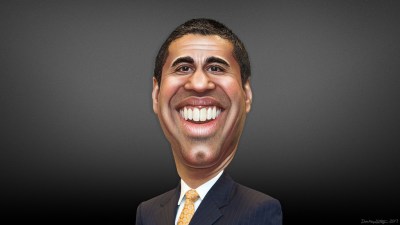
President Trump appointed Pai in 2017, but the proposed death of a free and open internet goes far beyond the Donald’s presence in Washington. The Obama Administration’s FCC Commissioner Tom Wheeler – who attempted to gut Net Neutrality rules in 2014 – was also a former cable industry lobbyist sponsored by Comcast, Verizon and the US Telecommunications Association, and hired Comcast Attorneys Daniel Alvarez and Matthew Del Nero during his tenure.
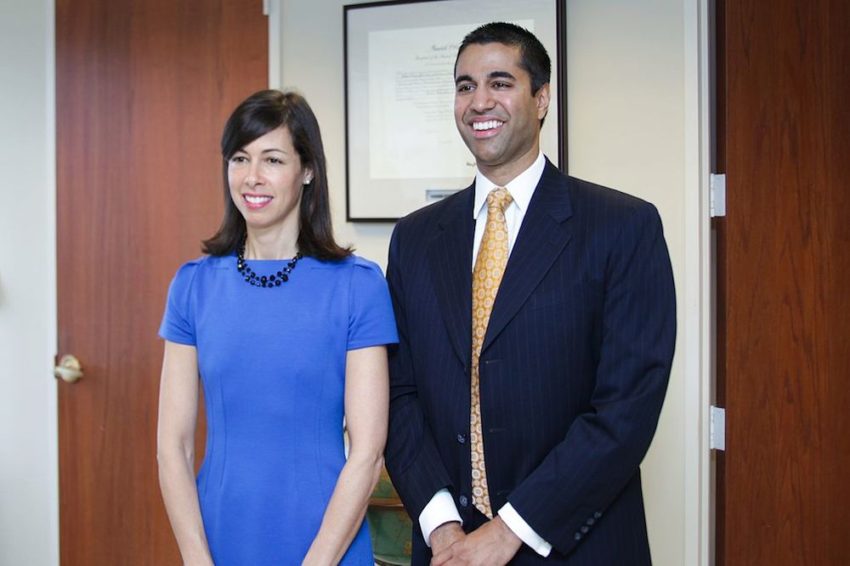
 Despite these obvious conflicts of interest, not everyone at the FCC seems thrilled with the corporate takeover on the online universe. In a Los Angeles Times op-ed entitled “I’m on the FCC. Please stop us from killing net neutrality” Commissioner Jessica Rosenworcel observes the persistent questions surrounding the legitimacy of anti-net neutrality public comments submitted to FCC, as well as what appear to be tens of thousands of missing comments. She now calls for voters to make sure the proposal by Republican Chairman Ajit Pai does not go through, citing overwhelming public support for net neutrality. She also proclaimed Pai’s plan “a lousy idea” deserving of a “heated response from the millions of Americans who work and create online every day.”
Montana Fights Back
In January Montana Governor Steve Bullock (D) responded to theFCC’s vote to end Net Neutrality by signing an executive order requiring internet service providers with government contracts in the state of Montana to abide by Net Neutrality rules.
As reported by Harper Neidig at The Hill:
The order makes his state the first to push back on the Federal Communications Commission’s decision to repeal the open internet rules last month.
“There has been a lot of talk around the country about how to respond to the recent decision by the Federal Communications Commission to repeal net neutrality rules, which keep the internet free and open. It’s time to actually do something about it,” Bullock said in a statement.
“This is a simple step states can take to preserve and protect net neutrality. We can’t wait for folks in Washington DC to come to their senses and reinstate these rules.”
The order says that in order to receive a contract with the state government, internet service providers must not engage in blocking or throttling web content or create internet fast lanes. Those practices were all banned under the Obama-era 2015 net neutrality order.
The fine folks at boing boing observe that the order sets up an interesting conundrum:
On the one hand, the FCC insists that it has the authority to ban states and cities from establishing public alternative networks. Since ISPs enjoy natural monopolies — there’s only so many poles and sewers to go around — most cities have one or two ISPs, and if both of them refuse to adhere to net neutrality principles, the state would seemingly have to go without internet service altogether. The question will be whether one of the duopolies in a city with government offices will betray its network discrimination conspiracy with its “competitor” in order to land state contracts — or whether the state will build out its own government network, something that the FCC seems prepared to permit.
MONETIZING SCARCITY
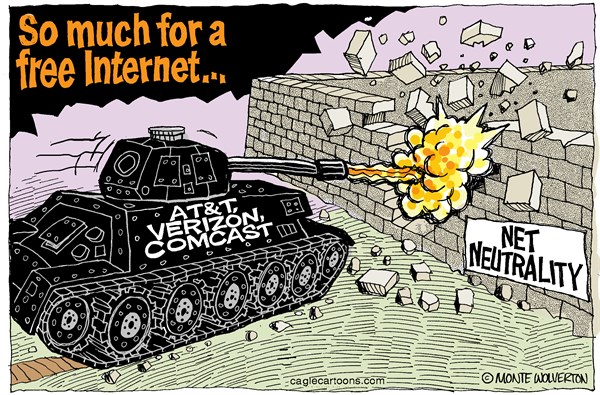
In a Washington D.C. Court of Appeals case – Verizon VS The Federal Communications Commission – rulings effectively put an end to Net Neutrality already, abolishing FCC regulations over telecommunications giants like Verizon and Comcast, Cox, AT&T, and Time Warner Cable. Now we’re facing the complete repeal of already compromised regulations, and we’re set to witness that repeal as soon as December of 2017.
Under the Appealed ruling, ISPs can already selectively censor the internet by throttling sites they don’t like into nonexistence, hindering cash-strapped internet start-ups from getting off of the ground, stifling innovation, killing off new competitors challenging massive corporations, and widening gap between the haves and have nots. Now income inequality threatens last bastion of free speech. Small businesses, nonprofit organizations, independent journalists and the like, will not be able to afford to pay for the “fast lane” of the internet.

ISPs will be able to discriminate between data on the final mile before the data connects to your home. The new tolls would allow ISPs to actually tax internet companies for the “privilege” of connecting with customers who are already paying for network access. Small business owners and everyone else won’t be able to compete with massive corporations. Start-ups won’t be able to compete with the pay-to-play fast-lane. An end to Net Neutrality would grant ISPs the ability to give some websites preferential treatment (faster traffic) in exchange for money. But who has all of the money in the first place?
The name of the game is Pay To Play. ISPs will be able to manipulate broadband speeds based on which organizations are willing to pony up the most dough. Our voices will become inaudible in the sea of money that has bought politicians and saturated our mental environment with the pollution of incessant advertisements for generations, literally drowning out our voices on the only frontier we have left.
Then again, wasn’t it really just a matter of time before this happened? The internet, after all, poses a significant threat to all corporate agendas. But for those of us who have come to take these services for granted, it is a sad reminder that we don’t truly know what we have until it is gone, as the old saying goes.

CORPORATIONS ARE LIKE THE MAFIA – THEY DO WHATEVER THEY WANT
The corporate giants have grown lazy in their attempts to smooth out PR. The fact remains they don’t have to issue apologies any longer. They’ve successfully implemented monopolies and laugh at every challenge to them. In a 2014 blog post, Tom Wheeler wouldn’t even defend his proposals, implicitly refusing to dispel the “interpretation” of proposed rules by not even mentioning them:
“Some recent commentary has had a misinformed interpretation of the Open Internet Notice of Proposed Rulemaking (NPRM) currently before the Commission. There are two things that are important to understand. First, this is not a final decision by the Commission but rather a formal request for input on a proposal as well as a set of related questions. Second, as the Notice makes clear, all options for protecting and promoting an Open Internet are on the table.
“In its Verizon v. FCC decision the D.C. Circuit laid out a blueprint for how the FCC could use Section 706 of the Telecommunications Act of 1996 to create Open Internet rules that would stick. I have repeatedly stated that I viewed the court’s ruling as an invitation that I intended to accept. We ask for comment on this approach in the NPRM.”
The courts have explicitly ruled they have the authority to change this classification, which is why they moved internet from Common Carrier classification to Information Provider, akin to any other public utility.
Wheeler went on to say:
“I do not believe we should leave the market unprotected for multiple more years while lawyers for the biggest corporate players tie the FCC’s protections up in court. Notwithstanding this, all regulatory options remain on the table. If the proposal before us now turns out to be insufficient or if we observe anyone taking advantage of the rule, I won’t hesitate to use Title II. However, unlike with Title II, we can use the court’s roadmap to implement Open Internet regulation now rather than endure additional years of litigation and delay.”
Enacting Title II of Telecommunications Act of 1996 would reclassify ISPs as utilities like phone companies and restrict them to more stringent FCC regulation. Despite his words, “hesitate” is exactly what Wheeler has done from the start. The FCC admits that actions are not commercially reasonable if they harm the consumer, like, for example, degrading other service to create a fast lane, if they harm competition, if they provide priority access to affiliate programs, or if they curb free speech or civic engagement. But as BGR’s Brad Reed points out:
“Just like with the AT&T/T-Mobile merger, Wheeler’s net neutrality rules propose giving a powerful corporate interest something it wants in exchange for agreeing to live under the vague threat of future regulations that depend entirely on the whims of the regulators who may or may not feel like enforcing them.”

NET NEUTRALITY IS NOT A MEDDLESOME GOVERNMENT REGULATION – ITS COMMON SENSE
As billions of people from different cultures are being brought into a brave, new, globalized economic landscape, the monopoly of the Anglo-American world Empire is being challenged on a daily basis by this online network of networks. But the internet doesn’t only challenge the Empire from the outside. While disinformation propaganda has filled our minds with lies for decades, the alternative media challenge the dogmatic information monopoly of corporate owned organizations like CNN, FOX and MSNBC. The internet has made it impossible for the established regime to sell propaganda to us; if the mainstream media attempts to convince us that the people of Iran are inherently evil to sell another illegal war to the American people, we can simply access the web to engage in conversations with Iranian citizens, and in doing so we ultimately arrive at the conclusion that those people in Iran are really no different from us, and desire the same things that we do. Thus the internet shows us not only that we are all connected, but that we are all one consciousness.
According to complexity theory, when simple things interact, they create unpredictability. It is expressly this unpredictability which threatens the hegemony of the Corporate state.The Corporatocracy has ten-thousand reasons to loathe a free and open internet, which is why they’re attacking it from all sides. While Microsoft and Macintosh’s computer systems have been intentionally designed with built-in back doors to NSA and GCHQ servers, open-source software like Linux challenges the dogmatic surveillance monopoly of corporate owned intelligence organizations like Booze-Allen-Hamilton. While Wal-Mart and Target drive out local businesses and bring mom-&-pop shops to their knees, eBay stores and the 3D printing revolution of thingiverse.com and the like challenge the dogmatic production monopoly of corporate owned retail outlets. While our banking systems choke out local economies and foreclose struggling families from their homes with the stranglehold that is compounded interest, Bit-Coin and other Crypto-Currencies challenge the dogmatic monopoly of the Central Banking System’s fiat currencies. The radio program you’re listening to at this very moment is yet another shining example of why the internet is so important. Without the web, this show does not exist, plain and simple. So its not hard to understand why the Corporate elite are doing everything they can to destroy internet sovereignty.

The Corporate elite view internet as something akin to Pandora opening her box. In the early days of internet regulation bills, Senator Jay Rockefeller actually said to a crowded auditorium on the subject of cybersecurity, “Would it have been better if we had never invented the internet?” Our Corporate masters are desperate to stuff the genie back into the bottle, and shove the cat back into the bag. But a mind expanded by new experience can never return to its previous dimensions, and now that the standard has been set, a reversal of the information trend will not be tolerated by the online community. Every day the internet exists, it becomes stronger, striking fear into the black heart of the oligarchs.

As the old saying goes, all good things must come to an end, and we may be witnessing the death of the internet as you read these words. The rich are attempting to control the internet by buying it, creating a new form of classism, what might be termed Digital Apartheid. If they succeed, the rest of us too poor to afford the perks of the free internet we’ve all come to take for granted, will become second-class digital citizens, unable to access information we were able to before. They don’t have to shut down websites to kill the internet. All they have to do is put an end to Net Neutrality, which is exactly what FCC Chairman Tom Wheeler announced was going to happen this week. The websites we access on a daily basis constitute the accessible internet, and Internet Service Providers or ISPs must provide equal access to everything that is online to their clients. Net Neutrality means that your Internet provider cannot limit what you view online in any way. If it is online, you can access it.
But let’s put this into perspective. What would net neutrality look like if it were applicable to telephones? It would mean that I can call a business as easily as I could call an individual. An end to telephone neutrality would mean that I could easily get through to big businesses, but would have to wait long periods of time in order to contact acquaintances, ultimately culminating in negative effects, like being put on hold for a 911 call. The bottom line here is that you cannot value communication technology on a sliding scale, although this is expressly what the end of Net Neutrality will create for us.

They’ve written a number of dress-rehearsal internet control bills, all of which were shut down by popular activism. ACTA failed. SOPA failed. PIPA failed. CISPA failed. And now with the TPP floundering in the water, it is clear that outward control of the internet is not going to work. The NSA is apprehensive to activate Quantum Copper, which is essentially the Great Firewall of China for the entire global internet, for fear of the backlash. If they suddenly shut off the internet, what would happen? They’ve discovered that they can’t control the internet openly, so now they’ve decided that it might be a good idea to exclusify information by forcing people to pay for it. Since people are barely able to make ends meet in the first place, the internet has become their only saving grace to make the rent and pay for groceries. So the idea of making people pay more for basic access on a sliding scale will break the back of our world wide web even more effectively than outwardly controlling it.
When it comes to these rulings and legislative efforts, the last people who are involved are we the people. The lobbyists and congressmen who have no conception of what the internet actually is, are writing this legislation not only for the sake of increasing their profits, but to control the even distribution of information that challenges their establishment narratives.

INTERNET CLASSISM
They’re turning this into a tiered system like cable television. These new data limits would likely be sold to us based on packages. For example, if you would like the social media package (which includes facebook and google+), you’ll have to pay an additional $9.99 in addition to the connection fees associated with your ISP. If you’ would like the streaming video package (which includes youtube hulu, and vimeo), that will cost you another additional $19.99 since steaming services require lots of bandwidth. And if you want to see smaller sites (like outerlimitsradioshow.wordpress.com) which aren’t included in these packages, you’ll just have to eat away that data. And if you’re dissatisfied with the fact that your service is slow, pay more to get faster service. Can’t afford it? Tough luck. Hope you enjoyed an open and free internet while it lasted. For the average internet user, this means that our favorite sites would take forever to load (especially if the corporations deem them a threat to the established propaganda narrative) resulting in even higher fees, justified by higher traffic and high bandwidths.

IS IT WORTH THE FIGHT?
How much longer are we going to waste our energy stopping programs that should not exist? Putting a stop to insane bills and ludicrous laws? How much longer will we read about the abuses of corporations in our headlines and think to ourselves – “this has to be stopped?” Why do we tolerate this? Occupy this. March for that. Instead of building a future on the altar of our most glorious dreams, we spend our time protesting and demonstrating, signing petition after petition, wasting all of our time and energy to stop programs and initiatives that should never have been conceived of in the first place. We’re on a hamster wheel, running harder and harder and expecting different results; expecting to go somewhere. We told ourselves that if we could stop SOPA the government would get the message and leave the internet alone. We told ourselves that if we could put an end to CISPA the government would finally get the message and leave the internet alone. But they slither and squirm their way out of every new regulation and ruling. They spend all their time conceiving clever methods of implementing their agenda. How much longer can we keep this up? I’ll give it to these lobbyists, they are very clever, but they’re not very wise. How do they think this is going to end?
The FCC would do well to appeal and win this case, but they won’t because they’ve been infiltrated by industry lobbyists. We might want to establish Net Neutrality on the books for good, somehow, and set it in stone forever. Although if we do that, they’ll just find another clever way to get around the rules and control the internet – they’ll stop at nothing until we put a stop to them, and the internet has proven to be the only means of doing that by exposing their lies on a daily basis, slowly but methodically waking up the masses one post at a time. In the meantime, here are a couple of sites you can access to make your voice heard on this issue:
Electronic Frontier Foundation
We are many, and they are few. The power to stop them is in the mirror. The fight is not over, but the time for waiting around to do something is. Take action.
[1] The FCC is about to axe-murder net neutrality. Don’t get mad – get even
http://www.theguardian.com/commentisfree/2014/apr/24/fcc-net-neutrality-tom-wheeler-stop-rules
[2] Obama Administration Launches Plan to Make an “Internet ID” a Reality
http://libertyblitzkrieg.com/2014/05/02/obama-administration-launches-plan-to-make-an-internet-id-a-reality/
[3] The FCC Chairman’s Many Excuses: Tom Wheeler tries, and fails, to justify his execution of Net Neutrality
http://www.slate.com/articles/technology/future_tense/2014/05/fcc_chairman_tom_wheeler_s_lame_excuses_for_his_net_neutrality_proposal.html
[4] FCC Chairman Tom Wheeler defends proposed Net Neutrality reform
http://www.latimes.com/entertainment/envelope/cotown/la-et-ct-fcc-net-neutrality-wheeler-20140430,0,7001552.story#axzz30gasnE7T
[5] FCC Chairman Tom Wheeler Pledges Open Internet In Face of Criticism
http://time.com/82409/wheeler-net-neutrality/
[6] If We Act Now, We Can Stop The FCC’s Horrific Proposal To End Net Neutrality
http://www.alternet.org/activism/if-we-act-now-we-can-stop-fccs-horrific-proposal-end-net-neutrality?paging=off¤t_page=1
[7] Former Comcast And Verizon Attorneys Now Manage The FCC And Are About To Kill The Internet
http://www.vice.com/read/former-comcast-and-verizon-attorneys-now-manage-the-fcc-and-are-about-to-kill-the-internet
Gabrielle Lafayette is a journalist, writer, and executive producer for the Outer Limits Radio Show.
Catch the cloudcast at mixcloud.com/outerlimitsradioshow
Check out the more frequently updated tumblr page at outerlimitsradioshow.tumblr.com
Contact the research team at outerlimitsradioshow@fastmail.fm
What In The World Is “Buddhist Rock”?
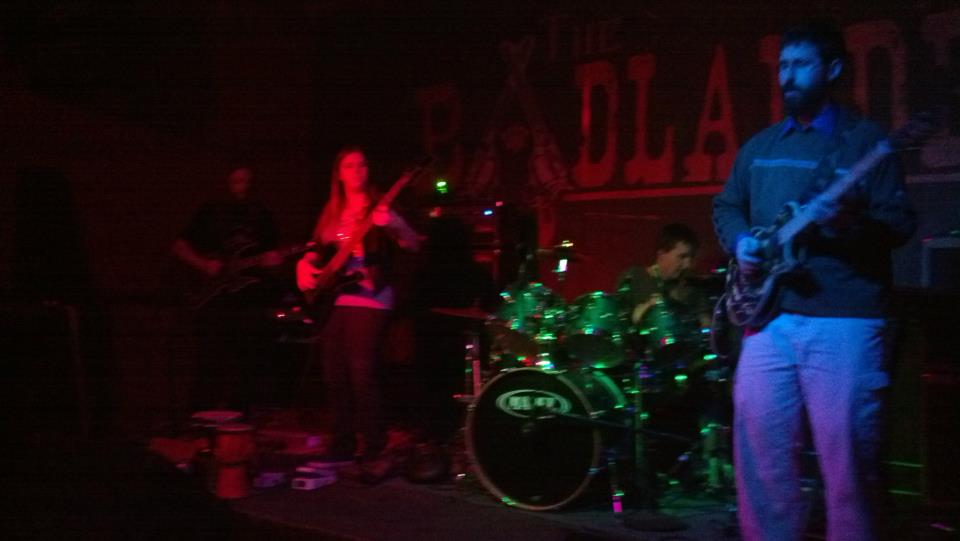
Buddhist rock band darshan Pulse (dP) was born in the musically rich community of Missoula, Montana, in the heart of the Rocky Mountain Pacific Northwest. After publishing a concept album called Panopticon in the spring of 2010, dP worked on a second concept album: Olive Moksha (OM). This ambitious project was crafted with the intention of guiding the listener on a wordless journey, which tells a timeless story of three monks as they navigate life, death, and rebirth. The story takes us from Dukkha (worldly suffering) to Anatta (the slippery and nuanced doctrine of “non-self”).
Time and time again we find evidence that music is capable of producing dramatic alterations in consciousness. Since consciousness seems the bedrock of all creation in this dimension, this observation seems to infer the question, To what extent might music be capable of changing the world?

The Theory
The basic idea/assumption that generated the music theory and musical forms that underlie Olive Moksha is this: that the scale a melody is played in has a reliable emotional affect. Usually this is limited, in most music, to major (a happy, uplifting, simple-sounding scale) and minor (an introspective, darker, complex-sounding scale). Our composer realized that major and minor are simply permutations of the same underlying circular sequence, only starting in different locations.
For those that know the Do-Re-Mi song from The Sound of Music: Major starts its scale on the Do, but minor starts its scale on the La. (If you imagine singing La Ti Do Re Mi Fa So La, for example, that’s a minor scale). Thus it’s a clear logical extension to consider the other scales as well – the unnamed ones that end on Re, Mi, Fa, So, and Ti.
Turns out, surprising no one, these scales have been around since the time of the Greeks, and got the names we know them by in the 1200s – they are called Ionian, Dorian, Phrygian, Lydian, Aeolian and Locrian – and they have the ability to paint melodies in more subtle shades of emotion than just Happy and Sad. But it goes much deeper.
Those that have some experience with concert band or private musical lessons will also be familiar with the scales of Harmonic Minor and Melodic Minor – these scales mostly came about because composers wanted to have the satisfying linear harmonic motion they get so easily in a V-I major cadence, but transposed into minor. Crucially, these scales don’t overlap with the major/minor sequence – they are wholly new seven-note sequences, each with their own unique Do, Re, Mi, etc., on which new scales of a more exotic nature are revealed.
By way of example, one scale employed, given the moniker of “Romantic” by the band, has a “sweetly sour nostalgic warmth” to it. It’s also the fifth mode of the Melodic Minor scale, starting on the relevant So. In C, meaning all the white keys, it would be C major with a B flat instead of a B and an Ab flat instead of an A; in A, the same scale would be A minor with a C sharp. This means, in terms of Romantic’s emotional qualities, it lies two steps away from Major, and one step away from Minor. The fact that this scale has the emotional quality that it does — lying closer to minor than major on the emotional axis — is not coincidence.
Of course, every theory has its limits. Even though we find a total of 28 potential scales, derived from 4 unique seven-note sequences (4×7=28), a sizable minority of them are unsuitable for practical reasons. (The main problem is that 3 of these scales have an unstable augmented chord as their Do, or root note, and 7 of them have a diminished chord. “No good,” say dP. They are just too far from Major and Minor, harmonically, to make sense to our Western ears (music appreciation being a subjective and fickle cultural beast). Thus we are left with 18 stable scales on which to base our emotional narrative: four scales each from Melodic Minor, Harmonic Minor, and Harmonic Major; and six scales from the Major sequence, the original Sound-of-Music Do-Re-Mi.
Armed with a pallet of 18 emotionally unique colors, dP paints an intricate and spine-tingling sonic tapestry of electric wizardry to evoke the story of Olive Moksha.
The Story
Dukkha, the state of suffering and want, begins our tale. Upon this background the curtains rise on three monks, performing their daily duties at a nameless monastery. They cut wood, carry water, tell stories (Vihara Devoir).
On the monastery grounds there is an olive orchard, where the monks work and meditate. One night, while the monks are meditating under an ancient olive tree, Avalokiteshvara, an enlightened being, the Thousand-armed Buddha of Compassion, appears to them in a vision. He tells them to leave the orchard to become bodhisattvas and wander the earth spreading good works in every direction. They immediately depart, each traveling to a different hemisphere, giving their lives over to public service (Wandering Bhikkhu). By and by, they live out their lives, gradually winding down, passing peaceably into the spirit world without malice or despair. Their bodies are sent back to the monastery for burial (Request to Laura).
Upon death, each of them sees for the first time the transient nature of all things — a movement of lightness and air enters them. They pass through the bardos between death and rebirth, first re-experiencing their lightest thoughts and moments of fleeting grace (Pala Moksha), followed swiftly by a re-telling of their darkest, most selfish thoughts, and moments of weakness (Sidpa Bardo). Unable to remain coalesced into a separate Will, facing an unknowable choice between rebirth and nirvana, each monk’s selfhood is torn apart in the transition (Tulku Bhava).
Years pass, and three children are born, each somewhere in the first world (Ici Avant). They come of age in an ailing society, overfull with violence and thoughtlessness, and struggle with the desire to take the right action instead of the easiest action. Desperate for an answer to the deepest questions that plague them, they each search for their own Truth, wherever it may lead (Quarry Unhewn). By and by, through hill and vale, the children find themselves at the doors of an ancient monastery. The scent of fruit oil and brine fills the air with peace and sweetness.
The abbot of the monastery meets with each child. It is clear from their meeting that this is not the first time they have met. The children know too much at too young an age. The children and the abbot talk long into the night, contrasting stories of a bygone time of a natural rise and fall with those of woes of present unmet wants. Exhausted from the revelation, the children stay the night at the orchard, sleeping under an old half-dead tree (Padme in the Orchard).
During the night, the children are visited by Avalokiteshvara in a shared dream. They see that their seemingly separate personalities are actually three emanations of a singular presence as their consciousnesses merge with that of the transcendent being. They awaken at once to the brightness of the full moon, she having suddenly slipped off her blanket of cloud. Having momentarily stepped into a larger world, they are struck still by the realization of Anatta, or no-self; that there is no difference between themselves, the old monks, and the Bodhisattva nature of all sentient beings. They rise with the Knowledge, the Sight, and the Truth. Whether they live long and well, it is not for us to say. But having experienced Moksha, they are free.

The Universal Calendar
Clocks are circular, and depict time, which certainly varies regularly, in predictable cycles. In the modern world, we track days with a sweeping hand, tracing out the same daily patterns and routines. However, our post-industrial monitoring of weeks and months is linear, tracing a straight line towards the unknown. We imagine ourselves standing on an infinite sidewalk down a main thoroughfare, with the unknowable future blocks ahead and the forgotten past blocks behind.
Other cultures don’t necessarily share this linear fascination; the Western Zodiac contains one cycle of time, the Hindu Yugas a second, the Mayans a third. Even the sky itself spins slowly in its own lazy circle. Each foretell rises and falls. Thus dP’s artist and illustrator was inspired to design a Universal Calendar for the album’s cover, depicting several cycles simultaneously. On the outermost rim, the I Ching awaits us, followed by the Hindu Yugas, the Mayan Ha’ab and Tzolkin calendars, and finally the Western Zodiac, all held together by the nine-triangled Sri Yantra. The combined wisdom of these otherwise disparate calendar systems allows for the realization that while we might each focus on different bits of the pattern, we are all watching the same fireworks show.
 Outer Limits Radio Show