All Is Well: Keep Shopping

Oppressed cultures always see through the illusions of their authoritarian masters eventually and upon realizing their enslavement, revolt. But clever oligarchs all too often maintain their power by anticipating rebellions and controlling their flow. Ineffectual protests that fail to inconvenience the levers of power have become the norm, as have the “protest permits” that accompany them. With hundreds of competing ideologies, it is clear that everyone has a different idea of what the next world should look like. But we risk repeating history if we continue to impose individual utopian ideals onto each other by force. No system will work for everyone, which is why returning to an Iroquois Nation model of harmoniously coexistent factions can only manifest in the absence of centralized authority. The only unacceptable outcome would be for present trends to continue. Let us resist the temptations that ruined the Baby Boomers who bailed on the revolution for houses, cars and stair-masters.

tumblr_o60rs0rDZB1ud5lpzo1_400

Lessons From The Nevada Desert

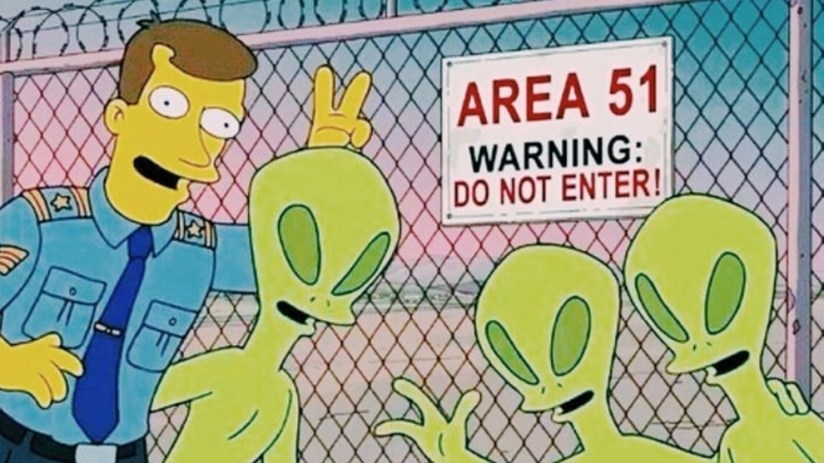
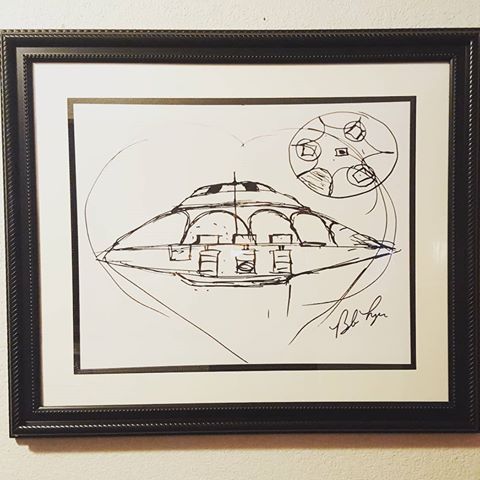
In 1989 a brilliant young technician named Bob Lazar snuck some friends into a top secret test flight at a classified military base no one had ever heard of. The juvenile mistake infuriated his superiors, and would lead him to become one of the greatest whistleblowers of all time. Lazar’s legendary television appearance with George Knapp made “Area 51” the household name it is today. He told of an underground military base deep in the Nevada desert where science fiction becomes science fact: corporate military operations involving the back-engineering of captured flying saucers. Many dismissed the story as a hoax. The trouble with Bob is, the more you look into his story, the more obvious it becomes that he’s telling the truth. Several proofs haunt skeptics, and additional evidence continues to corroborate what Bob said from day one: that he worked on “an anti-matter reactor that allows spaceships to produce their own gravitational fields.” A technology that could change the world.

67098820_153825035734339_8814241635098609038_n

The Long Lens of History

Investigative journalist Annie Jacobsen has authored six books addressing a military-industrial complex gone berzerk and desperate to cover up its actions. But her book on Area 51 seems to have made the biggest splash, expressing a very different and far more disturbing story of the infamous Top Secret base. The consensus history regarding the 1947 crash in Roswell, NM indicates an extraterrestrial mishap seized and covered up by government agents who stashed all the evidence in the Nevada desert. But Jacobsen’s investigation leads into a far darker territory, demonstrating how far government beauracracies are willing to go to preserve their surpremacy in military and intelligence operations. The overall thrust of her work encourages us all to sharpen our own media literacy and learn how to better read between the lines of disinformation and doublespeak.

15631205221551

A Leak Is Not A Hack

Among its many other meanings, the word “hack” tends to signify the act of digital trespassing. But modern hackers don’t just break into computer systems. Hackers also employ creative genius to invent radically new methods of solving problems by thinking in unorthodox ways. Reducing malaria and increasing the efficiency of nuclear power plants are realities both made possible by today’s clever innovators, or hackers. While corporate talking heads conflate hackers with terrorists, the hatred of authoritarian surveillance regimes validates hackers as modern heroes, boldly resisting the tyranny of Empire. The term “hacker” has come to be misappropriated in recent months and years, especially as the mainstream media struggles to determine whether Julian Assange is a journalist or not. The media’s constant and repeated accusations of “Russian hacking” became problematic when key intelligence officials demonstrate again and again the critical difference between a hack and a leak.

0007

One Giant Hoax For Mankind

As the corporate media focuses international attention on the 50-year anniversary of the Apollo 11 moon landing, our knowledge of modern technological limitations forces us to ask how a live television broadcast was possible from 240,000 miles away in 1969. We’ve all seen live broadcasts where parties experience significant delay time between question and response as the live signal crawls thousands of miles between them, then back to viewers. Yet, we’re expected to believe that CBS was capable of broadcasting live footage from the moon, fifty years ago, without any delay whatsoever. Unfortunately most who question the official narrative of the Apollo program insist that the image alteration and obviously faked television footage are evidence enough to prove NASA never went to the moon. Is it possible that NASA did successfully complete its mission, but concealed the truth with the magic of the silver screen by showing the world staged movie sets instead of the authentic mission footage?

a07


Garden City Guide to the Little Bigtown

In his classic, A River Runs Through It, Norman Maclean writes, “The world is full of bastards, the number increasing rapidly the further one gets from Missoula, Montana.” Though historians don’t agree unanimously on the exact translation of the word “Missoula”, the trading post that started out as the “Hellgate Village” has come to be known by many names over the decades, including the City-with-Soul, Zootown, the Hub of Five Valleys, and the Garden City. It’s also been referred to as the Little Bigtown, not only in reference to the Custer Battleground in eastern Montana, but because Missoula is the best of both worlds. It’s a bustling urban area with deer frolicking in the streets and Osprey hovering over Missoula’s many rivers, all teaming with fish. This emerald of the Rockies is the Golden Mean between urban and rural; progressive and classical. Missoula’s modern influence is world renowned, attracting worldwide attention from a wide range of audiences for it’s university, biodiversity, artistic relevance, outdoor enthusiasm, cultural tolerance, community focus, and stunning beauty. And while the community has been compared to places like Berkeley and Amsterdam, there really is nowhere quite as weird or as free as Missoula, Montana.